
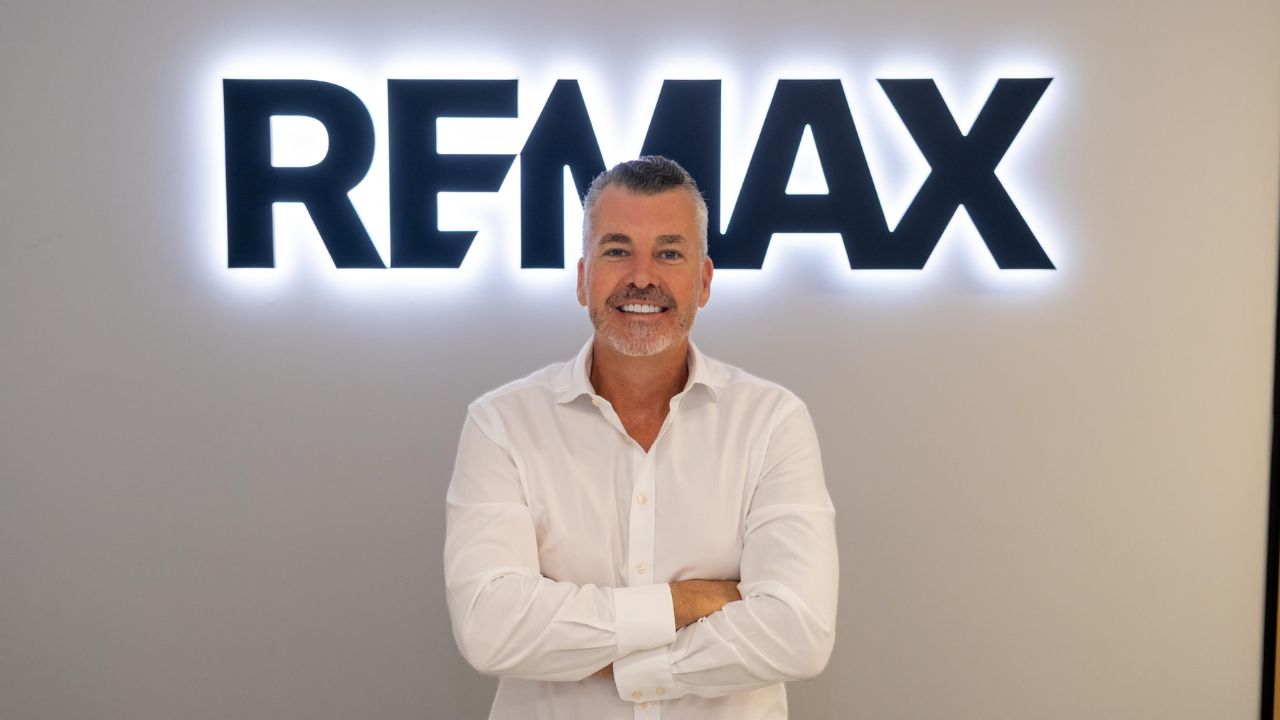
When Tristan Brown talks about leadership, he rarely mentions targets. Instead, he talks about energy, about being present and building an environment where performance is not chased, but expected.
It is a philosophy that has shaped the way Tristan has grown REMAX Property Sales on Queensland’s Sunshine Coast, most recently through the strategic decision to merge his two offices into a single, centralised location in Birtinya.
The move brought together the long-established Nambour office and the Caloundra business under one roof, creating a 32-strong sales and property management operation designed around collaboration rather than control.
For Tristan, the decision was less about scale for scale’s sake, and more about how people work best.
“I’m a tactile leader,” he says.
“I’m certainly not a micromanager – couldn’t be further from the truth – but I do like to be around. I’m a big believer in energy.”
Why environment matters more than pressure
His leadership approach runs counter to the traditional idea that performance must be pushed from the top. In his view, pressure is rarely the answer … design is.
“My belief for a long time has been that as a leader, we don’t necessarily push performance,” he says.
“In real estate there are a lot of different ways to do things. My role is to design conditions where performance becomes the default.”
Those conditions start with people; not just capable agents, but people who align culturally.
“There are some phenomenally good agents out there,” Tristan says.
“But we’ve resigned ourselves to understanding that they’re not always the right fit for our culture. As much as we might like the numbers, it’s detrimental to the environment we’re trying to create.”
Skills, he believes, can be taught; systems can be implemented but character is harder to change.
That mindset has informed everything from recruitment to office design, and ultimately led to the decision to bring his teams together physically.
The logic behind the merge
The move to Birtinya places REMAX Property Sales in one of the Sunshine Coast’s fastest-growing commercial corridors, but Tristan is quick to point out that geography was only part of the equation.
The bigger driver was connection.
Having agents and leaders in the same space allows standards to be demonstrated rather than dictated. Expectations are set by example, and culture is reinforced informally, day to day.
“It’s fantastic to have an environment where, if agents choose to, they can be around the leaders in the business and each other,” he says.
“We let the agents drive the standard, but the more we can get everyone around that, the better for the company.”
The new office was designed to encourage collaboration, with a layout that supports shared energy rather than siloed performance.
For Tristan, it reflects how the business has evolved from two successful offices to a single, more cohesive operation with a coast-wide focus.
Scaling without losing the culture
Growth, he admits, is where many agencies come undone.
“There’s a real void between about 20 and 40 staff,” he says.
“At 20, it’s still easy to be tight-knit and monitor the culture. Once you push into that 30 to 40 range, it becomes much more challenging.”
Tristan has seen businesses scale quickly, only to collapse under the weight of their own structure a year or two later.
To avoid that fate, he invested early in senior support roles: an operations manager, a head of property management, and a sales development coordinator.
Not a traditional sales manager, he is careful to point out, but someone focused on mentoring, removing roadblocks and maintaining the right conditions for people to perform.
“They’re filters for me,” he says. “They allow me to sit a little bit above the business and focus on strategy.”
It is an approach that requires financial courage and Tristan is open about the risk involved in investing heavily in people, particularly at a time when many agencies are cautious about costs.
“It’s scary,” he admits. “You’re paying people what they’re worth, and you don’t really know if you’ve got it right until six months in. But I’ve always believed we need to invest. If we’re happy to invest in the right people, it gives us a strong foundation for future growth.”
Learning the hard lessons of leadership
Tristan purchased the Nambour office in February 2021, stepping from a high-performing sales role into business ownership. Looking back, he acknowledges he was green – enthusiastic, ambitious, and learning in real time.
“One of the hard lessons early on was trying to appease everybody,” he says. “I tried to mould myself around what I thought people needed from me.”
It did not work.
Of the original eight people in the office, only one remains today. The rest moved on as Tristan clarified his vision and became more comfortable having difficult conversations.
“They’re hard conversations,” he says. “But if you create the right environment, people will either stay on the bus or pull the button themselves and get off.”
Avoiding those conversations, he reflects, was driven by fear – fear of financial impact, fear of instability. Experience has changed that.
“Every single time we’ve had to move someone on, it’s been a longer-term positive for the company,” he says. “It never feels good in the moment, but it’s necessary.”
As the business has grown, those conversations have become even more critical.
“If I ignore something, that says more about our culture than addressing it,” Tristan says.
“I have a responsibility to everyone else sitting at the table.”
Culture is built in the small moments
Culture, he says, is not defined by mission statements or slogans on walls. It is shaped by what is rewarded, what is tolerated, and what is quietly ignored.
“Successful people don’t need motivation,” he says. “They need clarity. They need trust. They need autonomy.”
Those values are reinforced through everyday actions – how leaders behave, how decisions are made, and how standards are upheld. In a competitive Sunshine Coast market, that consistency matters.
“There are too many agents chasing the shiny thing,” Tristan says. “That’s not who we want to be.”
His background in small business, growing up around family-run enterprises, informs that long-term view. Relationships matter and reputation matters.
Short-term wins mean little if they come at the expense of trust.
Publicly, he is clear about his ambition. He wants REMAX Property Sales to be recognised as one of the leading agencies on the Sunshine Coast, with a top-three position by transaction volume. But volume alone is not the end goal.
Equally important is how the business is spoken about – by clients, by the community, and by the people who work within it.
“This business is a reflection of who I am,” he says. “I want to hold my head high when people talk about REMAX. And I know everyone here wants the same thing.”