
The first question in my 2014 interview with Dr Fred Grosse was not mine. It was his.
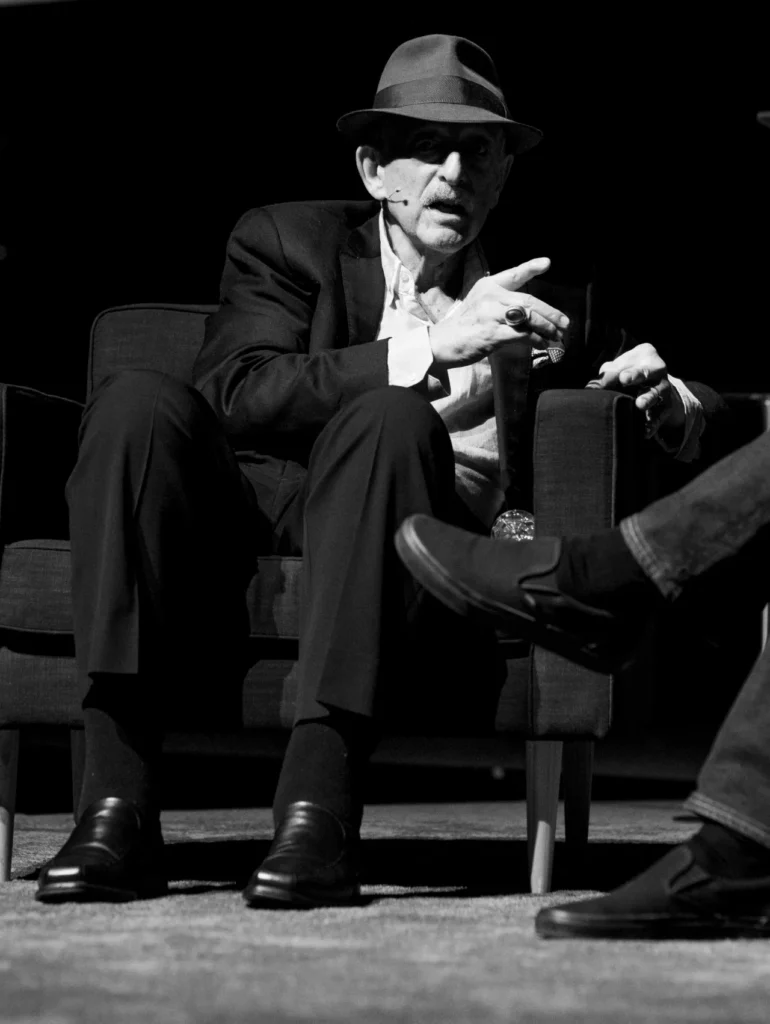
“How long have you worked with this magazine?”
I told him. Four years, all of it working for somebody else. That business had just ceased trading, and I had come away with two things: lessons, and a website. Everyone was telling me to “just do my own thing.” But at the time it was not as simple as that.
What I did not tell him, because you don’t hand that to a stranger on a promo call, was why. I was a single mum. I was in terrible financial shape. I had just watched a print magazine flounder at close range during a time when the entire print industry was struggling. It wasn’t exactly an encouraging precedent when weighing up whether to start one of your own. I was not confident about leaving corporate life. I was not sure Elite Agent should exist at all.
So, I gave a total stranger the tidy half of it inside ninety seconds, which in hindsight tells you everything about how good he was at this.
“Okay,” he said. “Fire away. What are your questions?”
Let’s be clear. Dr Fred was on the AREC 2014 program; I had a pre-conference speaker interview to file, and a pre-conference interview usually exists to promote the event.
Some headline speakers are happy to give you 30 minutes. That was Dr Fred’s assignment.
Dr Fred delivered way more than his allocated assignment.
He asked whether I had children, learned there was a 12-year-old daughter at home, corrected me twice, refused one of my questions outright, and spent the best part of half an hour running what I now recognise as a coaching session on a writer trying to be a journalist who had rung him for a promo quote. Then he had to go and see a client.
Sadly, he passed away late last week, and the tributes have been flowing in ever since from the people he coached – John McGrath, Tom Panos, Claudio Encina and many more. I have been back through the tape, and the tape is a great deal better than the article I made out of it back then.
So here is the rest of it.
The interview that turned on me
About a third of the way into the conversation it stopped being an interview and he got to work.
On me.
“If I asked you to make a 20-year plan of what goals you’d like to achieve in the year 2034, we could sit down with you, Sam, and pull from you what you’d like to be in terms of fitness, what countries you’d been to, your wealth level, your company, and, if you have children, what their ages will be.”
I always thought I needed to do more. Be more. His premise was that nothing needs adding to a person.
“Each person is a unique being, and everyone has almost a fingerprint of talents, passions, beliefs, goals, hopes and dreams,” he said.
“My work, as a coach, is to help them pull it out of their unconscious.”
Which is why he had no patience for the idea of going off to find yourself.
“It’s really inside of you right now. I believe that everything in your past is inside of you … Everything in your future is inside of you right now.”
And then, flatly: “It’s not like you have to look for it. You have to be willing to see it. It’s already in your pocket.”
I asked why so many people won’t look. He set the answer up first.
“If you’re asking a real question, I’ll give you a real answer,” he said.
“Many people ask the question they don’t want to hear the answer to.”
The question he wouldn’t take
Later I asked him something slightly lazy about work-life balance and how many hours a day one ought to work.
“It’s an awkward question,” he said.
“Let me reframe your questions. I’m going to teach you how to ask the questions better.”
Then he gave me the best answer in the interview, and I printed none of it.
“I believe that every day should be 10 out of 10. You should enjoy every day 10 out of 10, whether it be a work day or a day off.”
Whatever went wrong in the day was simply life, and the job was to become “a black belt of life” while designing the day on purpose anyway.
“Part of every day is adding things that make your heart sing in a systematic and written-down way. You may have a glass of red wine. You may go for a bike ride. You may go for a surf. You may go dancing. You may work in the garden if it really pleases you.”
Then the thing a man who taught wealth for forty years had no commercial reason to say.
“From my point of view, life is most important. Money, which is important for the things money can buy, is not the same as a cuddle from your daughter.
“The big push for me is life is primary and money funds the parts of life like good medicine, private schools, travel, toys and charity.”
She was 12 then. She is 24 now.
And at the end of it, having comprehensively dismantled my question and replaced it with a better one, he checked: “I changed your question around a bit. Are you okay with that?”
The bit I definitely should have printed
Dr Fred was not anti-money. He was emphatic about the opposite.
“Poverty sucks, and I don’t think that anybody should participate in it.”
But he had watched money go wrong at close range, and he was unusually honest about his own hand in it.
“I used to have a problem in America. I would teach how to make money, and then they would buy cocaine and they would break up their marriages and all kinds of weird stuff because they learned money is everything.”
A coach volunteering that his own teaching had hurt people is not common. And then, unprompted, he turned it on the man headlining the conference he was about to speak at.
“We are having a guy at AREC. I forget his name now … Jordan … and he stole money. I mean, he belongs in jail for the rest of his life. The fact that he ratted everyone else and got out is a separate issue, but money then becomes a toxic substance, like the drugs he was using.”
For the record: Belfort pleaded guilty in 1999 to securities fraud and money laundering, was ordered to repay US$110 million to the investors he defrauded, and served about 22 months after cooperating with prosecutors. The jail-for-life part was Dr Fred’s opinion. The rest was the court record.
Jordan Belfort was the headline act at AREC 2014, and at that moment he was about as famous as he was ever going to be – The Wolf of Wall Street had hit Australian cinemas that January, and booking him read as a coup, not a controversy. Dr Fred had helped start that conference. He was on the same bill, weeks out, telling a writer the marquee name was a thief, and declining to remember his name while doing it.
I did not run a word of it. What I did run, in my AREC 14 wrap a few weeks later, was a Belfort item that ends: “Persuasion may get you the listing, but ethics are everything.”
I don’t remember making that connection at the time. Reading both documents side by side now, I think it made itself.
What he saw coming
The most useful thing Dr Fred said in 2014 also sadly never made the page, and it has aged better than anything else on the tape.
“Right now, what’s happening in real estate is people don’t need information. They need skill. The role of the realtor in that world used to be the provider of information.”
He was talking about portals. Buyers could suddenly see everything, so what exactly was the agent for? His answer was the human part: helping people decide, walking them through the emotional wreckage of leaving a house where the memories live, negotiating the price, running the auction. Information was a commodity. Skill was not.
Read it again with a 2026 lens. Information is no longer merely available, it is generated on demand, summarised, formatted and delivered in your own tone of voice.
If your value proposition was ever “I know things you don’t”, it has gone. What Dr Fred identified twelve years ago as the agent’s actual job is now the only job there is.
He had a line about the digital world I have not been able to shake. “It’s the illusion that you can eat a picture of a steak rather than having a steak. It’s not the same.”
I’d said to him, a minute earlier, that social media makes people feel bad because what you see is everyone’s show reel rather than their real life. I cut that too. Apparently I removed the writer from the story and left the transcript.
He was also watching our market with a raised eyebrow. I mentioned there had been a record 1,100 auctions in Sydney that weekend, expecting him to be pleased.
“That’s wonderful, but this is part of a bubble, and part of the knowledge is that a lot of people, believe it or not, don’t know how to deal with a bubble. It’s so easy to make money that people don’t know what it was like in 2008 or 2009 back in the US.”
He was not calling a date, and Sydney ran hard for years afterwards. He was making a point about literacy. An agent whose entire career has occurred inside a rising market has no idea what they don’t know, and a market is not a skill.
He was also blunt about the endgame for people who confuse the two: “They stop working at 60, and they’re broke. Then they get depressed and die.”
The other thing he’d watched change, he said, was our reputation. “With used car salesmen and realtors, it was like you chose one of them who lied the least. All of them lie all the time.” And now?
“There are actually people who wear suits and are real estate people who have a sense of dignity … That whole area of real estate as a profession is new.”
Green and growing
When I told him he had a way of making everything sound simple, he corrected me one last time.
“They are simple. They’re very simple, but they’re difficult.”
Then he told me, without being asked, that he had just lost 25 pounds after carrying it around for fourteen years, that he felt enormously better, and that he was now going after another ten. Four decades of coaching other people behind him, and he was still cheerfully reporting his own scoreboard to a journalist he’d met twenty minutes earlier.
His last message for the stage that year was this: “Human beings are continuously evolving. You need to have a growing edge. I call it ‘green and growing’ rather than ‘ripe and rotting.’ Once you begin to plateau and get bored with what you’re doing, you lose out on major opportunity.”
Something else he mentioned in passing and I never printed: he told me he’d helped start AREC. “I, and some of my clients from the US, set up AREC for John as a gift.” A gift.
He said it the way you’d mention the weather and moved straight to my next question.
Showing up
There is one more line, and it belongs here at the end.
We were talking about social media replacing actual human contact, and Dr Fred said there were all kinds of jokes now about the man with “2,000 friends on Facebook and nobody showed up for his funeral.”
I took it at the time as a fairly standard complaint about technology. It isn’t. Dr Fred was an ordained rabbi, and in Jewish practice burial happens fast, ideally within a day. You cannot diarise it. There is no convenient Saturday slot. You drop what you are doing and go, or you do not go.
I’m not Jewish, but this time I did the research, and I hope I’ve got it right.
The Hebrew word for the funeral, levayah, means accompanying.
Helping to fill the grave by hand is an act of chesed shel emet – true kindness – and it carries that name precisely because the person receiving it can never repay you. It is the rare kindness that runs entirely one way.
So a rabbi with forty years inside that tradition was not grumbling about phones. He was telling me that presence is the highest thing we have, that its whole value lies in being inconvenient and unrepayable, and that a picture of it is not it.
He asked me to picture my business in 2034. I did not tell him that I was still deciding whether or not to have one.
I went to AREC a few weeks later with that question open. I came home and answered it. Elite Agent has now been running for twelve years, which is the closest thing I have to evidence that he was right about the pocket.
We are more than halfway to 2034 now, and the uncomfortable, useful thing about his question is that it works exactly as well asked from here, about 2046.
Everything you need for it is already in your pocket. Maybe we all just need to reach for it.
Dr Fred Grosse. May his memory be a blessing.
Dr Fred’s rules, in his own words
Turn the dream into a number and a date. “A dream is ‘I’d like to be rich.’ A goal would be ‘I’d like to have a million dollars in cash or in a savings account by January 30th, 2016.'” Amount, vehicle, deadline. Miss one and it is still a dream.
Build the 20-year plan by category. Fitness, countries visited, wealth level, the company, your children and their ages on the date. Then ask what moves you closer starting today.
Log all 168 hours. Divide your GCI by the hours you are genuinely productive to find your real rate. At $500,000 a year you are a $500-an-hour operator, “so if you have a three dollar coffee with someone in the office who’s whinging, you just spend $503.”
Know the five things. “Prospect, list, negotiate, sell, keep a deal together, and nothing else.” Everything outside the list gets delegated, batched or dropped.
Treat wealth as a separate skill from earning. Budget, will, trust, investment portfolio, protection. It is learnable, “just like playing basketball.” Without it, “they stop working at 60 and they’re broke.”
It is not fear; it is a lack of mentoring. “I don’t see it as a fear thing. I see it as not having enough mentoring to walk you through the fog until you can do it.”
Choose the room, not the willpower. “If you put people in the military, they learn to kill. You can put people in banking and they can learn to steal.” Put yourself where the behaviour you want is the boring norm.
Design a 10 out of 10 day. “Part of every day is adding things that make your heart sing in a systematic and written-down way.” Scheduled, not left to spare time.
Watch for the plateau, not the downturn. “Green and growing rather than ripe and rotting.”
Be your own hero. “I ask people to see themselves as their own hero.” An entrepreneur, he said, is “someone who creates their own life” rather than tracking the movie stars, the politicians and “what other deadbeats are doing.”