
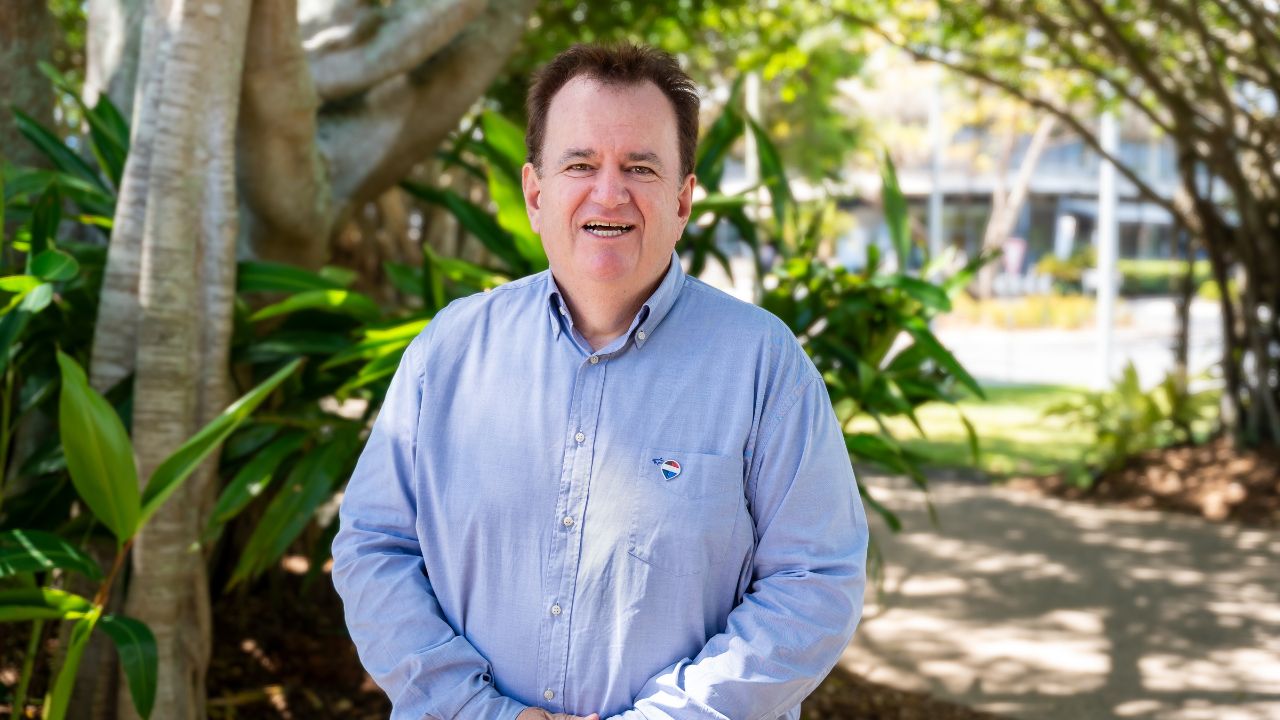
Tony Williamson has retired twice. He has sold a major business, and he has walked away, with every intention of staying away.
And yet, in September 2025, the REMAX brokerowner was back in the game in Cairns, stepping into a market that barely resembles the one he left behind.
“I think any old real estate agent will tell you it gets in your blood,” he says. “It’s very hard to walk away from the job.”
His first retirement came in 2006, when he turned 40. He returned in 2010, ran what he describes as a “big successful business” until 2019, then sold that, and retired again at 53.
This time, he was meant to be done for good. But by the end of last year, the itch returned.
What drew him back wasn’t a desire to build the biggest office in the region all over again. If anything, it was the opposite.
Tony says he has already done the high-speed, high-pressure version of the business; now he wants something that fits around life, not the other way around.
“I just want to create a lifestyle job,” he says. “Not going 100 miles an hour like most agents have to do. And just enjoy the ride.”
Cairns ‘exploded’ post-COVID, and investors are now a major force
If that sounds like a soft re-entry, the reality of the market he has returned to is anything but.
Cairns, he says, has been “white hot”, with price growth continuing and rents rising at a pace that is reshaping the local conversation about housing.
“We’re selling houses for $700,000 that three years ago were selling for $300,000, $250,000,” he says, almost as if he still can’t quite believe the numbers coming out of his own mouth.
For years, Tony says, Cairns sat outside the national spotlight. It was a tourism town, supported by tourism and farming, with a transient workforce and industries that weren’t always resilient through downturns.
It didn’t have the population base or the investor cachet of Australia’s bigger markets.
Then COVID happened and, in his words, “Cairns exploded”.
In the last five years, the city’s property market has spiked, and the buyer mix has shifted.
Population growth has gathered pace, infrastructure spending is increasing, and the town, Tony says, is “growing up”.
“Cairns was always undervalued nationally,” he says. “But since COVID… it’s had a big population growth.
And a new kind of buyer arrived with it: the interstate investor, often acting through a buyer’s agent, often purchasing without setting foot in Far North Queensland.
“It’s been a really big thing up here,” he says.
“A lot of people are buying real estate in Cairns that probably never considered Cairns without a buyer’s agent.”
For selling agents, it has introduced a mode of transaction that can feel strangely detached from the very thing real estate people are trained to sell: place.
Tony laughs as he describes the phenomenon.
“We have buyers that spend more time at Harvey Norman buying a fridge than they will buying an $800,000 house in Cairns,” he says.
“We get offers on emails all the time with just investors making offers on property.”
Many of them, he says, are not asking about the street, the neighbours, the feel of the area, or the things locals obsess over.
They aren’t touring the home, they aren’t walking the block. Some aren’t even looking beyond the listing photos.
“They’ll just buy with a calculator,” he says. “They just chase the yield.”
The shift has been dramatic enough to upend a rule that older agents recite like scripture: position, position, position.
Tony gives an example that still seems to irritate him in the retelling.
Recently, he had an investor choose a property in Babinda, a sugarcane town about an hour south of Cairns, over an absolute beachfront home in Holloways Beach.
The beachfront property had the view, the lifestyle appeal, the type of holding that would once have been the obvious pick.
The Babinda property had something else: a one per cent higher return.
“This investor bought the one in Babinda over the one at Holloways Beach on the beachfront because it had a better yield,” he says. “Back in my day it was all about position, position, position.
“The buyer didn’t care about the position. He bought on yield alone.”
The “market has changed”
In the middle of this investor-led transformation is a more uncomfortable reality for locals: rising prices may be a windfall for existing owners, but they have also tightened the squeeze on locals.
“People are under a lot of stress with the massive price changes, both to rentals and to sales,” he says.
“It’s been a big windfall for a lot of people, but it makes it very hard for people to enter the market. And it makes it very hard to enter the rental market even.”
He remembers an auction recently at Kurrimine Beach, where a voice called out from the back as the bidding climbed.
“Can’t we buy for our old Kurrimine prices anymore?”
Tony’s response was blunt, because it had to be.
“I’m sorry. The market has changed,” he replied.
The question, of course, is what happens next. He believes Cairns still has room to move, not least because even after its jump, it remains cheaper than the major capitals.
What has changed is that it has now been properly noticed: by buyers, by investors, and by the people who used to skip over it when scanning a map of Australian opportunity.
“Cairns has been discovered,” he says. “Anyone that’s bought the last couple of years has done very, very well.”
He points to government and institutional spending as part of that next chapter, including investment around the hospital and broader infrastructure that supports population growth and employment.
He talks about cruise ships docked close to the CBD and the sense that Cairns is becoming more permanent, less transient.
“There’s more opportunities,” he says. “There’s more government roles, there’s more commercial roles. It’s grown up a bit more.”
For Tony, returning now is less about chasing scale and more about shaping a business that suits the stage of life he is in – while still doing the work he genuinely enjoys.
The market might have changed, the technology might have changed, and buyer behaviour might now be driven by spreadsheets more than street appeal – but the underlying draw is the same.
“We bridge the gap between the buyers and the sellers,” he says.
“That’s the whole reason we’ve got a job.”