
BresicWhitney’s leadership is challenging some of real estate’s long-held assumptions about brand, talent and what will set agencies apart in the years ahead.
Real estate agencies need to look beyond building brands around individual agents and focus more heavily on the properties and customers they represent, according to BresicWhitney CEO Will Gosse.
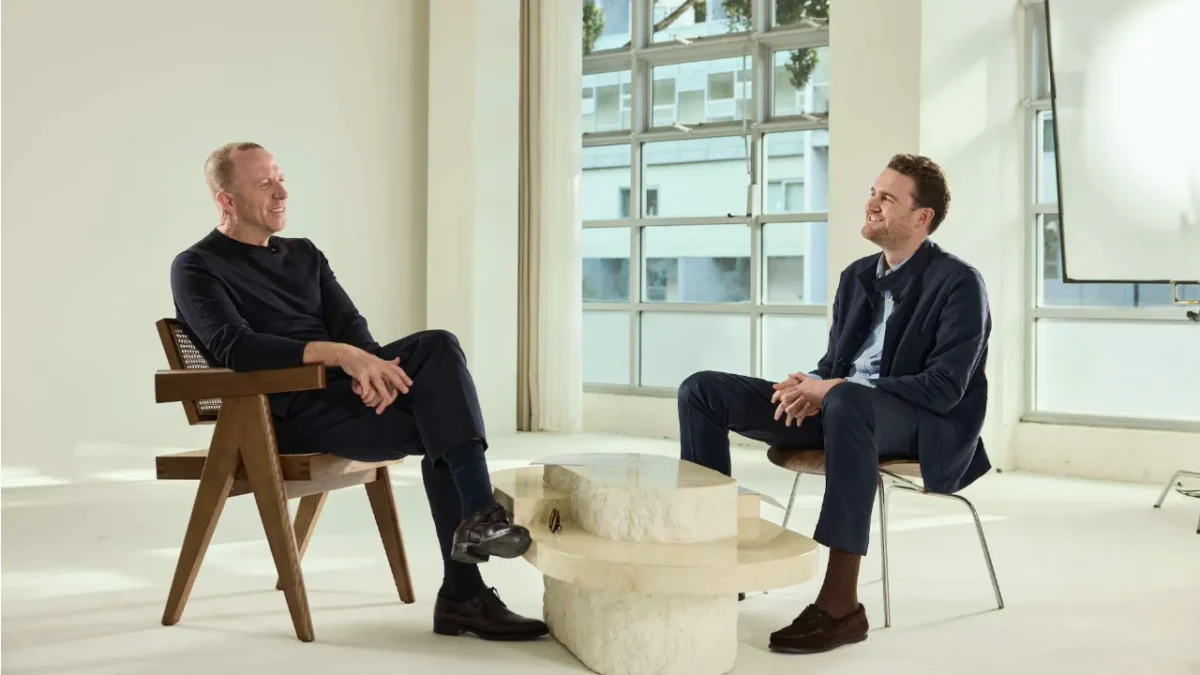
In a YouTube conversation with BresicWhitney founder and director Shannan Whitney, Will said the industry’s tendency to prioritise agents could shift attention away from the property and customer towards building the profile of the individual salesperson.
Asked by Shannan about the difference between a brand for an agent and one built for the customer, Will said the distinction came down to what was being put at the centre of the business.
“So to me, a brand that’s going beyond agent centricity is much more focused on the property representation than it is on the agent representation,” Will said.
“And I think rightly or wrongly the industry tends to swing more towards agent prioritisation.”
The appeal of that model for agents was understandable, he said, particularly when representing clients could also help build their own public profiles.
“There’s an interesting dynamic at play there where you’re able to effectively utilise your clients to build your own profile and personality,” he said.
“And I think that’s very alluring and tempting for agents in the industry.”
Rather than simply watching what competitors were doing and following suit, Will argued agencies had an opportunity to reconsider how they represented homes and where they directed their marketing effort.
“And again, I observe most agents focused on what so and so down the road might be doing and how do we do that?” he said.
“I come back to the point before about representing properties or bringing homes to life in the highest possible way as something that most the industry probably doesn’t understand at times.”
Property and communities also offered agencies a way to connect with an audience beyond those interested in following a particular agent or personality.
“Property to me is a much more sustainable channel through which you can engage on a deeper level with your communities and your customers,” Will said.
Shannan agreed that the distinction between an individual agent and the wider brand was becoming more apparent to consumers, particularly as their expectations were shaped by the services and brands they encountered in other areas of their lives.
“I do think the customer can see the difference,” Shannan said.
“And I think that the gap between an individual agent or the role or the value of an individual person, versus what a brand can bring at a customer point of view. I think that that is really clear now and getting wider and wider.”
He said customers increasingly expected more from the organisations behind the individual providing the service.
“I think that the customer wants that more and more. They’re getting that more and more in other parts of their life and other services that are on offer in other industries,” Shannan said.
The discussion also highlighted what Will sees as the two areas capable of differentiating BresicWhitney over the longer term: its people and its brand.
“Within the context of our business specifically and the world that we’re entering into at the moment people and brand are ultimately the two things that I feel do offer a point of differentiation into the future,” he said.
“And if we’re not focused very keenly on those two avenues and making sure that those avenues are continuously improving and getting better every day, then I don’t think in five, 10, 20 years we’re going to be having a similar conversation.”
Building a business that is not for everybody
That clarity of identity also extends to recruitment, with Will arguing that trying to create an organisation that appeals to everyone would ultimately weaken what the business stood for.
“I don’t think [BresicWhitney] is all things to all people and I think that’s a good thing,” he said.
“And by default of that you attract people, but you also have to separate and part ways with people at a certain point as well.”
For those suited to the environment, he said the opportunity was to be challenged and exposed to experiences they may not otherwise encounter during their careers.
“And if it’s not for you, that’s completely okay. And you may not actually enjoy the environment very much,” Will said.
“So for me personally, I’m comfortable that we’re not for everybody.”
But attracting the right people also meant looking beyond the industry’s conventional talent pool.
“To me, if we aren’t considering talent from different channels, different avenues, we’re going to be very limited in what we’re able to do,” Will said.
“And to me, it’s the combination of all those people, all those skills, all those different ways of thinking that actually contribute to you having a thriving and forward-thinking organisation.”
That diversity of experience, he argued, becomes particularly valuable when businesses are trying to address challenges the industry has historically struggled to resolve.
“Having not only a diverse team, but diverse ways of thinking is crucial to the success of the business into the future,” Will said.
“So my summary would really be going down the traditional industry channels to solve problems that the industry hasn’t typically been good at solving doesn’t make a huge amount of sense.”
For Shannan, the experience of founding and building BresicWhitney had reinforced how closely the quality of a business was tied to the quality of its people.
“You learn very quickly some of those comments and sayings that you continue to hear about businesses, it’s only as good as its people,” he said.
“You realise very quickly that that’s actually really true.”
The challenge, he said, was then to create the kind of brand and culture capable of attracting talented people in the first place.
“I think the great challenge was what sort of brand do you want to have and what sort of culture do you want to have if you are absolutely serious about getting talented people in your business?”
“It’s a really important question and I guess we asked that question very early on.”
That opportunity extends beyond sales, with Shannan pointing to finance, operations, property management, creative and communications as areas where people with different skills could build careers within the organisation.
His ambition was for those people to eventually look back on BresicWhitney as somewhere that had contributed meaningfully to their professional development.
“People will walk away and say, ‘That was great experience. I learned a lot there. I furthered my career. It was a great place.’”
“And I’d love to think that we can continue to provide that platform for people.”
For Will, those functions are also central to what an agent ultimately receives from the business, creating an infrastructure around salespeople that can be difficult to understand until they have experienced it.
“They create an infrastructure around an agent, which is hard to explain to people at times until they’ve experienced it. I think this has contributed to the tenure in our sales team,” he said.
“It’s very hard not to have those resources around you.”
Rather than seeing investment in different disciplines as separate from the sales function, Will said the two were intrinsically connected.
“Diversity, creativity, different thinking in the people that we have in our business actually contributes to the health and the success of the agent ecosystem.”
This conversation is part of a five-part video series published by BresicWhitney featuring founder and director Shannan Whitney and CEO Will Gosse.