

Real estate has long measured success in moments. The listing. The auction. The settlement. But according to Mosaik founder Sheila Reddy, those moments are no longer where the outcome is truly decided.
“The assumption is that once a property settles, the relationship is finished,” she says. “In reality, that’s where most of the opportunity is lost.”
Mosaik is a client experience platform designed to change that pattern. Rather than operating as a traditional CRM, which focuses on tracking leads and managing pipelines, it is built to extend the relationship between agent and homeowner well beyond the transaction itself.
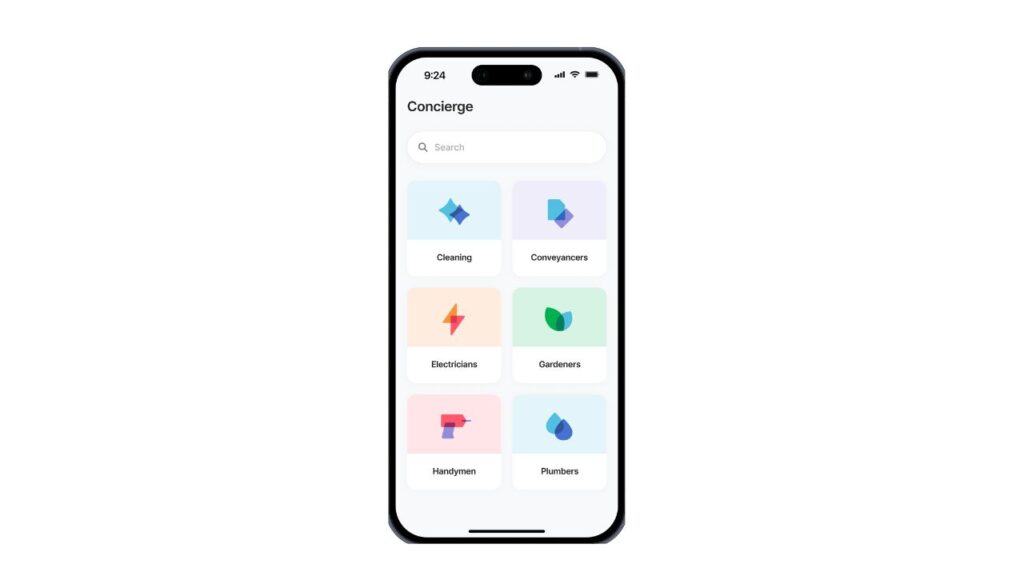
Each property becomes a living profile inside the system, with the agent remaining connected through automated, property-specific communication and ongoing support tools.
In practical terms, that means the relationship does not fade after settlement. It continues quietly in the background through relevant updates, reminders and insights tied directly to the home.
Ms Reddy says this is where most agencies unknowingly leak future business.
“We’ve seen situations where a significant portion of past clients have already sold again without the original agent being involved,” she says.
“Not because the relationship was bad, but because it simply wasn’t maintained.”
Traditionally, agents rely on periodic contact to stay present in a client’s life. Market updates, newsletters or the occasional check-in are still the norm.
But Ms Reddy argues those approaches are increasingly ineffective in a saturated communication environment.
Instead, Mosaik structures what she calls “value delivery points” – ongoing interactions that are triggered by the property itself rather than generic marketing cycles.
These can include council reminders, maintenance prompts, insurance renewal alerts or seasonal property guidance. The intent is not frequency alone, but relevance.
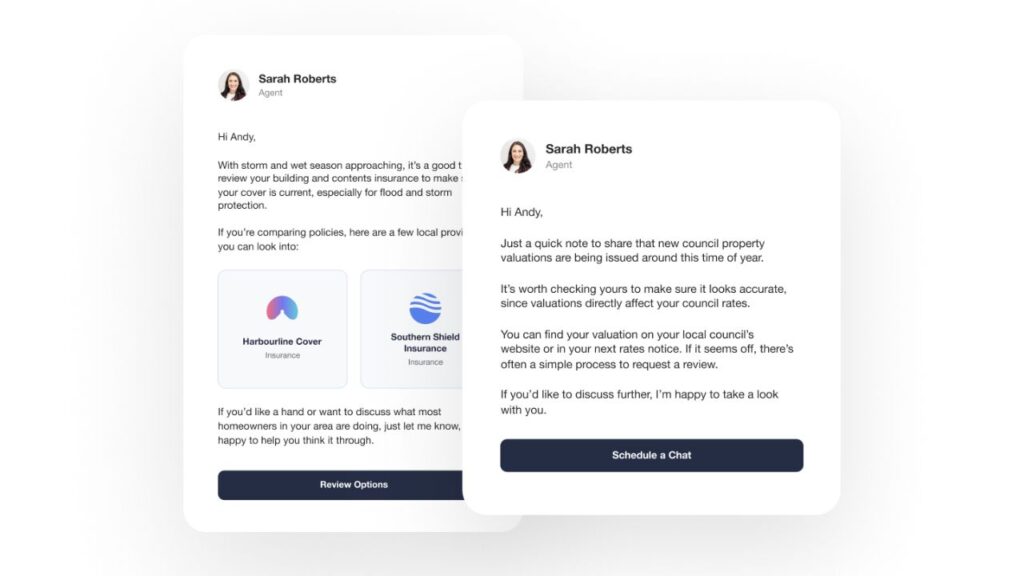
“If you’re sending something that is tied to the actual property someone lives in, they pay attention,” she says. “It’s no longer just another message in their inbox.”
The effect, she suggests, is subtle but powerful. Over time, the agent is no longer remembered as someone who sold a house, but as someone who continues to help manage it.
That shift becomes particularly important when homeowners eventually re-enter the market.
In many cases, she says, they do not actively search for an agent they once worked with. They default to whoever is most visible at the time.
“If you are not already embedded in their decision-making process, you are relying on chance,” she says.
That presence also matters earlier in the cycle, when homeowners begin reassessing their property and inviting agents in for appraisals. In those moments, selection is still active; clients are interviewing, comparing, and forming shortlists.
Ms Reddy says agents who have remained embedded in ongoing property support are not starting from scratch at that point.
“They’re not being rediscovered as agents,” she says. “They’re already positioned as part of how that homeowner manages their property.”
But she says that the same positioning advantage does not only apply to long-term clients. It can also be created at the appraisal stage itself, even where there is no existing relationship.
The opportunity, she argues, is for agents to leave an appraisal not just as a moment of valuation or pitch, but as the start of an ongoing support framework around the property.
In that context, the agent is not relying on immediate listing decisions; instead, they remain present in the homeowner’s thinking through structured, property-specific follow-up and guidance that continues after the appointment.
Ultimately, Mosaik is designed to address that gap by keeping agents present during the long period between transactions – a phase that, in many cases, can stretch across years.
It is also where referrals tend to originate. Rather than waiting for clients to introduce friends or family at the point of sale, agents using the platform are able to remain connected to a wider network of property owners through those existing relationships.
In effect, the agent’s sphere of influence expands without additional outbound outreach, creating what has been described as “leapfrog referrals.”
The idea is that instead of relying only on direct, transactional connections, agents are introduced beyond their immediate network through second-layer relationships.
For example, a past client may only know a small number of people actively selling property, but they may know many more who are not currently in the market; while those individuals may not traditionally be referred because they are not transacting, each of them still has their own wider network of contacts.
By positioning themselves as a broader property ownership support resource, agents create a reason for clients to introduce them to those non-transacting contacts – effectively “leaping” across to the next layer of referrals and unlocking further introductions through each network level.
“You are no longer just hoping for referrals,” Ms Reddy says. “You are maintaining visibility across the network that generates them.”
The broader implication is that client care is no longer a support function; it is a competitive mechanism that determines whether an agent is remembered at all when the next property decision is made.
And in a market where ownership cycles are lengthening and decisions are becoming more complex, she says that visibility is everything.
“The agent who stays present through ownership is the one who gets the next listing,” she says.
“Everyone else is competing for attention again from scratch.”
For more information about Mosaik and its Australian rollout, visit mosaik.io/australia