
You know how industry conferences normally go.
You arrive. Find the registration desk. Stick on a name badge. Make eye contact with someone you vaguely recognise from LinkedIn and spend the next 30 seconds trying to remember whether you’ve actually met before.
Grab a coffee. Find your seat. Open a fresh notebook with the very best intentions.
Then, if we’re being honest, there’s a fair chance those notes end up back at the office beneath a pile of everything else demanding your attention.
That’s often the conference experience people expect.
The BDM Summit 2026 was designed to be a little different.
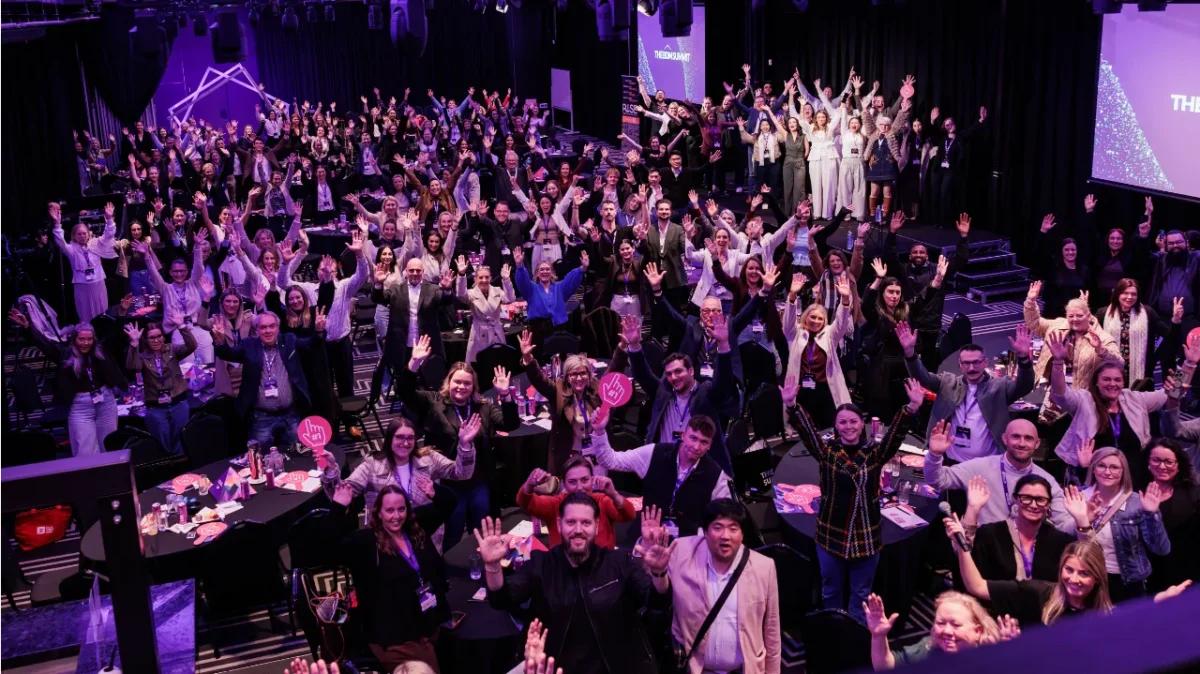
And if you weren’t at Doltone House in Sydney on 24 July, here’s what you missed.
8:30AM: “I’m just here for a conference.”
The room filled with business owners, BDMs, property managers and leaders who had travelled to spend a full day focused on one thing: rent roll growth.
But from the outset, co-founders Sarah Cincotta and Hermione Gardiner had built the day around a bigger question than simply, “How do we get more leads?”
Through years of working with property management businesses and teams, they had seen growth stall for all kinds of reasons.
Sometimes the opportunity is there, but the confidence isn’t. Sometimes an agency delivers exceptional service but struggles to articulate why it is worth the fee. Sometimes leads are coming in, but the sales conversation isn’t converting. And sometimes there is a database full of future clients receiving very little meaningful follow-up.
The Summit was designed around those gaps.
Not six disconnected presentations, but six different parts of what it actually takes to grow.
What you expect from an industry event versus what happened
The familiar conference formula is simple. A speaker shares what worked for them, you take notes, and you promise yourself you’ll implement it when you get back to the office.
Then Monday happens.
At The Summit, attendees were asked to do more than listen. They were challenged to look at their own beliefs, processes, conversations and behaviours while they were in the room.
The market has changed. Landlords have more information, more choice and more ways to research an agency before making contact. Fee pressure is real, competition is strong and simply telling a team to “make more calls” is no longer a complete growth strategy.
So the question throughout the day became less about doing more and more about getting better across the entire growth journey.
Six speakers. Six different shifts.
Andy Nunn opened the day by challenging attendees to rethink what they believed was possible for themselves.
Before the scripts, systems and strategies came a more confronting question: have you already put a ceiling on what you think you can achieve?
His session shifted the conversation towards possibility, self-belief and the assumptions that can quietly shape performance before the numbers ever reveal them.
For some people in the room, the first big takeaway of the day wasn’t tactical at all.
It was permission to think bigger.
Sarah Cincotta then moved into one of the most commercially important conversations BDMs face: value and fees.
In a market where fee pressure is constant, Sarah challenged attendees to stop thinking about the fee as something that needs to be defended and start getting much clearer on the value behind it.
Property management is not simply a collection of tasks. Agencies provide expertise, advice, risk management, communication, compliance support, problem-solving and protection of an investor’s asset.
But if the people selling that service cannot clearly articulate its value, it becomes much harder to expect a prospective client to see it.
Sarah’s session helped attendees identify the outcomes they create for clients and communicate them with greater conviction.
Because the fee conversation starts well before someone asks, “Can you do it cheaper?”
It starts with knowing exactly why your service is worth what you charge.
From there, Marie Fitzpatrick turned the room’s attention to sales and conversion.
For many people in property management, selling can still feel synonymous with scripts, pressure and becoming a version of yourself that feels slightly unnatural.
Marie offered a different approach.
Better selling starts with better conversations. Asking stronger questions. Listening properly. Understanding what the prospective client actually needs and being able to guide the conversation towards a decision.
Her session reframed conversion as something less transactional and more human, while still keeping the commercial outcome firmly in sight.
Hermione Gardiner then challenged the way attendees thought about the marketing journey itself.
The traditional picture of a landlord seeing your agency, enquiring, booking an appraisal and signing neatly on the dotted line rarely reflects how people make decisions today.
They research. Compare. Watch your content. Ask other people. Disappear. Come back months later.
Sometimes they have been paying attention to your business for far longer than you realise before you ever know their name.
That means marketing cannot only focus on getting someone to book an appraisal today. It needs to build familiarity and trust long before they are ready to make a decision.
One analogy from the session captured it particularly well: asking a landlord to book an appraisal before you have built any trust can feel a little like asking someone to come home on the first date.
It got a laugh, but the point landed.
There is an enormous part of the future pipeline sitting between “never heard of you” and “ready to sign”, and agencies need a plan for those people too.
Adam Joske followed with a timely reminder that while technology and consumer behaviour keep changing, some fundamentals still matter just as much as they ever did.
Relationships matter. Staying in touch matters. Knowing the people in your database matters.
In a world of automation, AI and increasingly sophisticated marketing technology, Adam brought the conversation back to disciplined relationship building and database management.
A database is not just a list of names inside software. It is a collection of relationships, and when those relationships are nurtured consistently, they can become one of the most valuable growth assets in a business.
Annalise Macarthy closed out the speaker journey with confidence.
Because eventually, no matter how good your marketing, your value proposition or your database is, somebody still has to have the conversation.
How you show up matters.
Her session challenged attendees to look at confidence as something that can be built, practised and strengthened. The way you communicate, carry yourself, respond under pressure and back your own expertise influences the response you get from other people.
The takeaway was bigger than simply “feel more confident”.
Show up differently, and you can create different results.
Then the pieces started connecting
By this point, the bigger lesson of the day was becoming obvious.
Mindset influences what you believe is achievable. Understanding your value changes the fee conversation. Sales skills improve conversion. Marketing builds trust before the enquiry. Relationships keep future clients connected. Confidence affects how well you execute all of it.
Growth is not one skill.
And by the middle of the day, the notebooks in the room had started looking less like passive note-taking and more like working documents.
Ideas were being circled. Processes were being questioned. Actions were being written down. Team members were turning to each other mid-session with a quiet, “We need to change that.”
That was the point.
The goal wasn’t for people to walk out saying they had heard some good speakers.
It was for something to actually change.
One attendee shared that after working through the value-stack concept, she went straight back to the way her agency was presenting itself across its website and social media.
The value they had identified during the session wasn’t reflected clearly enough in their current messaging.
So she started changing it.
“I started working on the value stack, then looked at our website, socials and the message we’re delivering. I’m excited about taking that voice across our website and socials.”
That’s the difference between writing down an idea and using one.
The part you can’t put neatly on an agenda
Then there were the conversations happening away from the stage.
A BDM comparing notes with someone from another market. A business owner discovering that the growth challenge they had been wrestling with wasn’t unique to them. Someone meeting a supplier who could solve an issue their team had simply learned to live with.
That’s why “networking” has always felt like an inadequate word for what happens when the right people are put in a room together.
Sometimes the five-minute conversation over coffee is the thing you remember six months later.
By 5PM, the question had changed
At the start of an event, the question is often, “What am I going to learn?”
By the end of The BDM Summit, the more useful question was, “What am I going to do differently?”
For some, that meant aiming higher.
For others, it meant changing how they communicate their value, approaching sales differently, rethinking their marketing journey or rebuilding relationships inside their database.
And for some, the biggest change was more personal.
One attendee described the day simply:
“It was life-changing.”
One of his biggest takeaways was learning to take fear with him rather than allow it to work against him, while also communicating more directly, backing himself in conversations and continuing to knock on doors.
That is bigger than a notebook full of ideas.
That is a shift in behaviour.
So, did you miss it?
One full day. A sold-out room. Six different conversations about growth, all leading back to the same thing: doing something differently when you return to the business.
The Summit has now sold out three years running.
Which brings us to the slightly painful part if you missed 2026.
There is no replay button for the room itself.
You can see the photos. Read the takeaways. Hear about what attendees changed afterwards.
But there is something different about being there while those conversations are happening.
The first tickets for 2027 have already been secured through pre-sale, with more announcements about next year’s Summit coming soon.
The intention is to make 2027 bigger and better again, while keeping the thing that matters most: the right people, the right conversations and an expectation that what happens in the room doesn’t stay in the notebook.
So yes, maybe you missed this one.
Just don’t be the person reading the 2027 wrap-up thinking the same thing.
Join the 2027 waitlist and be first to hear what’s coming next.