
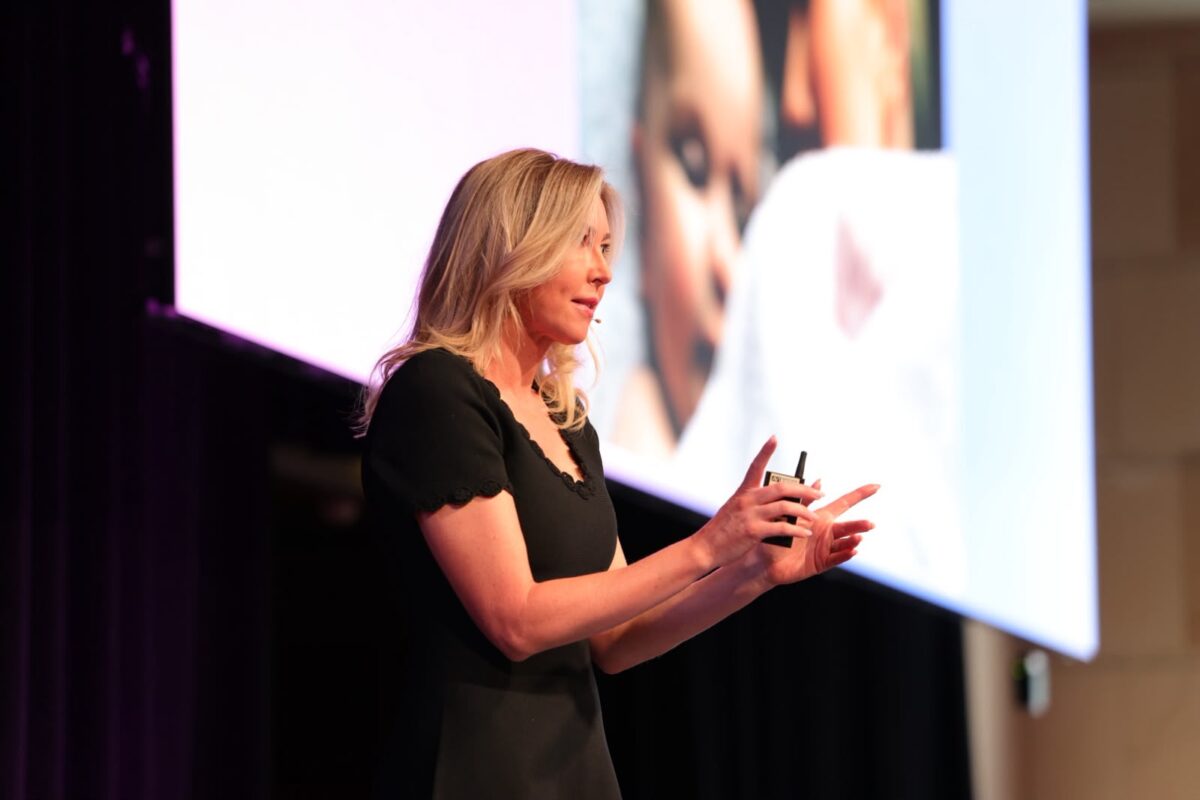
Chelsea Pottenger asked property managers at PM/ONE to put a deliberate pause between a demanding workday and the people waiting for them at home.
The same pause, she said, could help them move from a difficult conversation into their next meeting with a calmer response.
It was a practical starting point for a session about sustaining performance: build small resets into the day, give yourself room to learn, and choose one habit you can put into practice.
The EQ Minds founder brought that message to PM/ONE 2026 in Sydney, drawing on her work in mental health and her own experience of changing how she lived and worked.
She invited delegates to think of the session as a buffet; they could choose the tool that suited them and begin there.
Put a pause between conversations
Chelsea described a brief breathing exercise she uses when she wants to respond more calmly, whether at work or at home.
She demonstrated a long inhale followed by a shorter inhale and an audible exhale, then led delegates through the exercise.
Her suggestion was to use that moment as a transition: after an interaction that had unsettled them, before the next meeting, or before walking through the front door.
For property managers giving so much of themselves through the working day, she wanted the people at home to receive a calmer, more mindful version of them.
Give the morning a different starting point
Chelsea’s “Five for Five” challenge asked delegates to try five changes to their morning routine for five days.
The first was to replace a harsh, beeping alarm with a sound they preferred, such as music or nature sounds.
The second was to put the phone down instead of beginning the morning by scrolling.
From there, she suggested thinking of three things they were grateful for, setting a positive intention for the day, and getting outside into the morning light, with a walk if possible.
She asked delegates to notice how they felt after trying the routine.
Chelsea used her own morning as an example of gratitude: an early ocean swim at Bondi with a friend, and appreciation for being able to see and enjoy it.
Health, family, and animals all came up as delegates shared what they valued.
Her invitation was to do something with the ideas they heard.
“Because knowledge is only powerful if we do something with the knowledge,” she said.
Follow “yet” with an action
Chelsea also asked delegates to think about something they believed they were not good at.
For some in the room, that meant saying no. For others, it meant switching off at home.
She encouraged them to add “yet” to that assessment, opening up the possibility of improvement.
“What yet does is it takes the full stop off your potential, and it says that success still lies ahead,” she said.
Chelsea traced the lesson to her basketball coach, (as a teen, she played in the same team with Australian basketball icon Lauren Jackson) who paired that belief in her potential with a different approach to training.
The change involved early practice, adjustments to her training routine, and sustained effort. The word gave her a way to see what was possible; the work gave her a way to move towards it.
She asked delegates to make the same connection between their own limiting belief and a practical next step.
Someone who wanted to improve at public speaking, for example, could practise more regularly, record themselves, or join a group such as Toastmasters.
“Practice makes progress,” she said.
It was a lesson she encouraged delegates to share with children and younger people, helping them see a skill they had yet to develop as something they could work on.
Make connection part of the work
Chelsea closed by bringing the focus back to how people treat one another.
As technology develops, she said, looking someone in the eye, showing empathy, offering kindness, and connecting with other people remain valuable human abilities.
She linked that connection to trust within a workplace and people’s willingness to help each other.
For property managers, her question was what someone felt after an interaction with them.
She asked delegates to choose one tool from the session and share it with someone they cared about.
“When we take care of ourselves, it’s not selfish. It’s actually self-preservation,” Chelsea said.
Actionable
- Pause between demanding conversations before moving into the next meeting.
- Try Chelsea’s five morning habits for five days.
- Add “yet” to a skill you want to develop.
- Follow that intention with a specific action to practise.
- Share one useful tool with someone you care about.