
Giving someone an AI tool can help them finish a task faster. Getting that work through the rest of the business takes a broader approach, according to REA Group Chief Technology Officer Steve Maidment.
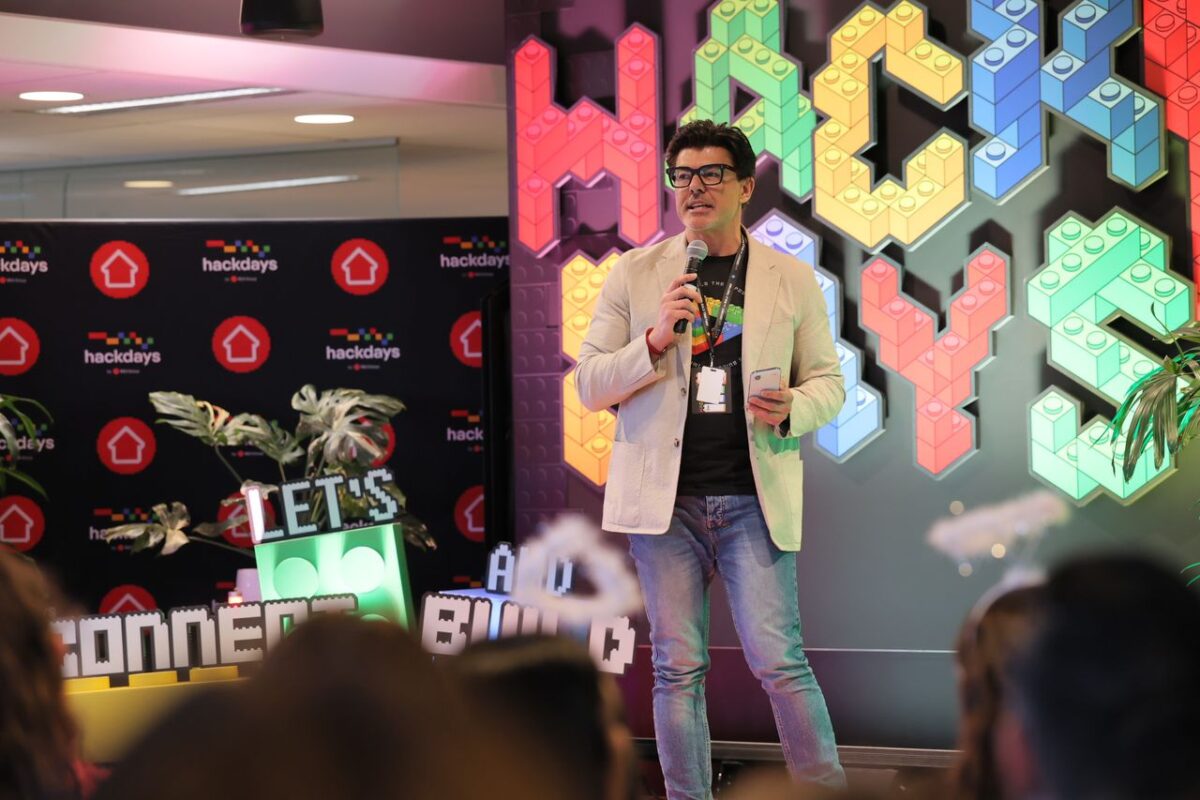
Speaking to Elite Agent at REA’s 2026 Hackdays, Mr Maidment said the company was looking at the whole process between committing to an idea and delivering something useful to a customer.
REA calls that measure “speed to value”, and it sits at the centre of an internally developed program called FlowLab.
The program grew out of experiments with AI tools and the observation that individual productivity gains could expose delays elsewhere in a team’s work.
“If one person’s going faster but the rest aren’t, you’re not actually seeing the value up the other side,” he said.
For a technology business, that means looking beyond how quickly code is written. Product management, design, code review and deployment all play a part in determining when a customer can use the result.
Mr Maidment said REA had been working on those surrounding activities as well as the development itself, while retaining guardrails around quality.
The additional capacity could then support work in areas such as commercial property and new homes, including ideas raised by customers at Hackdays.
That connection between improving the process and delivering something useful was also evident in the customer projects developed during the event, held in Melbourne from 7–10 September.
He said the judging considered the impact an idea could have on customers and whether it could be built and delivered.
One example was Agent Angel, a prototype developed with Ray White Upper North Shore to address rental enquiries and inspection scheduling.
Hearing directly from a customer about the repetitive work involved helped make its potential value clear, he said.
For a smaller agency, that type of task could occupy a significant share of one person’s day; reducing the burden could create time to work on the business.
The same attention to how people actually work is informing another idea REA is exploring: pairing a researcher with an AI engineer inside a customer’s office.
Mr Maidment described a possible approach in which the researcher would observe the work being done and document the process, while the engineer considered how technology could help solve the problem.
It remains an idea under consideration, rather than an announced customer program.
The attraction, he said, was the opportunity to rethink a process more broadly. Someone immersed in a daily task may understandably focus on making that particular task easier, while an observer can bring a different perspective to how the work is organised.
“They’re not rethinking the process in the office,” he said of the tendency to concentrate on automating individual tasks.
“So that’s something we’re playing with as an idea.”
For agency leaders assessing AI, his experience at REA provides a useful lens: follow the work through to the customer and consider where it still waits, needs input, or passes to another person.
Mr Maidment illustrated the problem with a distribution analogy. Speeding up the conveyor belts achieves little if the goods still cannot leave the dock.
“People want to get their stuff quicker,” he said.