
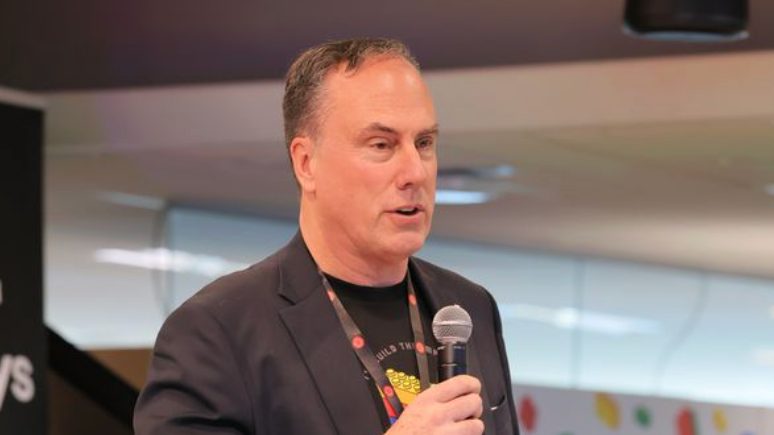
Artificial intelligence can help an agent prepare for a listing presentation, find information and improve the quality of a lead. But REA Group CEO Cameron McIntyre believes the trust that underpins a property transaction will continue to come from people.
Speaking to Elite Agent at REA’s Hackdays in Melbourne, Mr McIntyre said the opportunity was to make agents more effective by taking time-consuming preparation out of their working day.
“Agents have built trust over decades,” he said.
“They’ve built their brands on trust. They’ve built their personal relationships on trust.”
For Mr McIntyre, the complexity and significance of buying a property make that relationship especially important. Clients need confidence in the person guiding them through the transaction, even as more of the work surrounding it becomes automated.
“Trust can’t be replaced by AI,” he said.
He pointed to campaign preparation, talking points and information for a vendor presentation as areas where automation could support an agent before they walk into a client’s living room.
Search and discovery were other opportunities, alongside improving the quality of leads so agents could spend their time on more productive conversations.
Mr McIntyre said the benefit would come through the way agents used that additional capacity.
“It will mean that they’re spending their time on more valuable activities than on non-valuable activities,” he said.
His comments came as selected customers worked alongside REA teams to develop ideas addressing challenges in their businesses.
Held from 7–10 September at REA’s Melbourne headquarters, the 2026 Hackdays program brought 10 customers into the full experience, giving them the opportunity to work directly with the people designing and developing potential solutions.
Mr McIntyre said that direct contact was valuable for engineers who might otherwise hear about a customer’s experience through someone else.
Working alongside customers gave the teams access to the detail behind a problem: how it occurred, where it interrupted someone’s day, and what resolving it could mean for their business.
“They’re actually talking to customers and hearing about real-world problems,” he said.
He said he liked seeing engineers close to the frontline, whether that meant sitting alongside customer service staff, spending time with the field team, or hearing from customers themselves.
That understanding also shaped how he approached judging the Hackdays ideas.
Asked what he would look for, Mr McIntyre identified the potential to bring an idea to market quickly and the size of the customer problem it could address.
The two considerations were connected: a useful idea needed a path into customers’ hands, while the prospect of seeing their work make a difference helped motivate the people building it.
For agents, that puts the focus on the work a tool can help them do and the client experience it can improve.
Mr McIntyre’s example of better-quality leads captured that approach. The technology’s contribution would be to help an agent use their time more effectively and improve their opportunity to convert an enquiry into business.
The relationship at the centre of that opportunity remained personal.
“I don’t think AI can replace the trust that an agent brings,” he said.