
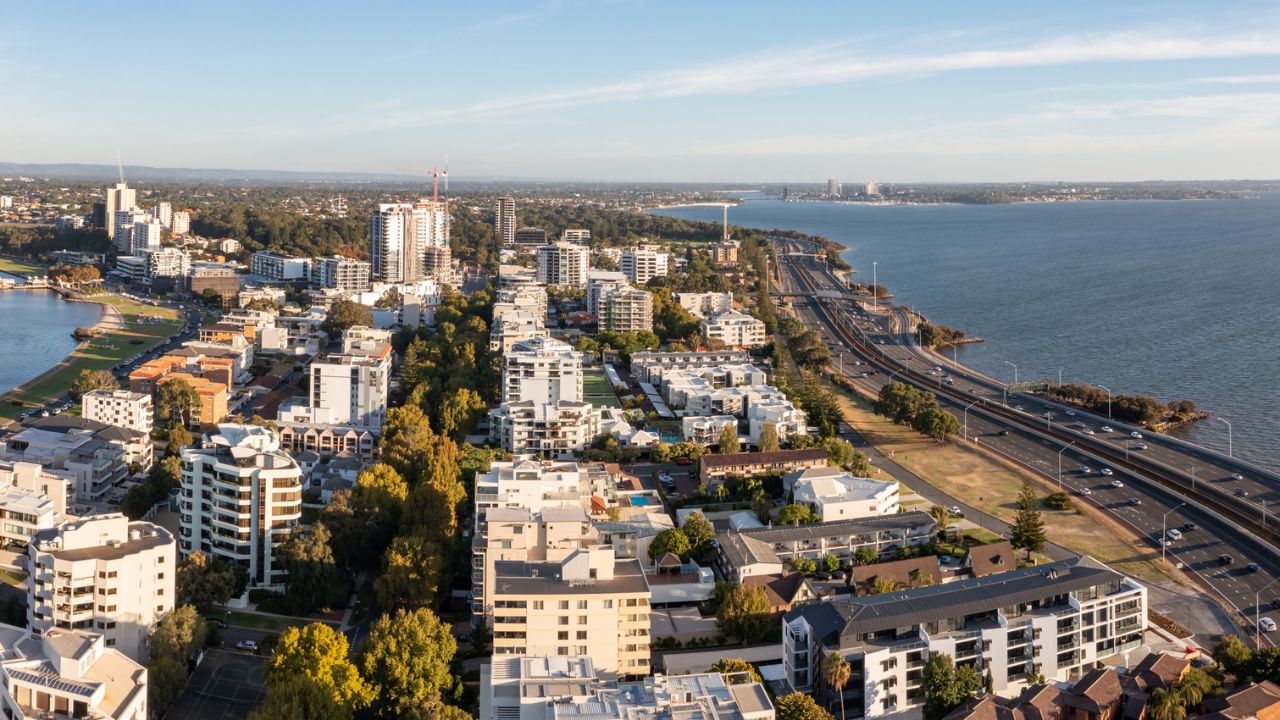
Perth has officially joined Australia’s so-called “million dollar club”, with the city’s median house price climbing to $1,087,762 after a 9.9 per cent rise over the December quarter, according to Domain’s latest House Price Report.
The milestone makes Perth the sixth capital city to record a median house price above $1 million, following Adelaide’s entry earlier this year.
Domain President Jason Pellegrino said Perth’s rise reflects a broader shift in the national housing market, driven by population growth and economic strength in Western Australia.
“Perth’s entry into the million-dollar club highlights the scale of change underway in Australia’s housing market,” Mr Pellegrino said.
“The city’s strong appeal as a place to live, work and invest, combined with the state’s economic strength and liveability, has attracted new residents at record pace, making Western Australia the nation’s fastest-growing state.”
While the headline figure marks a significant moment for the city, it also underscores growing affordability pressures, particularly for first home buyers.
Since 2019, entry-level house prices in Perth have increased by 74.3 per cent, adding around $275,000 to the cost of buying.
Over the same period, the share of household income required to service a median mortgage has climbed sharply, from 22.3 per cent to 39.5 per cent.
Perth’s path to a $1 million median has been decades in the making.
Domain data shows the city’s median house price rose from $143,394 in 1994 to $528,779 in 2019, before more than doubling in the years since.
Recent growth has been particularly pronounced in outer and traditionally more affordable suburbs.
More than 50 Perth suburbs have seen house prices double over the past five years, including Orelia, Parmelia, Coolungup, Armadale and Merriwa.
The city’s relative affordability compared with other capitals has also narrowed dramatically.
In 2019, Perth house prices were 41.5 per cent cheaper than Melbourne.
Now, that gap has shrunk to just 2.1 per cent, while Perth unit prices now slightly exceed those in Melbourne.
Housing affordability pressures are also showing up in ownership rates.
Home ownership among 30 to 34-year-olds in Western Australia has fallen from 67 per cent for those born between 1947 and 1951 to 56 per cent today, with further declines expected if prices continue to rise.
Domain’s Chief of Research and Economics, Dr Nicola Powell, said the price growth is increasingly shaping how buyers approach the market.
“Rapid price growth has pushed home ownership further out of reach for many buyers, forcing tougher trade-offs and longer saving times,” Dr Powell said.
“While price growth is expected to moderate, affordability challenges will persist unless housing supply improves.”
Dr Powell said Perth still offers comparative advantages for buyers willing to adjust their expectations.
“Despite reaching the $1 million milestone, Perth continues to offer relative value compared to other capitals, supported by higher-than-average wages and shorter saving timeframes for first-home buyers,” she said.
“Flexibility will be key, whether that means buying further from the CBD, choosing smaller homes, or considering units and townhouses.”