
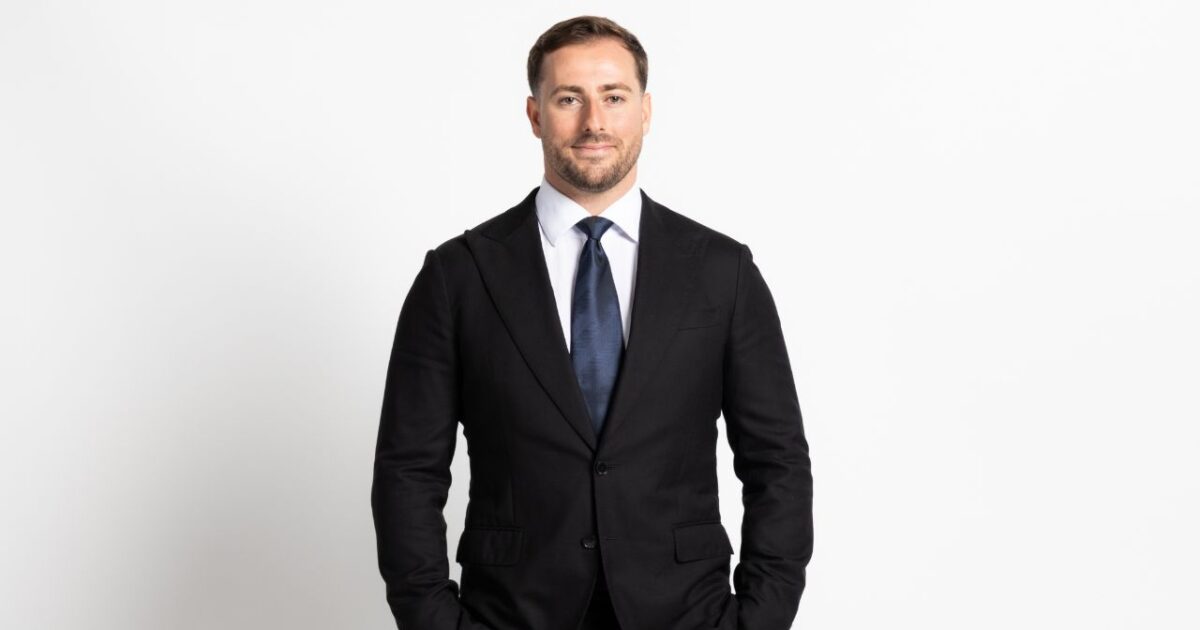
The Gold Coast property market is being reshaped by sustained interstate migration, tightening housing supply and rising demand for luxury coastal living, with industry leaders pointing to long-term structural pressures rather than short-term cycles.
South East Queensland is expected to require close to 900,000 new homes by 2046 to accommodate population growth of about 2.2 million people, according to Queensland Government planning projections under the South East Queensland Regional Plan.
Managing director of Highland Gold Coast, Hanan Cawley, says the imbalance between population growth and housing delivery is now the defining feature of the market.
Hanan says demand has been fundamentally reshaped since COVID, when remote work enabled buyers to reassess where they wanted to live.
“What I saw through COVID was a huge shift,” he said. “People realised if they could work from home, then where did they actually want to live? For a lot of people, the answer was the Gold Coast.”
He said the early pandemic period accelerated interstate purchasing activity, particularly from Sydney and Melbourne.
“Everyone just started buying from Sydney and Melbourne. A lot of it was over FaceTime or video,” he said. “And once people experienced the lifestyle here, they didn’t leave.”
Luxury market setting price benchmarks
While demand has lifted values across most segments, Hanan says the luxury apartment and beachfront market is increasingly shaping broader pricing benchmarks.
“People selling in Sydney might be selling for anywhere from $50,000 per square metre up to $100,000 in blue-chip markets,” he said.
“On the Gold Coast, the highest recorded is around $34,800 per square metre for a beachfront unit. That gap means they can sell there, buy something better here, and still put money aside.”
He said that capital migration continues to underpin demand in prestige developments, particularly along the beachfront and in lifestyle precincts.
“That market is still incredibly strong,” he said. “There’s more urgency there than we’ve seen in a long time.”
Coastal strip effectively land constrained
According to Hanan, the most supply-constrained part of the Gold Coast market is now the coastal strip east of the Gold Coast Highway.
“If someone wants to develop there, they have to knock down existing buildings and start again,” he said. “The time, cost and complexity is enormous.”
As a result, attention is shifting to what he describes as fringe growth suburbs including Southport, Labrador, Carrara, Nerang and Coomera.
“Those suburbs are not necessarily blue-chip yet, but they’re moving in that direction very quickly,” he said. “And they’re still within 15 minutes of the beach.”
Undoubtedly, he says, the Gold Coast’s long-term trajectory remains firmly upward, supported by population growth, infrastructure investment and the lead-up to the 2032 Olympic Games.
“I think there’s every chance the market could double again over time,” he said. “Every market is driven by supply and demand. If more people want something, prices go up – it’s very simple.”
“For as long as there’s little land available, which we know is the case on the Gold Coast, and the population keeps growing, it’s a recipe for continued growth.”
He says previously overlooked suburbs are already being reassessed by the market.
“Only a couple of years ago people didn’t want to consider Southport,” he said. “Now it’s one of the best suburbs to invest in on the coast.”
From commercial fishing to real estate leadership
Hanan’s path to the Gold Coast property market began in New Zealand, where he left school at 15 to work on commercial fishing boats.
“I worked on about 14 different fishing boats across New Zealand,” he said. “It taught me how to work hard, first and foremost, and definitely toughened me up.”
After moving to Australia without a job lined up, he entered real estate through cold calling before building a sales career in Toowoomba, later relocating to the Gold Coast.
“I worked seven days a week for four and a half years in Toowoomba,” he said. “A lot of people see the Gold Coast chapter, but the groundwork was laid long before that.”
He says the most important lesson from his career is that performance is closely tied to lifestyle discipline.
“Your lifestyle outside of work will be the biggest contributor to your success or failure,” he said.
“If you live a healthy, clean lifestyle, exercise, read, and focus on personal development, it directly impacts your business. If you’re distracted or not aligned, it shows in your results.”