
Australia could be approaching a new wave of branded residential development, with new Knight Frank research identifying Sydney, Brisbane and the Gold Coast as markets particularly well placed to capture demand from increasingly mobile wealthy buyers.
Knight Frank’s The Residence Report 2026/27 found the global branded residence sector has almost tripled in size over the past decade, rising from 354 schemes in 2015 to 903 at the end of 2025.
The market is expected to pass 1,000 developments this year, reaching about 1,088 schemes and more than 170,000 units, before approaching 1,800 schemes and 300,000 units by 2031.
The expansion comes as the residential portfolios of ultra-high-net-worth individuals (UHNWIs) – defined by Knight Frank as people with a net worth of at least US$30 million – have grown from an average 2.9 properties to 3.8 in less than a decade.
For the Australian development industry, however, one of the report’s more significant findings is how little of that global growth has so far been captured locally.
Adam Ross, Head of International and Private Clients at McGrath Estate Agents, Knight Frank’s Australian residential partner, said Australia had the fundamentals to support considerably more branded development.
“Australia has globally recognised lifestyle destinations, growing wealth and strong demand for premium residential product, yet the branded residences sector remains relatively immature when compared with markets throughout Asia, the Middle East, Europe and North America.”
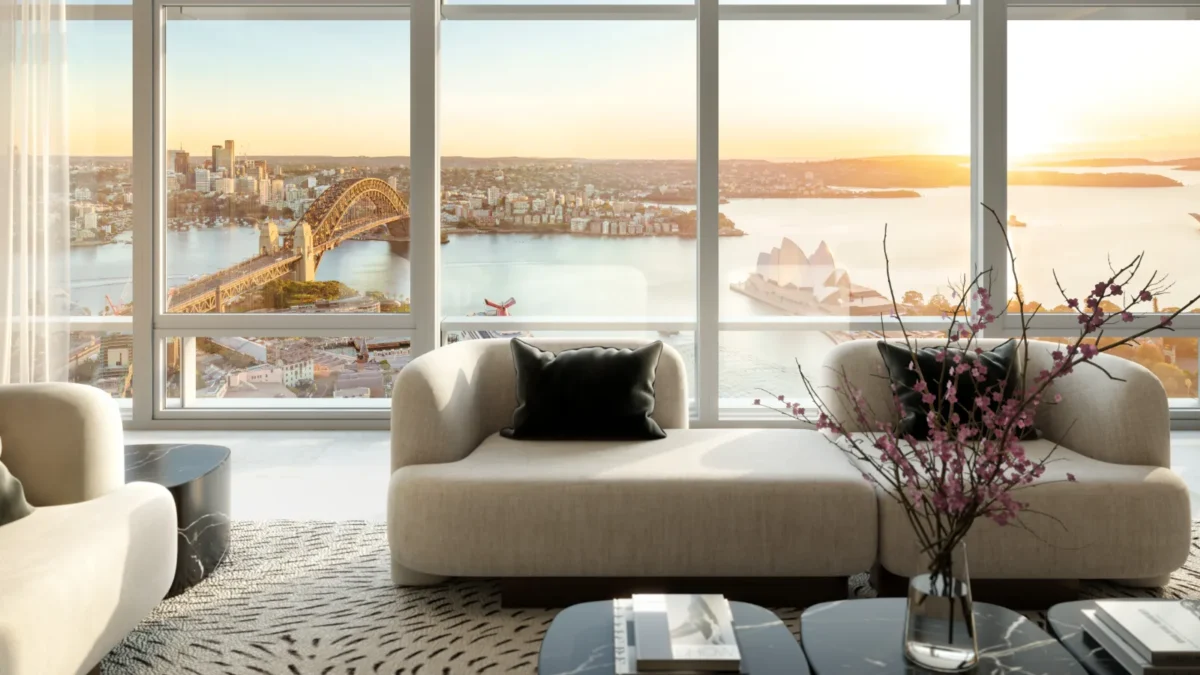
Adam pointed to Lendlease’s One Circular Quay in Sydney as evidence that Australian buyers were already prepared to pay for the combination of location, design, amenity and service underpinning the branded residence model.
“The success of luxury developments such as Lendlease’s One Circular Quay in Sydney demonstrates the depth of demand that exists at the top end of the Australian market. Buyers are willing to pay a premium for exceptional design, world-class amenity, hotel-style concierge services and iconic locations.”
Queensland emerges as development opportunity
South East Queensland stands out in the research, with 60 per cent of Australia’s branded residence developments earmarked for Queensland and Brisbane identified as one of Asia-Pacific’s fastest-growing luxury residential markets.
Knight Frank said investment associated with the 2032 Olympic Games was adding to longer-term forces already reshaping Brisbane, including population growth and interstate migration.
The report points to the scale of Games-related investment, including a $7.1 billion Games Venue Infrastructure Program and $3.4 billion allocated to deliver 17 new and upgraded venues across Queensland, with investment also flowing into hospitality, retail and residential property.
That growth is occurring alongside a broader shift in the geography of luxury development. In 2016, 38 per cent of branded residence schemes were outside major cities; by 2025 that proportion had reached 55 per cent and is projected to rise to 57 per cent by 2028.
Adam said the trend could favour South East Queensland as local buyers trade up and wealthy purchasers from Sydney and Melbourne increasingly look for second homes.
“As local residents trade up and affluent Sydney and Melbourne buyers secure second homes, South East Queensland is emerging as a destination for more sophisticated living, reinforcing the growing attraction of the branded residence lifestyle.”
He said Sydney, Brisbane and the Gold Coast were particularly well placed for future projects.
“We expect developers will continue exploring branded residence opportunities across Australia’s key luxury residential markets. For the right site, in the right location and with the right brand partner, we believe there is a substantial and growing buyer base ready to support further branded residence development in Australia.
“In time, branded residences will become the defining force in luxury development in Australia.”
The opportunity is not solely reliant on international capital. McGrath Estate Agents National Head of Research Michelle Ciesielski said affluent domestic purchasers were also seeking the convenience and services associated with branded developments.
“Importantly, demand extends far beyond offshore buyers. We continue to see strong interest from affluent Australian purchasers who are looking for turnkey luxury living, concierge services, wellness facilities and the security that comes with a globally recognised brand.”
For developers, the competitive landscape is also broadening beyond the hotel groups traditionally associated with the sector. Hotel brands currently account for about 70 per cent of operational branded residence schemes globally, but their share falls to 60 per cent when pipeline projects are included, with non-hotel supply forecast to approach 40 per cent by 2028.
Fashion, automotive and lifestyle brands are increasingly moving into residential property, giving developers more options to differentiate projects as buyer expectations around service, wellness, design and experience increase.
Knight Frank Global Head of Research Liam Bailey said the scale of growth indicated branded residences were becoming an increasingly important part of the wider luxury market.
“The luxury branded residential sector is one of the strongest growth stories in global real estate. The market has trebled in size over the past decade, and we expect it to double again within the next five years.
“Wealth creation and increased global mobility are driving demand from buyers who are building larger residential portfolios and seeking homes in destinations that offer lifestyle, convenience and world-class service. This is creating significant opportunities for branded residential development globally.”