

The modern real estate office has become a complex web of disconnected systems.
What was once sold as “efficiency through technology” has, for many agencies, evolved into a fragmented operating model where CRMs, email marketing platforms, proposal tools, and website managers sit in separate silos, constantly requiring double handling and manual workarounds. Instead of freeing up time, the stack often consumes it.
Aron Rubulis, Managing Director of Aro, wants to fix that. Having recently secured a coveted spot as one of just five proptech companies to join the 2026 cohort of the REACH Australia and New Zealand accelerator program, Aro is rapidly turning heads.
But their success isn’t built on chasing fleeting tech trends; it is rooted in 18 years of evolution and a deeply grounded understanding of what real estate agents actually need.
“When we first started, things were very heavily focused on integrations with portals and more simple admin tasks which at the time was considered cutting-edge,” Aron says. “Since then, it’s evolved into a fully centralised ecosystem.”
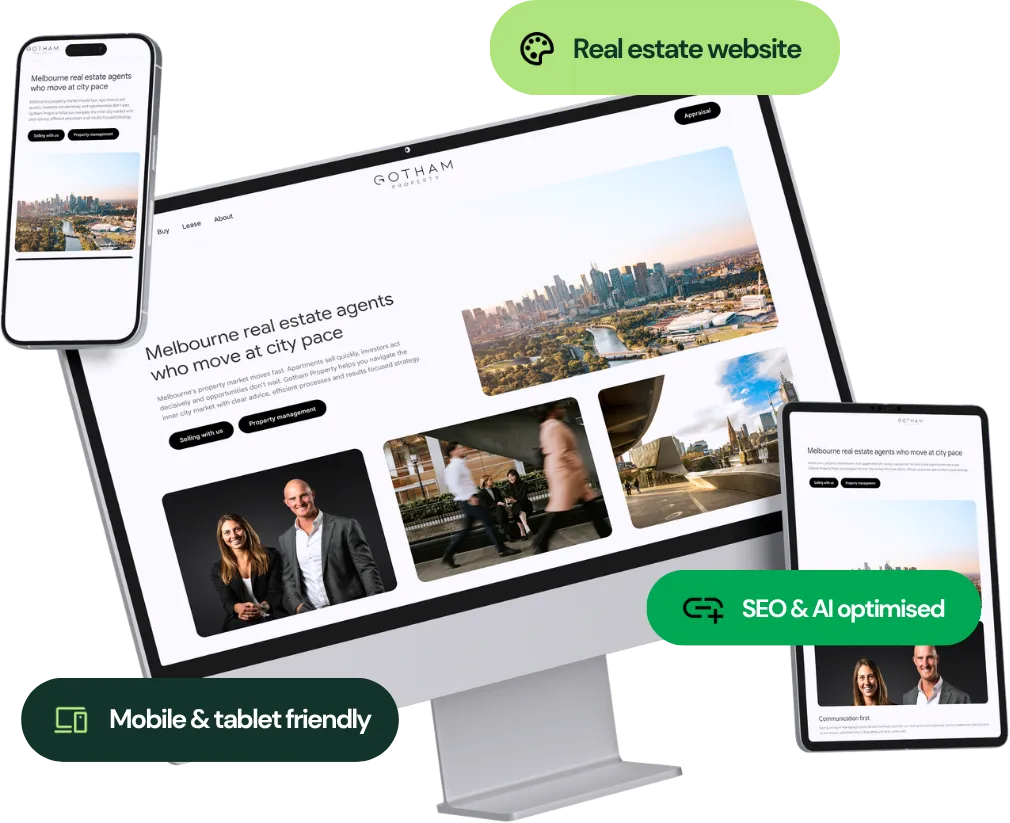
That ecosystem now combines CRM functionality, a proprietary website platform, landing page builder, digital proposal system, and a full suite of omni-channel marketing tools spanning email, SMS, and Meta advertising.
The pitch, however, is not about adding more tools to an already crowded market, it’s about removing them entirely.
At the centre of Aro’s philosophy is consolidation: bringing what is typically spread across multiple platforms into a single operating system for residential real estate businesses.
Aron says most agencies are still operating with a familiar but inefficient structure, where contact management sits in one platform, marketing in another, proposals in a third, and website infrastructure somewhere else again.
While each tool may be effective in isolation, the fragmentation creates a deeper structural issue: disconnected data.
“There’s usually a cost benefit to consolidating everything,” he says. “But the real advantage is simplicity for teams, and more importantly, centralising your data into one platform.”
That centralisation, he argues, is what unlocks meaningful performance gains.
When contact behaviour, campaign engagement, SMS activity, and proposal interactions are split across multiple systems, it becomes almost impossible to build a clear picture of intent. Even simple data points – what a buyer is clicking on, what a seller is opening, how they’re engaging over time – are diluted by system boundaries.
“You can sync a name and an email address, but once you start trying to track behaviour across different platforms, that’s where it breaks down,” he says. “And that behaviour is where the real value is.”
It is this shift, from fragmented data to unified intelligence, that Aron sees as foundational to the next phase of AI in real estate.
Rather than AI being a standalone tool, he describes it as an interface layer sitting on top of structured, accessible data.
“AI gives us the ability to access and interpret vast amounts of data,” he says. “And in many ways it’s not that different from a real estate agent’s database – the difference is what you can actually do with it.”
Historically, that has been the bottleneck. While agencies have long been told that “the database is everything”, extracting actionable insights at scale has remained a largely manual process, dependent on individual agents filtering leads, identifying opportunities, and interpreting patterns across disparate systems.
With a unified platform, Aron says that dynamic changes. Instead of manually searching for signals, agents can query their own database in natural language, identifying, for example, high-intent buyers in specific suburbs, or homeowners actively engaging with listings who may be approaching a selling decision.
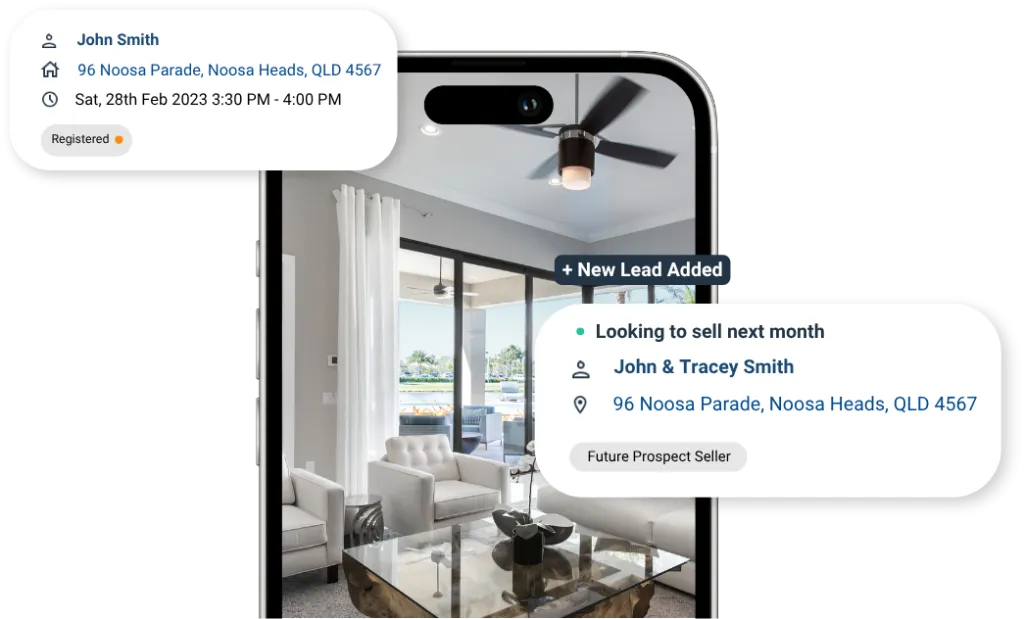
“They can start building their own propensity models based on the data in their system,” he says. “They can just ask questions through an LLM and get answers in real time.”
The impact of fragmentation, however, is not only technical – it is behavioural, and Aron argues that in many cases, the real cost of disconnected systems is not inefficiency, but abandonment.
Tools are implemented with intent, but over time become underused or reduced to their most basic functions.
“What we see is that people end up spending so much time trying to make these tools work that they just stop using them properly,” he says.
“Or they fall back into very basic usage because the data isn’t strong enough to support automation or meaningful targeting.”
Nowhere is this more visible than in the appraisal and proposal process, and Aron says agents typically fall into one of two inefficient workflows: either sending generic, auto-generated CMAs that look identical across competitors, or investing significant time manually building bespoke presentations in tools like Canva, Word, or PDF editors.
In both cases, the process is heavily manual and disconnected from the core CRM.
“What we’re replacing is that entire workflow,” he says. “If I go into an owner record, I can see exactly what’s happened … I can see that I sent a proposal three weeks ago, I can see they’ve opened it five times, and I can see I haven’t followed up yet. It’s all there in one place.”
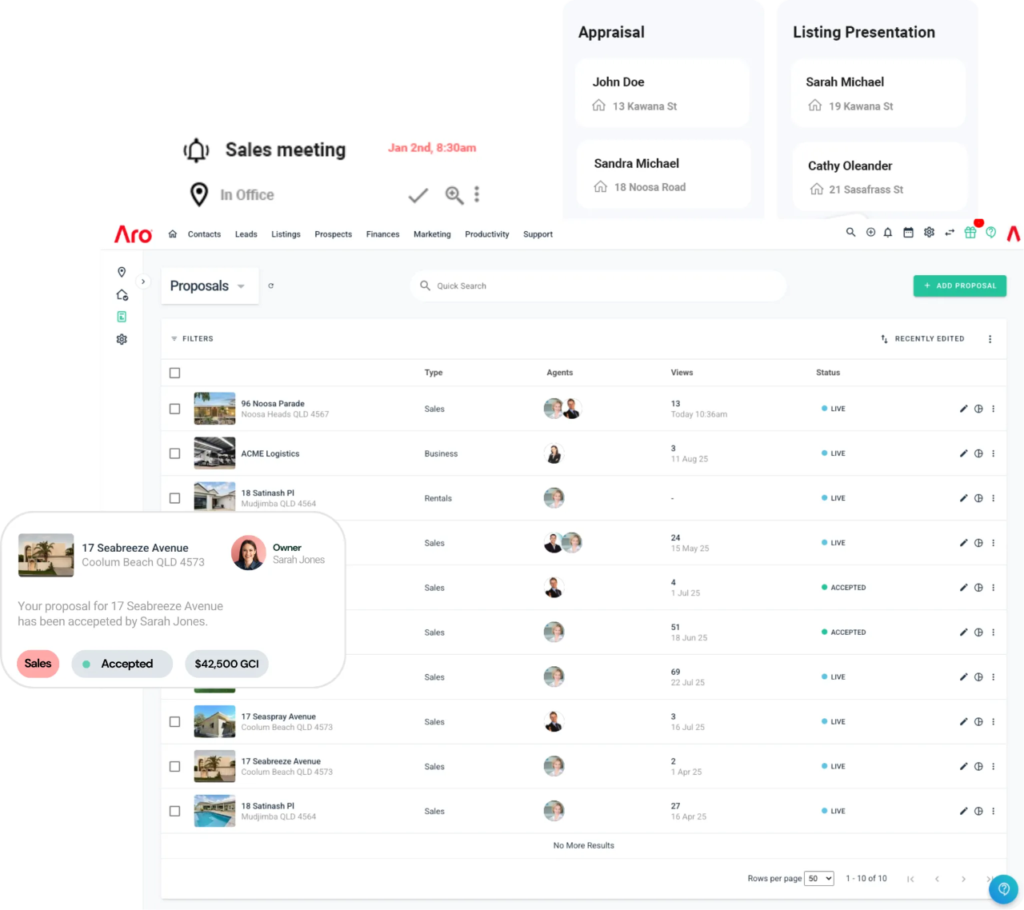
That shift, from fragmented tools to unified visibility, is what ultimately drives outcomes. Not just efficiency for its own sake, but improved responsiveness, better conversations, and ultimately more listings and market share.
Across the industry, however, the success of any platform still depends on one consistent challenge: data quality.
Even the most advanced system cannot overcome inconsistent or incomplete input, and Aron acknowledges that adoption varies widely across agencies and even within teams.
“It’s always been a challenge,” he says. “The system is only as good as the data that goes into it.”
But he believes that is also beginning to change; as agents become more familiar with AI tools in their daily lives, expectations around software usability and data quality are rising. With powerful tools now accessible from a phone, the value of structured data is becoming more immediately visible.
People are no longer just being told data matters, they are seeing what it enables.
At the same time, Aro continues to invest in human support alongside automation. The company operates an Australian-based customer service team on the Sunshine Coast, providing phone, email and live chat support during business hours, supported by onboarding programs and a self-service help centre containing more than 650 articles, augmented by an AI chat assistant.
For Aron, the next phase of real estate technology is not about more tools. It is about fewer silos, cleaner data and smarter systems that help agencies act faster.
As AI becomes part of everyday agency operations, Aro’s focus is clear: give real estate businesses one connected platform that turns their data into better conversations, better follow-up and better results.