
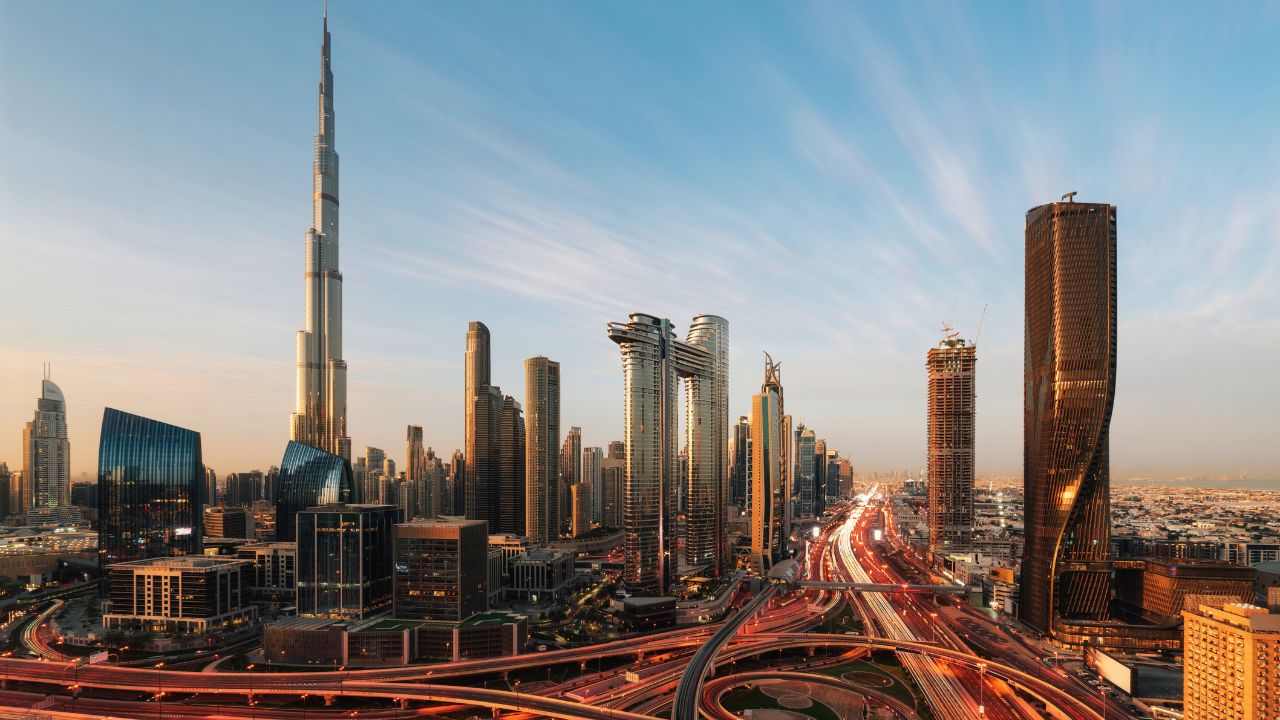
Dubai’s global property market, long lauded for its resilience and appeal to international investors, is confronting its biggest confidence test in years as regional geopolitical tensions reach the Gulf, triggering volatility across financial markets and a noticeable slowdown in real estate activity.
Following an unprecedented two‑day trading halt on the Dubai Financial Market and Abu Dhabi Securities Exchange, prompted by Iranian missile and drone attacks on UAE territory, equity markets reopened only to plunge sharply.
Historically, Dubai has benefitted from a “safe‑haven” narrative that attracted capital flows even during broader regional instability. But that narrative is now being tested as headline risk climbs.
Industry sources point to a clear shift in buyer behaviour, with some major international investor cohorts adopting a wait‑and‑see approach.
Indian and other foreign buyers, a cornerstone of Dubai’s transaction volumes in recent years, are reportedly deferring decisions on new property acquisitions while they monitor geopolitical developments and market responses.
Analysts say this hesitancy is beginning to show up in transaction timelines, particularly in the luxury and investment segments where cross‑border capital flows have historically been strongest.
Real estate brokers and market advisers have told reported that deal timelines are lengthening and new buyer enquiries have softened compared with the robust activity seen in late 2025 and early 2026.
Underlying Fundamentals Still in Focus
Despite the near‑term sentiment shift, Dubai’s property market entered 2026 with strong momentum. New data published by Arabian Business shows February real estate sales reached approximately AED 60.8 billion (around US$16.6 billion), led by off‑plan transactions and a high proportion of cash buyers – strong structural indicators that precede the recent geopolitical disruption.
Developers and analysts stress that the market’s “safe‑haven” paradox, where conflict elsewhere can both attract capital and raise risk aversion, may be playing out.
If geopolitical uncertainty persists for another 4–8 weeks, but local employment, credit availability, and flight connectivity remain strong, it is reasonable to expect that 60–80% of Dubai real estate deals currently on hold may close next quarter, albeit some with re-pricing or restructuring, Morgan Owen, managing director, Middle East and North Africa at ANAROCK Group, told Hindustan Times Real Estate.
In the past, slowdowns during times of upheavals or crisis, such as the pandemic lockdowns and oil price weakness, have usually led to deal deferrals instead of full cancellations.
For real estate agents and institutional market watchers, the current environment is shaping up as a period of near‑term risk repricing rather than fundamental deterioration.
At this point in time, key takeaways:
- Sentiment, not supply, is driving current slowdowns — buyers are deferring rather than cancelling, indicating confidence may return if geopolitical stability returns;
- Cash‑buyer segments and off‑plan markets, which have underpinned recent growth, still show resilience despite slower enquiry levels;
- Equity market volatility, particularly in property and financial stocks, may continue to influence investor psychology and capital cost dynamics in the short term.
Dubai’s real estate ecosystem, shaped by strong regulations and deep capital inflows, has historically weathered regional shocks.
But the latest geopolitical flashpoints have amplified the sensitivity of global investors to headline risk, underscoring the importance of ongoing monitoring of both geopolitical developments and market sentiment in the coming months.

