
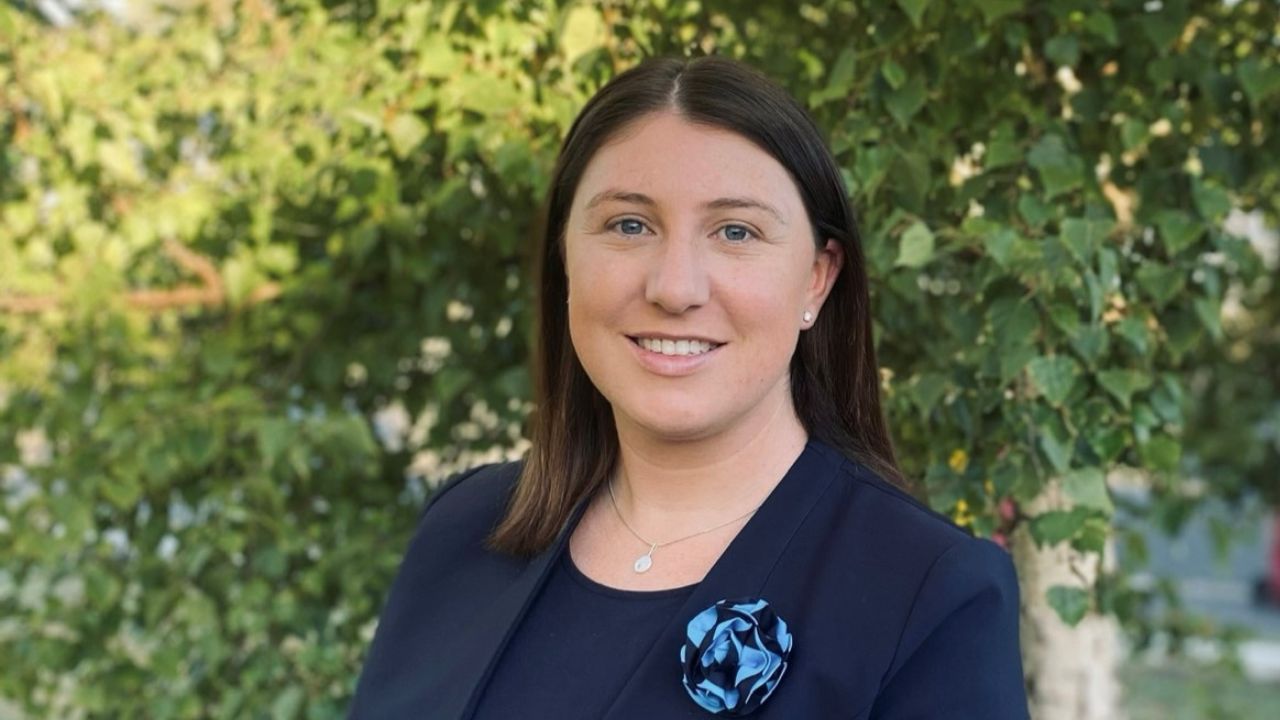
In our modern market where AI-generated scripts and automated prospecting are quickly becoming the baseline, Molly Gibbons is arguing for something far less flashy and far more effective: a disciplined return to fundamentals.
As Performance Coach for Harcourts Tasmania, Molly has had a front-row seat to the industry’s recent correction.
She watched the post-COVID boom deliver listings with minimal resistance, and she is now guiding agents through a very different environment—one that demands skill, structure and sustained effort.
For Molly, the shift is not simply about adapting to market conditions, it actually represents a broader professional reset.
“This is about the professionalisation of the industry,” she says.
“We’re at a point where shortcuts don’t hold up anymore.”
That philosophy underpins her work leading Harcourts’ Leading Edge program, a 12-month leadership and development pathway for emerging talent across the network.
The cohort is deliberately broad, spanning school leavers, career changers and experienced professionals seeking a second or third act.
“We really do have everyone,” Molly says. “I don’t actually see as many straight-from-school entrants as people assume. Often the younger ones have had a gap year or some life experience first. At the other end, I have people coming in who are on career two, three or four.”
While backgrounds differ, Molly says success hinges on a single shared trait: a willingness to engage seriously with training, even when it feels uncomfortable.
“When you first get into real estate, there’s a lot of learning,” she says.
“That overwhelms some people and scares them off. Others lean into it. They don’t see training as a chore; they see it as an opportunity.”
Those agents, she says, are the ones who last.
“They build good habits early. Our top agents aren’t top by accident. They understand that confidence comes from trained experience. That’s what strengthens them.”
The return of door knocking
One of the more unexpected shifts Molly anticipates over the next 12 to 18 months is a renewed role for one of real estate’s oldest prospecting tools: door knocking.
In a world saturated with scam calls, auto-diallers and templated AI outreach, she believes physical presence is quietly regaining credibility.
“I actually think there’s an opportunity for door knocking to come back,” she says.
“People answer the door and think, ‘Oh, you’re a real person.’ That matters now more than it did five or ten years ago.”
The tactic, however, requires finesse. Molly is clear that there is a line between being visible and being intrusive.
“If you’re knocking just to say, ‘Hi, I’m Molly from Harcourts, and I’m in real estate,’ you’re being a pest,” she says. “You’re not helping anyone.”
Instead, she advocates for a value-first approach.
“If I’ve just listed a property or I’ve got an open home nearby, I’ll knock and say, ‘We’ve got a home open down the road on Saturday at 10am. You’re welcome to come through.’ You’re not asking for anything. You’re just introducing yourself.”
That brief interaction, she says, does important groundwork.
“There’s a face to the name. You start to break down that initial barrier. That’s where trust begins.”
Training as risk management
Nowhere is Molly more emphatic than on the role of formal education and compliance.
Tasmania’s licensing framework is among the most demanding in the country, with a rigorous exam and a three-year window to complete a Certificate IV.
Molly has supported more than 70 agents through the process in the past year alone.
She sees the system not as a barrier, but as protection.
“Real estate changes too quickly for agents to rely on what they learned years ago,” she says. “Even two years ago, AI wasn’t part of the conversation.”
That, she warns, creates risk.
“If someone is just typing property details into a platform and publishing whatever comes out, how are they checking that it’s compliant, accurate and not identical to every other script in the market?”
With legislative changes gathering pace – including updates to Tasmanian pet laws, furniture anchoring requirements and incoming national anti-money laundering regulations – Molly believes informal, on-the-job learning is no longer sufficient.
“Ongoing training keeps agents compliant, competitive and confident,” she says.
“Skilled agents protect clients financially and emotionally. Without that training, you fall behind very quickly.”
She has seen the consequences play out.
“There was a big influx of people into the industry during COVID, when listings were effectively handed over on a ‘silver platter’. That environment masked gaps in skill.”
Why the human element still wins
Despite the rise of buyer’s agents, digital marketplaces and online-only models, Molly remains convinced that networks investing in people will continue to outperform.
“Training isn’t just about selling more,” she says. “It’s about doing business properly.”
She points to the continued demand for in-person learning—classrooms, workshops and conferences—as evidence that agents value shared experience as much as content.
“People want to be around their peers. They learn from the room as much as the presenter. Ideas get exchanged, standards lift, and the whole industry benefits.”
Her message to agents searching for quick wins is blunt.
“There’s no magic wand,” Molly says. “A few social posts won’t replace showing up. Listings don’t come from sitting behind a screen.”
Sustainable success, she says, still comes from doing the work.
“You have to be out there. You have to be consistent. And you have to keep learning. That’s what keeps agents relevant, credible and trusted.”