
Ask most agents where Chinese buyers are active and you will still hear the same answers you would have heard in 2010: Box Hill. Glen Waverley. Chatswood. Rhodes.
The established Chinese buyer corridors of Melbourne and Sydney became so synonymous with demand during the boom years that many agents still treat them as the default map of Chinese buyer activity.
That map is outdated.
And agents who are still relying on it are missing one of the more important shifts happening quietly underneath the Australian property market.
I’ve spent the past 15 years working closely with Chinese buyers in Australian real estate, both locally and internationally. From that experience, I also understand why many in the industry believe Chinese buyer demand has declined. It is not because the demand has necessarily disappeared, but because it has become far less visible. The headlines have faded, the foreign investment debates that once dominated public discussion are no longer as prominent, and the developer roadshows in China are far less frequent than they were. As a result, the entire conversation around Chinese buyers feels quieter.
But quieter does not mean gone.
What has changed is not simply the level of demand. It is the shape of the demand, the type of buyer driving it, and the way property decisions are now being formed.
Chinese buyer enquiry today is lower than the peak years of the last cycle, but it is also more stable and significantly more dispersed. During the boom years, activity tended to arrive in waves, often attached to a single project launch, apartment tower or concentrated pocket of suburbs. Today the enquiry profile looks very different. We are seeing fewer dramatic spikes and a much broader spread of interest across multiple locations simultaneously.
Importantly, these shifts are often visible first in search and enquiry behaviour, well before they become obvious in transaction data.
The old buyer profile was predictable
Ten years ago, an estimated 80 per cent of Chinese buyer enquiry was concentrated in a fairly predictable collection of suburbs across Melbourne and Sydney. Buyers focused heavily on CBD apartments and established Chinese community areas such as Balwyn, Box Hill, Glen Waverley, Chatswood, Strathfield, Rhodes and Hurstville.
The pattern was highly concentrated because the information flow itself was concentrated.
Chinese developers and Australian project marketers hosted property expos and roadshows in cities like Shanghai and Beijing, presenting large-scale apartment developments directly to offshore buyers. Buyers often relied heavily on developer marketing material, family recommendations and existing Chinese community networks when making decisions.
Many were investors first and foremost. The focus was frequently on off-the-plan apartments, rental demand, perceived safety and proximity to universities or established Chinese amenities. There was comfort in familiarity and confidence in following where previous buyers had already gone.
The result was a market that became very predictable.
The new buyer grew up in Australia
The families who purchased property in Australia 10 to 15 years ago have now raised children here. Those children attended Australian schools, studied at Australian universities, built careers and friendships here, and developed a much deeper understanding of Australian life beyond the traditional “Chinese buyer” suburbs.
They are now reaching the stage where they are purchasing homes themselves or heavily influencing their parents’ next property decisions, often with family financial support still sitting behind the purchase.
This new generation is not discovering Australia through developer brochures or offshore expos. They understand the country from lived experience.
They know which suburbs feel overly dense and which feel liveable. They know where traffic becomes unmanageable. They know which school zones matter. They know where lifestyle outweighs convenience. They understand Australian neighbourhoods in the same way local buyers do because, in many ways, they are local buyers.
But at the same time, they remain deeply connected to China through language, family relationships and Chinese-based digital platforms.
That combination is changing the way property information now moves between Australia and China.
The information flow has reversed
A decade ago, the information flow was largely one directional. Developers and marketers promoted Australian property opportunities into China and buyers responded to that marketing.
Now a second channel has emerged running in reverse.
When younger Chinese Australians discover suburbs or lifestyles they genuinely enjoy, they share those experiences with friends and family overseas. They talk about them on Chinese social media platforms. They discuss them in WeChat groups. They recommend schools, suburbs, beaches, cafes and lifestyle regions that older generations of buyers may never previously have considered.
It is a far quieter influence than the old roadshow model, but in many ways it is more powerful because it is based on trusted lived experience rather than sales marketing.
This is one of the biggest reasons the traditional hotspot map no longer fully explains Chinese buyer behaviour.
The hotspot map is expanding
Based on search activity and direct enquiries through our platform and WeChat enquiry desk, we are now seeing stronger relative growth in areas that historically attracted very little Chinese buyer attention.
Importantly, these are not necessarily “hotspots” in the traditional sense. There is no single dominant replacement market emerging. What we are seeing instead is fragmentation and expansion.
Today, traditional Melbourne and Sydney strongholds still account for the majority of enquiry activity, but that concentration has softened materially. Instead of roughly 80 per cent of enquiry being concentrated in a small group of established suburbs, it is now closer to 60 per cent, with the remaining 40 per cent dispersed across a far broader mix of locations.
That shift is significant.
And many of the areas now attracting attention would have been considered highly unlikely a decade ago.
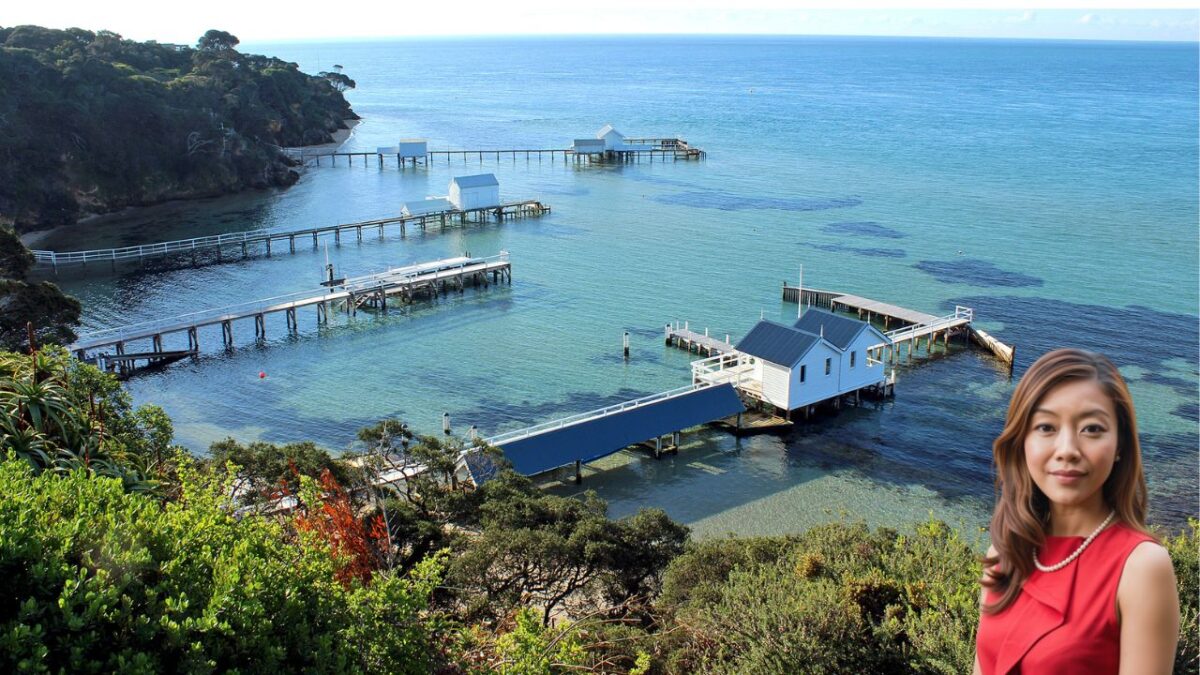
We are seeing increased search and enquiry activity around coastal lifestyle regions such as the Central Coast, Mornington Peninsula and the Southern Gold Coast.
We are also seeing stronger interest in smaller cities and regional centres with strong schools, manageable lifestyles and lower-density living, including Adelaide, Brisbane and regional Victorian locations such as Bendigo.
Ten years ago, many of these locations barely appeared in Chinese-language search behaviour at all.
Today they are appearing regularly in both online searches and direct enquiries.
Lifestyle is replacing proximity to the CBD
That does not mean Chinese buyers are abandoning Melbourne and Sydney. Far from it. Those cities remain key anchor markets and continue to attract significant attention.
What has changed is that buyers are now exploring alternatives in parallel instead of narrowing immediately into the traditional Chinese buyer corridors.
The search behaviour itself has evolved.
Historically, proximity to the CBD was often one of the dominant decision-making drivers. Today, lifestyle considerations appear to be playing a much larger role.
We are seeing more suburb-specific research, more school-related searches, more family-home enquiries and broader exploration across multiple regions before buyers narrow their focus.
There is also noticeably stronger engagement with established housing rather than purely new apartment stock.
The buyer profile itself has shifted from being heavily investor-led toward a more owner-occupier and migration-driven audience. Family capital still frequently supports purchases, but buyers are increasingly focused on long-term liveability rather than purely investment returns.
Anecdotally, we are seeing this shift constantly.
For example, it is no longer unusual to see younger buyers whose parents once purchased CBD apartments for them now actively looking to move away from density and into quieter lifestyle-oriented areas outside traditional inner-city markets.
That would have been far less common 10 years ago.
What this means for agents
One of the biggest misconceptions in the industry is that Chinese buyers have become irrelevant simply because they are less visible in mainstream headlines.
In reality, they have become more sophisticated, more dispersed and significantly harder to categorise than the market agents learned to target during the previous cycle.
And critically, the buyer journey often begins long before these buyers appear on Australian listing portals.
The earliest stages of the search process usually happen in Chinese, through community conversations, WeChat groups, Chinese-based social media and personal recommendations flowing between Australia and China.
By the time many buyers arrive on domestic English-language property portals, several key decisions have already been made. Which city they prefer. Which lifestyle appeals to them. Which school zones matter. Whether they want density or space. Whether they see themselves living in an apartment tower or near the coast.
If agents are only engaging with buyers at the final portal stage, they are often arriving late to the decision-making process.
That is why understanding this behavioural shift matters commercially.
Agents who can credibly explain how Chinese buyer behaviour has evolved are not simply marketing to an overseas audience. They are demonstrating to vendors that they understand a buyer pool many competitors are still overlooking.
In competitive listing presentations, that matters.
Vendors want confidence that their property is being exposed to every viable buyer audience, particularly one that remains globally connected and financially influential.
The agents who benefit most from this shift will not necessarily be the ones operating in the suburbs with historically high Chinese buyer activity.
They will be the agents who recognise that the map itself has changed.
Time to update the map
The old hotspot map reflected a very specific buyer at a very specific moment in time. A buyer shaped by offshore developer marketing, concentrated investor demand and a relatively narrow understanding of Australia.
That buyer has evolved. Their children grew up here, their priorities changed, their understanding of Australian life expanded and in the process, the conversation around where Chinese buyers want to live has become far more nuanced, fragmented and lifestyle-driven than the industry often assumes.
The hotspots did not disappear. The map simply became much bigger.