
Queensland’s housing market is undergoing a gradual but increasingly visible shift, driven by migration flows from South Asia that are changing not only where people buy property, but how they make decisions and who they rely on in the process.
While Australia does not publish detailed ethnicity-based housing purchase data, migration figures make the broader trend clear. India is now the largest source of permanent migrants to Australia, accounting for around one in six arrivals according to Department of Home Affairs data, a shift that has flowed directly into population growth across cities such as Brisbane and into its expanding suburban corridors.
What is emerging alongside that demographic change is a transformation in how trust is built in the property market itself, particularly in high-pressure, high-value environments such as auctions, where buyers are often navigating not just financial decisions but unfamiliar systems, language barriers, and complex family expectations.
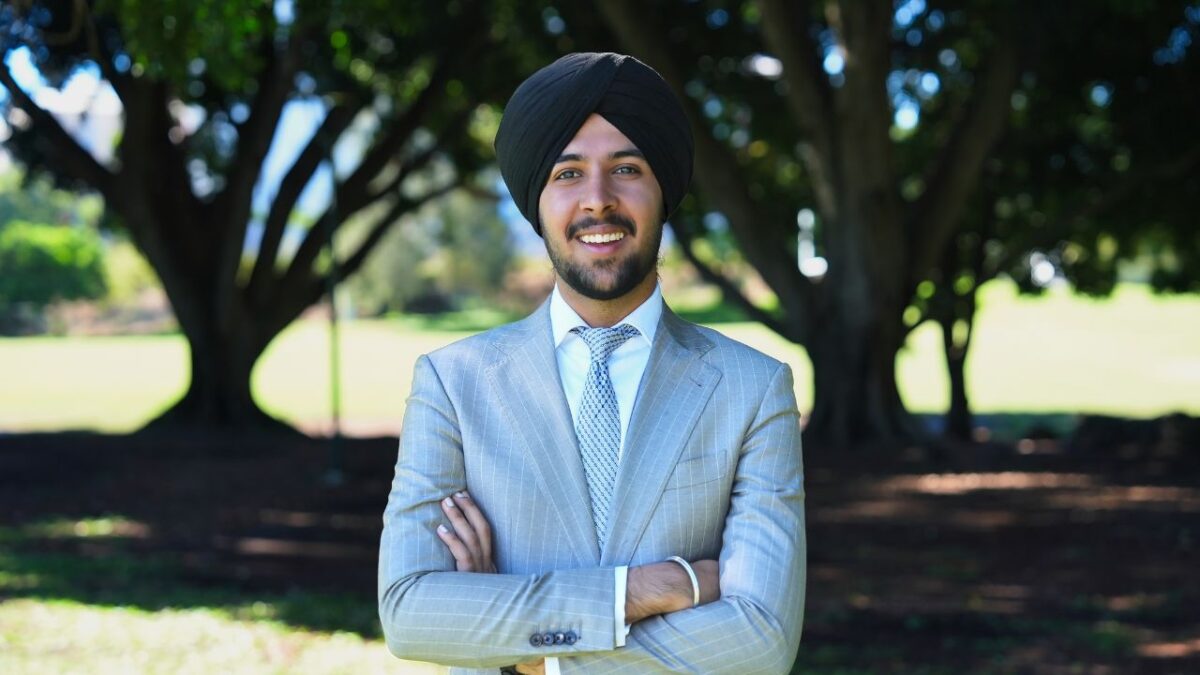
For Sukhraj Singh Nijjar, a 23-year-old agent working across Brisbane’s north-west, that shift is already playing out in real time.
“We’re seeing such an influx of people coming into Brisbane every week, and a significant proportion of that is from India and South Asia,” he said, adding that the change is not just statistical but something he experiences directly through day-to-day interactions with buyers and families.
For many of those buyers, he said, the decision to purchase a home is rarely limited to individual circumstances, but instead shaped by broader family structures and expectations that are often carried across generations and borders.
“It’s not just a commercial decision at all, because when people are buying a home in our community they are often thinking about their parents, about whether their parents are going to come and stay with them, or whether extended family is going to visit or live with them at some point,” he says.
“So you have to understand that you are not just dealing with one person making a decision for themselves, you are dealing with a whole family system and all the expectations that come with that,” he said.
That multi-generational decision-making lens is increasingly reflected in settlement patterns across Australia’s major cities, particularly in suburbs where established diaspora communities already exist and where new arrivals often gravitate towards familiarity in both social and practical terms.
Academic research into migration and housing behaviour supports this broader pattern, suggesting that cultural proximity, social networks, and familiarity with institutions all play a role in shaping where migrants choose to live and how they engage with property markets once they arrive.
Other studies have similarly identified the role of what is sometimes described as “cultural distance”, where unfamiliarity with local systems can influence confidence levels in financial decision-making and increase reliance on trusted intermediaries such as agents, community networks, or bilingual professionals.
Within that context, language and cultural familiarity become less about translation and more about reducing uncertainty in decisions that carry significant emotional and financial weight.
“It’s not just language,” Sukhraj said. “It’s understanding where people are coming from, culturally and emotionally, because being able to speak Hindi or Punjabi means I can explain things clearly.
“But more importantly it means I can make people feel like they are not isolated in the process or like they are missing something in translation, and that changes the entire experience for them.”
Sukhraj’s own background sits within that broader migration story, having moved from India to Australia as part of a family decision driven by education and long-term opportunity, an experience he says now informs how he understands the motivations of the clients he works with.
“I did grow up in India and then moved to Australia in 2015 with my family, and for us it was very much about stability and opportunity and trying to build something long term here,” he said.
“When I look at clients now, especially migrants or families who have recently moved, I think I understand a bit of what they are going through because I have lived that transition myself, and I know how many decisions sit underneath something as simple as buying a home.”
Before securing a formal role in real estate, Sukhraj spent months shadowing senior agent Haesley Cush, observing auctions and negotiations from the passenger seat and gradually learning how deals were structured in real time.

“I just tried to be in front of them as much as I could,” he said, reflecting on the early period of persistence that defined his entry into the industry.
“I knew it would take time and there was no point pushing every day in a way that would annoy people, so I just focused on staying present, staying around, and hoping that eventually the opportunity would come.”
That opportunity eventually arrived after months of unpaid exposure and repeated contact.
“Six months later they gave me a job,” he said. “I was lucky in the sense that it worked out, but I also had to keep showing up consistently until it did.”
Now working across Brisbane’s auction floors, Sukhraj is part of a property market that is adjusting in real time to demographic change.
Despite that, he is cautious about overstating his role in a broader structural shift.
“I don’t think I am doing anything extraordinary,” he said. “I just try to stay grounded and focus on helping people through what is often one of the biggest decisions of their lives, because real estate can become very noisy and complicated very quickly, but at its core it is really just about someone trying to decide where they are going to live and build their life.”
Looking ahead, he says the focus remains on long-term consistency rather than rapid growth, even as he considers eventually building something of his own.
“My biggest fear is complacency,” he said. “Even though I have been doing this for a few years, it still feels like I am at the beginning, and I want to make sure I keep improving rather than becoming comfortable too early, because I want to do this for decades, not just a few years.”
For now, though, he remains focused on the present – and on a market where migration is reshaping both demand and trust in equal measure.