

Across Australia’s property landscape, a dark cloud of negativity has settled over buyers and vendors alike.
Driven by dramatic media commentary, talk of falling auction clearance rates, and sensationalist headlines, an overwhelming sense of market anxiety has taken hold.
To Alistair Macmillan, Sales & Marketing Specialist at Ray White Wilston, that narrative isn’t just frustrating, it is fundamentally wrong.
Fed up with the defeatist rhetoric circulating across digital channels and news outlets, Alistair posted an unfiltered video on Instagram calling out the industry’s defeatist narrative.
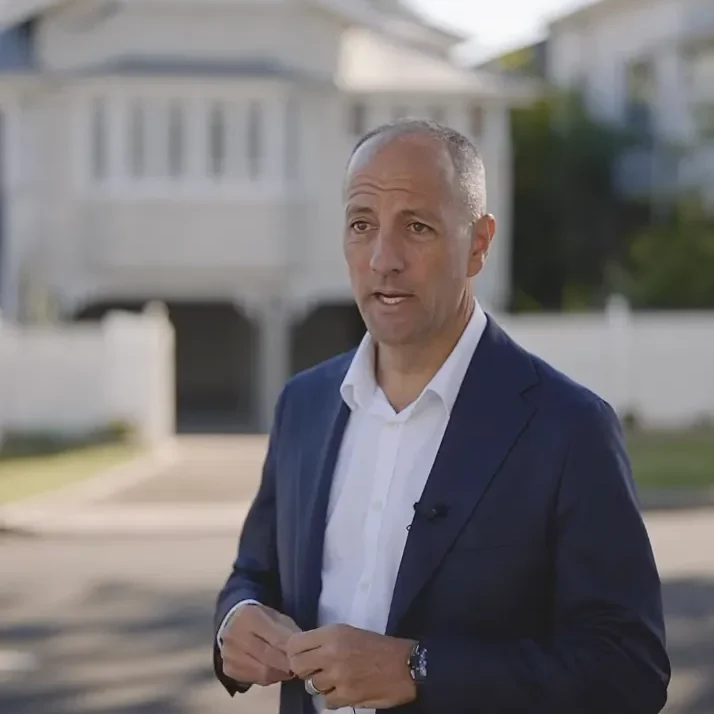
“I just got the shits because of agents, commentators, auctioneers, shit-counting the current market. Mate, there’s nothing wrong with this market. This is a normal market.“
In Alistair’s view, fuelled by clickbait headlines, sensationalist auction coverage, and agents who have forgotten how to negotiate, the industry is mistaking a return to normal, rational trading conditions for a full-blown crisis.
“What inspired me [to post on social media] was the negative commentary that exists in the marketplace,” he says.
“It was coming through auctioneers, agents, and people just generally commenting on the market. The level of frustration was high, particularly with agents saying that the market is so incredibly tough now and that is what gets communicated directly through to the property owners.”
Alistair’s frustration reached a boiling point after watching auctioneers broadcast difficult clearance results to the masses and agents complain publicly about how tough the environment had become without recognising the damage this gloom was inflicting on everyday buyers and sellers.
“When you meet with owners, they say, ‘Well, we know the market is really bad.’ But it is not really bad,” Alistair explains.
“It is definitely a different market to what it was four months ago, but to me, this is a normal market. In our marketplace, it is a flattening market, which simply means as an agent, you have to work a whole lot harder in order to yield the same outcome.”
He points directly to the self-serving nature of much of the public commentary currently circulating across digital channels.
“Some of the commentary is grossly inaccurate, and perhaps it is made purely for clickbait. It is done to create exposure for the person doing it because they like getting their face in the media.”
Normal market versus manufactured panic
The root of the issue, Alistair argues, lies in the lingering hangover of a decade-long property boom; for years, low interest rates and hyper-competitive demand created conditions where properties virtually sold themselves. Open homes packed with dozens of eager buyer groups were standard, and campaigns wrapped up in days.
“In our industry, there are a lot of agents who do not have the skill set required to transact properties today,” he says.
“When the market is strong, everyone wants to get in and become a real estate agent, but ss soon as it turns, they suddenly do not have the skills required to get deals done. I would hate to think what they are doing to try and negotiate transactions.”
Now that open home attendances have moderated to realistic levels and campaigns require patience and negotiation, many agents accustomed to effortless wins are panicking. He says that unstead of sharpening their skills, they are blaming the market – and transmitting that fear directly to their clients.
“Days on market going beyond three weeks is normal … we have had it so good for so long that we have been shooting fish in a barrel for ten years. Now, at the first sign that conditions have softened slightly, it means we have to knuckle down and do all the things we should have been doing the whole time.
“When the market was so strong, you did not have to, because you would still ultimately get an outcome. Now you have to execute all those core fundamentals just to achieve a result; if an agent is unskilled, inexperienced, or not prepared to do the work, the people who suffer most are the home owners.”
This professional panic carries immediate, tangible consequences for ordinary Australians and when agents internalise negative commentary, they walk into vendor listing meetings predicting doom.
Sellers, spooked by news stories and anxious agent dialogue, begin to second-guess their decisions.
Simultaneously, the negativity is alienating the very buyers who stand to gain the most; in suburban pockets where owner-occupiers make up ninety-nine percent of transactions, families who have spent the best part of a decade trying to buy their primary residence are sitting on their hands out of fear.
They read dramatic headlines and pause, waiting for a drop that history suggests will never come.
“Ninety-nine percent of my transactions are with owner-occupiers,” he says. “We have owner-occupiers who have been desperately trying to enter the market for the best part of ten years.
“There is a little bit of uncertainty right now, so if ever there was a good time for a buyer to enter the market where real opportunities exist, it is right now. But they are reading and hearing this negative broadcasting on the current state of the market, which is impacting their confidence to move forward.”
Grounding his perspective in long-term economic data provided by Ray White Chief Economist Nerida Conisbee, Alistair points out that even if a major correction occurred, the underlying strength remains clear.
“If the market dropped in Brisbane by eight to ten percent, prices would be back to June of last year,” he says. “In Queensland, that has actually never happened. We have never had the median sale price drop by eight percent.
“If it happened in Brisbane, it would be a major correction and it would simply put prices back to where they were a year ago.”
For an owner-occupier purchasing a primary residence to live in for the next ten, fifteen, or twenty years, short-term market noise is irrelevant.
“These owner-occupiers buying a home intend to live in the property for the next ten years. You are buying a house to live in and raise a family, and our local turnover is slow. You are certainly going to be there for five, seven, or ten years. When you look back in ten years’ time, what are you waiting for? Are you waiting for more confidence to return to the market so prices start moving up again before you decide to get involved?”
The shift in conditions also exposes a sharp division within the industry itself – a rising market hides incompetence, but a stabilising market relentlessly lays it bare. When properties sit idle on the portal listings or campaigns are withdrawn, the fault rarely lies with underlying buyer demand; it lies with execution.
This dynamic extends to the media’s obsession with weekly auction clearance rates.
“Everyone is hell-bent on auction clearance rates,” he says “If you put out a stat showing the percentage of private treaty properties sold within three weeks of going to market alongside the percentage of auctions sold within three weeks, it would be very interesting to see.”
Alistair estimates the auction clearance rate within three weeks is significantly higher than private treaty, which he guesses is probably sitting at less than ten percent.
“Yet nobody broadcasts that private treaty is a poor process just because it only clears a small fraction of homes in three weeks.”
He adds that clearance rates reflect agent capability rather than a dead market.
“The clearance rate in a market like this is heavily dependent on the agent. We have a large number of grossly incompetent agents trying to run auction campaigns who are severely underskilled to do it, which is the exact reason those properties do not sell. A skilled agent is going to have the biggest influence on whether a property sells or not.”
For vendors debating whether to list now or hold out for a speculative market surge in six to twelve months, Alistair advises looking at historical performance rather than short-term peaks.
“Owners coming to market right now have a genuine requirement to transact. They are not coming to market simply because the market is on fire,” he says. “Communication needs to be very honest and transparent around what the process looks like, what we need to do, and how long it is going to take. It is about reassuring them that buyers are still out there.”
“Because owners listing now have a genuine need to sell, their choice of agent is critically important,” he continues. “If they choose someone who is not equipped to get an outcome today, it will impact their price even further. The property goes stale, gets withdrawn, becomes secondhand stock, and turns into a complete nightmare.”
When assessing the risk of waiting, his advice is pragmatic: “If you are asking whether you should sell now or wait seven months, as a betting person, the odds are that the market is not going to improve by five to seven percent in seven months’ time. There is a higher probability it may continue to soften slightly. If you have a requirement to sell in the next six to twelve months, you are better off doing it sooner rather than later.”
Alistair also argues that homeowners who have held real estate for ten or twenty years have benefited from significant, tax-free capital growth, with some achieving net returns of ten to fifteen percent annually.
“If you have owned your property for twenty years, you have just gone through the greatest increase in property values our area has ever seen, and you have ridden that wave completely tax-free.
“You might have achieved a slightly higher price six months ago than today, but look at the time you have owned it, what you paid for it, and the percentage return over that period. We are talking fifteen percent per annum net returns on that investment over the duration of ownership.”
To that end, Alistair says he’s never heard of a legal investment that achieves a net ten to twelve percent annual return for fifteen years with zero tax.
Ultimately, his message is that the real estate market isn’t broken – it has simply returned to normal.
“That was the motivation [for the social media post] – I simply got fed up with listening to all the rhetoric,” Alistair concludes.
“I wanted to provide a level of confidence to both owners and buyers who want to transact in this market, because there are still plenty of successful deals happening every single day.”