
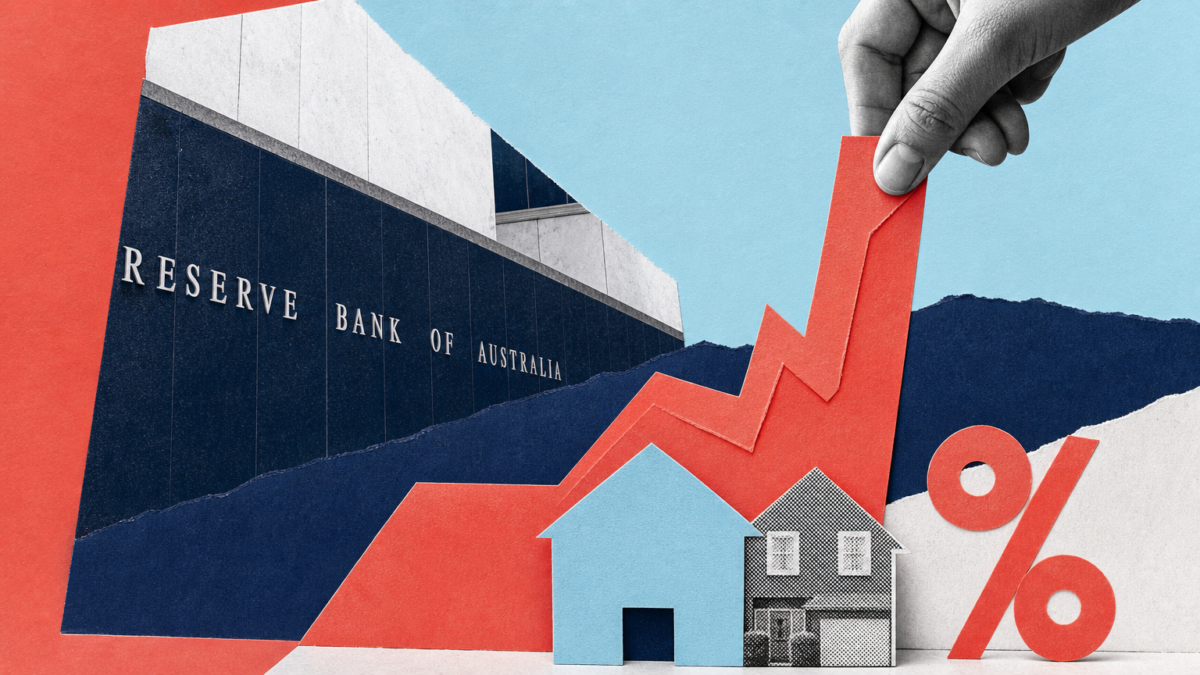
The Reserve Bank has delivered its fourth interest rate rise of 2026, lifting the cash rate by 25 basis points to 4.60 per cent and putting fresh pressure on borrowing capacity just as the spring property market enters one of its busiest periods.
For real estate businesses, the impact will extend well beyond another increase in mortgage repayments.
Buyers now face another reduction in what they can borrow, agents are likely to encounter more price-sensitive purchasers and vendors may need to recalibrate expectations as higher financing costs flow through to demand.
The industry is not, however, expecting transactions to simply dry up; tight housing supply, life-driven sales and continued competition for quality homes are expected to keep properties changing hands, but agents are heading into a market where accurate pricing, strong presentation and careful management of vendor expectations will become increasingly important.
Experts say limited housing supply and tight rental markets should reduce the risk of a major downturn.
Attention will now turn quickly to what the latest hike means for the remainder of the spring selling season, and whether the RBA is finished, with the next meeting, on Melbourne Cup Day, 3 November, already looming as the next major test for property.
Read what our experts had to say.
Domain Chief Residential Economist, Dr Nicola Powell
Every increase in interest rates reduces the amount buyers can borrow, limiting what they can afford to pay and pushing some aspiring homeowners out of the market altogether. For many, that means delaying their plans while they save a larger deposit or work to meet stricter lending requirements.
Sydney and Melbourne have led the current downturn and are beginning to show early signs of stabilisation, with auction clearance rates improving from their mid-year lows and new listings starting to ease. Another rate rise could slow that stabilisation by placing further pressure on borrowing capacity and buyer demand.
The bigger challenge is what higher rates could mean for future housing supply. Building approvals remain subdued, but that’s not because construction activity has disappeared. Housing is increasingly competing with infrastructure, renewable energy and data-centre projects for the same workers, materials and resources.
Australia’s construction industry only has so much capacity. As labour and materials are drawn into other major projects, it becomes harder and more expensive to bring new housing developments to market.
The risk is that today’s fight against inflation becomes tomorrow’s housing shortage. Higher rates may help cool demand in the short term, but they can also make it harder to increase housing supply and address Australia’s long-term housing shortfall.
Realestate.com.au senior economist Eleanor Creagh

The RBA lifted the cash rate by a further 25 basis points today to 4.60%, as persistent inflation and signs the economy is still operating with excess demand outweighed evidence that higher rates are slowing growth.
Inflation remains too high, and some of the upside risks the RBA has been warning about are now materialising. The economy has slowed, but not enough to give the RBA confidence that inflation will return sustainably to target without further tightening. Unemployment has lifted, but the labour market remains relatively resilient, household spending has been resilient and weak productivity growth means the economy has less capacity to absorb demand without generating inflationary pressure.
For the housing market, another rate rise reinforces the downturn already underway. Higher mortgage rates further reduce borrowing capacities and buyer budgets, adding to the downward pressure on home prices and sales activity.
However, this remains an orderly adjustment rather than a distressed housing correction. Labour market conditions remain relatively resilient, very few borrowers are in negative equity while many households retain substantial repayment buffers.
The RBA does not target home prices, and the current housing slowdown is one of the channels through which tighter monetary policy is working to reduce demand. While structural housing undersupply remains a long-term support for prices, in the near-term, affordability constraints, higher borrowing costs and weaker buyer demand are likely to keep downward pressure on prices.
Woodards CEO Nigel O’Neil

Although the increase was widely anticipated, it is still disappointing. The Consumer Price Index rose 3.5 per cent in the 12 months to July, down from 3.8 per cent in June, although inflation remains above the Reserve Bank’s target range of 2 to 3 per cent.
Higher borrowing costs will affect what some buyers can afford and may force them to reassess their preferred location, property type or price bracket. Others may pause their search while they adjust their finances and gain a clearer understanding of their revised borrowing capacity.
However, families still need to move as their circumstances change. People have children, change jobs, separate, downsize or need more space, and while higher rates can affect their budgets, these decisions can only be delayed for so long.
We expect quality homes in sought-after locations to continue attracting competition. Properties with good floorplans, access to schools and strong lifestyle credentials tend to perform well because genuine demand for great real estate does not disappear when rates rise.
There can also be opportunities in a more cautious market. Upgraders who are buying and selling under the same conditions may benefit from a smaller price gap between their existing home and the property they hope to secure.
Another rate rise will undoubtedly create short-term challenges, but it does not change the long-term fundamentals of property. Buyers and sellers who need to act will adjust their expectations, review their budgets and continue making decisions that suit the next stage of their lives.
LJ Hooker Head of Research Mathew Tiller

The Reserve Bank of Australia’s decision to lift the cash rate is expected to take momentum out of the spring selling season as buyers assess their budgets and borrowing capacity. Price growth was likely to remain subdued for the rest of the year, although limited housing supply and tight rental markets should reduce the risk of a major downturn.
Sellers will need to meet the market, particularly where listings are rising and buyers are becoming more selective. This means setting realistic price expectations and ensuring the property is well presented and stands out from the competition.
The softer conditions are already becoming more visible. The latest Cotality figures show 1,428 properties were scheduled for auction across Australia last weekend, with a combined capital city clearance rate of 50.3 per cent. Sydney and Canberra recorded the strongest results at 53 per cent, while Adelaide’s clearance rate was just 33 per cent.
The housing market is showing signs of softening. Prices are coming under pressure as confidence weakens and household budgets remain stretched.
Situational sellers have less flexibility around when they bring their property to market, so they need to understand current conditions and adjust their expectations.
Higher living costs and reduced borrowing capacity will be factored into buyers’ budgets, while some investors may remain on the sidelines because of proposed tax changes. However, upsizers who can manage the larger repayments may find opportunities in the current market and have more room to negotiate.
Nerida Conisbee Ray White Group Chief Economist

By increasing rates, the RBA has placed greater weight on the inflation risk. Inflation remains well above the midpoint of the target range and domestic price pressures continue to be persistent. The Bank’s concern is that leaving these pressures in place for too long could make inflation harder to bring under control.
Housing continues to complicate the inflation story. Housing costs increased by 5.0 per cent over the year to July. New dwelling prices rose by 5.7 per cent as builders passed through higher labour and materials costs, while rents increased by 3.6 per cent.
These are pressures that higher interest rates are poorly placed to solve. Higher rates can reduce household demand, but they do not reduce construction costs, increase the number of tradespeople or deliver more homes. They can also make new housing development less viable at a time when Australia already has a significant shortage of housing.
For the established housing market, another increase will add to the downturn already underway. The RBA has acknowledged that housing prices and activity have weakened by more than it previously expected, reflecting the combined impact of higher rates, the Federal Budget changes and weaker sentiment. A cash rate of 4.60 per cent will further reduce borrowing capacity and increase repayment pressure, while rising unemployment is likely to add another layer of caution for buyers.
The increase does not, however, make further rate rises inevitable.
The Agency Insights Partner, Cameron Kusher

This increase took the cash rate to 4.60 per cent which is the highest it has been since October 2011.
Inflation has slowed but remains higher than forecast and with oil prices surging and fuel a key input to many goods and services it is likely that inflationary pressures will persist and may even strengthen.
Monthly data on household spending shows that continues to grow at an annual rate well above inflation and discretionary spending is growing faster than non-discretionary spending which indicates that households still aren’t reigning-in their spending enough to slow inflation.
The next four weeks are critical for people who are wanting to buy and secure a property before Christmas. Those looking to sell next year must start to think about navigating an unusual phenomenon of a March easter as well as school holidays and Anzac Day.
REIQ CEO Antonia Mercorella

Today’s decision takes the cash rate to 4.60 per cent, pushing borrowing costs beyond the previous post-pandemic peak of 4.35 per cent. What many Australians are increasingly questioning is whether they are being asked to bear an unfair share of the burden in the fight against inflation.
People understand that inflation needs to be brought under control and that the RBA only has a limited number of levers it can pull.
However, rising costs are not the result of everyone living large or luxuriously. For many, a significant share of household income goes towards essential expenses such as housing, fuel, insurance, groceries and utilities that can’t simply be reigned in.
There is a growing perceived unfairness around borrowers ‘being punished twice’. First through higher prices, and then through higher interest rates designed to bring those prices under control.
It can feel counterintuitive that interest rates rise in response to inflation when that also increases mortgage repayments, rent pressures and the overall cost burden many people are already carrying.
That creates a sense of being caught in a cycle where prices remain high, yet the cost of managing those higher prices becomes even more expensive. Understandably, sentiment is low given current predictions point to more rate rises to come. There’s little light at the end of the tunnel and little hope of reprieve any time soon.
BresicWhitney CEO Will Gosse

Today’s decision was widely expected. The rise itself is less significant than what it confirms, that the current environment is the one we’ll be operating in for a while yet.
The buyers and vendors moving right now are the ones who have accepted the conditions rather than negotiated with them.
Someone who could borrow $1.5m before this year’s four rises can now borrow about $1.37m. That’s the real story for buyers, it’s not the rate itself, it’s what it does to borrowing power.
Campaigns that launch with honest pricing are the ones converting. In this environment, time is the real cost.
Compare the Market’s Economic Director David Koch

Average mortgage payers with a loan around $731,000 will spend roughly $5,568 more over the course of a year, now that rates are a full 1% higher than they were at the start of 2026.
[The rate rise is] yet another gut punch for Aussie families with a mortgage. Where are people meant to find an extra $5,500 a year? And that’s after tax… On top of that, households are getting hit at the petrol pump and again at the supermarket.
Rates are higher, loans are bigger, and we have a whole generation of mortgage payers who have never seen rates this high. We can’t keep asking the same group of people to keep tightening their belts when there are forces pulling in the opposite direction.
Consumers, we are all fighting with the Reserve Bank, but government spending and government price rises are undoing all our good work. So why should we pay the penalty? We all need to be fighting inflation together… households, the RBA and all levels of Government.
My view is that the Reserve Bank should be calling out governments of all persuasions and all levels to actually fight the inflation battle with them. I think we should be introducing a statement on the conduct of fiscal policy that all treasuries – state, federal, local – should sign up to, committing to a public spending path consistent with that inflation target. And if they spend more and fuel inflation, then they should be singled out and shamed.
It’s the only way to get the attention of politicians that are spending too much. As I say, on all different levels of government.
Oliver Hume Property Group chief economist, Matt Bell

The RBA Board has delivered on the warnings provided by the Governor and other key staff over the past few weeks and voted to raise the cash rate by a further 0.25%.
Markets had largely moved to fully expecting this decision, with all major forecasters and financial markets forecasting a September move. Only one month ago, it was viewed as a 50% chance of any further rises, but the RBA made it clear that those risks of higher inflation have been borne out.
Does it change the outlook for property? Well, yes, it does. And significantly compared to where we were one month ago.
We’ve always maintained that the budget taxation changes were not the main game, and this hike and the possibility of another will prove that out. We know rate changes can impact property markets up to 6-9 months out, and so today’s decision means any recovery has probably been pushed out to mid-year at the earliest, although some markets will move back into growth mode before that.
The small rebounds in sentiment and auction clearance rates have stalled, and the monthly falls in established prices of around -1% per month look as though they will continue in the coming months.
As always, the fundamentals haven’t changed. Demand exceeds supply in most markets and household budgets remain in good shape (although weaker after today’s decision). But this won’t be enough to bring buyers back to the table until households can be sure their borrowing capacity and mortgage payments won’t rise further.
November remains a very live meeting, with plenty of forecasters expecting another hike. But it will be heavily dependent on the next few inflation and labour market prints. A push of unemployment up towards 5% will probably be enough to get the RBA to hold fire until 2027.