
While higher interest rates and deteriorating affordability weigh on property markets across Australia, the Gold Coast continues to demonstrate resilience, with population growth, employment opportunities and a chronic housing shortage underpinning demand.
Colliers’ latest Gold Coast Market Overview reveals the city’s median house price climbed 10.2 per cent over the year to $1.405 million, while units recorded even stronger growth, rising 12.4 per cent to $950,000.
Although quarterly price growth has moderated, the research suggests the region’s underlying economic fundamentals are helping cushion the impact of the broader property slowdown.
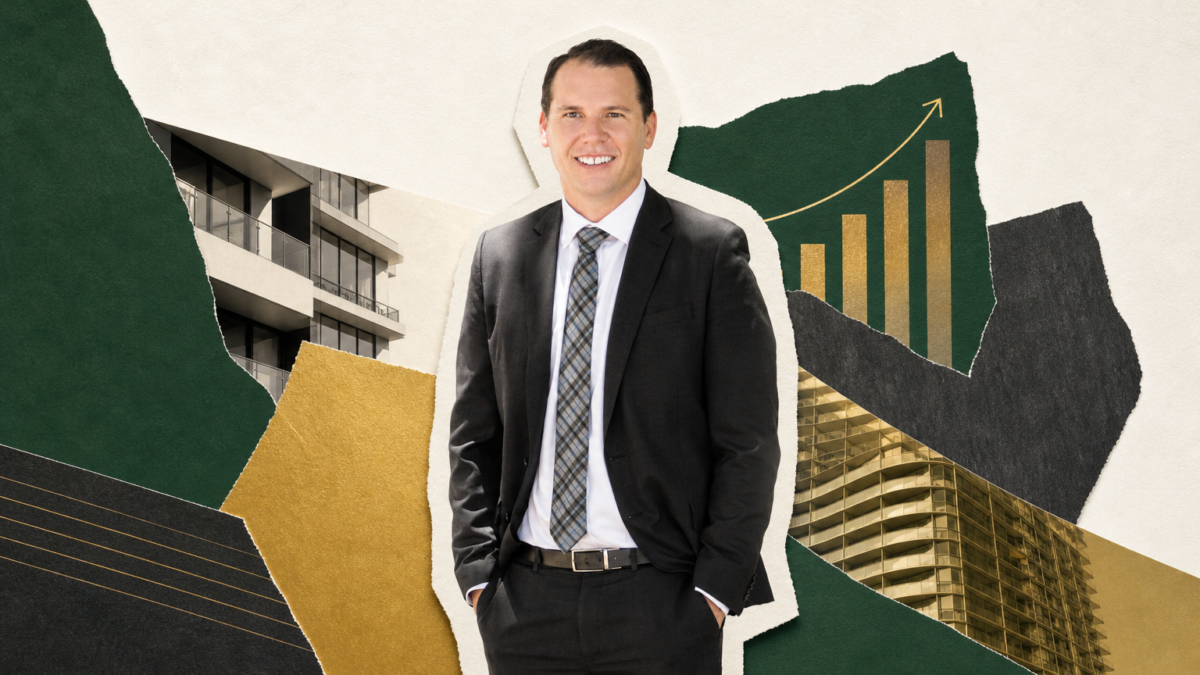
Colliers Gold Coast Director-in-Charge Steven King said the region continued to attract investment despite weakening national sentiment.
“The market has slowed from a record year, but it hasn’t stalled as population growth, jobs and a housing shortage are carrying the Gold Coast through.”
Housing shortage keeps pressure on prices
The strength of the Gold Coast’s residential market is also evident in its rental sector, where the vacancy rate sits at just 1.9 per cent and rents have increased by 7 per cent over the past year.
Colliers Associate Director of Research Pragya Sharma said the imbalance between housing supply and demand continued to support property values despite increasingly challenging market conditions.
“Quarterly growth has eased, but a structural undersupply is holding values up, with the key indicators across each of the residential and commercial property sectors supporting the analysis,” Ms Sharma said.
The city’s population has surpassed 691,000 and is forecast to approach one million by 2046, placing further pressure on housing supply and infrastructure.
Meanwhile, the Gold Coast economy has expanded by 39 per cent over the past decade to $55 billion, recording growth of 3.72 per cent in the past year alone.
The region added 5,300 jobs in the year to August, with unemployment sitting at 3.1 per cent, well below the national average of 4.7 per cent cited in the report.
Commercial property holds its ground
The resilience extends beyond residential real estate, with commercial property transactions in 2026 already exceeding the full-year totals recorded in both 2024 and 2023, despite activity slowing from last year’s exceptional performance.
“After exceptionally strong volumes in 2025, where we saw $1.4 billion in commercial assets change hands, the latest figures point to 2026 shaping as another strong year for commercial property transactions,” Mr King said.
“Last year there was a significant shift in capital to the Gold Coast, but the latest data shows that process has some way to go yet, even amid the negativity that is dominating national sentiment.”
Ms Sharma said the office, industrial and retail sectors were also demonstrating resilience.
“We’re also seeing continued strength in the office market with lower vacancies and positive demand,” she said.
“Industrial vacancies are also extremely tight, leading to solid growth in prime rents, while the retail market has also been supported by significant transactions over the past year.”
Infrastructure investment supports long-term growth
More than $20 billion in major infrastructure and investment projects tracked by Colliers are supporting the region’s economy, including the $5.75 billion Logan and Gold Coast Faster Rail project, the $5 billion Gold Coast Health and Knowledge Precinct, the $3.5 billion Coomera Connector and the $2.25 billion Coomera Hospital.
Despite these economic advantages, Mr King cautioned that the Gold Coast was not immune to the broader challenges facing the property sector, with investors likely to remain selective in the near term.
“Investors are likely to remain selective in the short term, with a continued focus on quality assets,” he said.
“However, RBA forecasts point to an improving economic outlook in 2027, which could help restore investor confidence and encourage greater activity across the property market.
“While market conditions may remain subdued in the short term, the region’s long-term prospects remain positive, with opportunities for investors focused on quality assets and sustainable returns.”