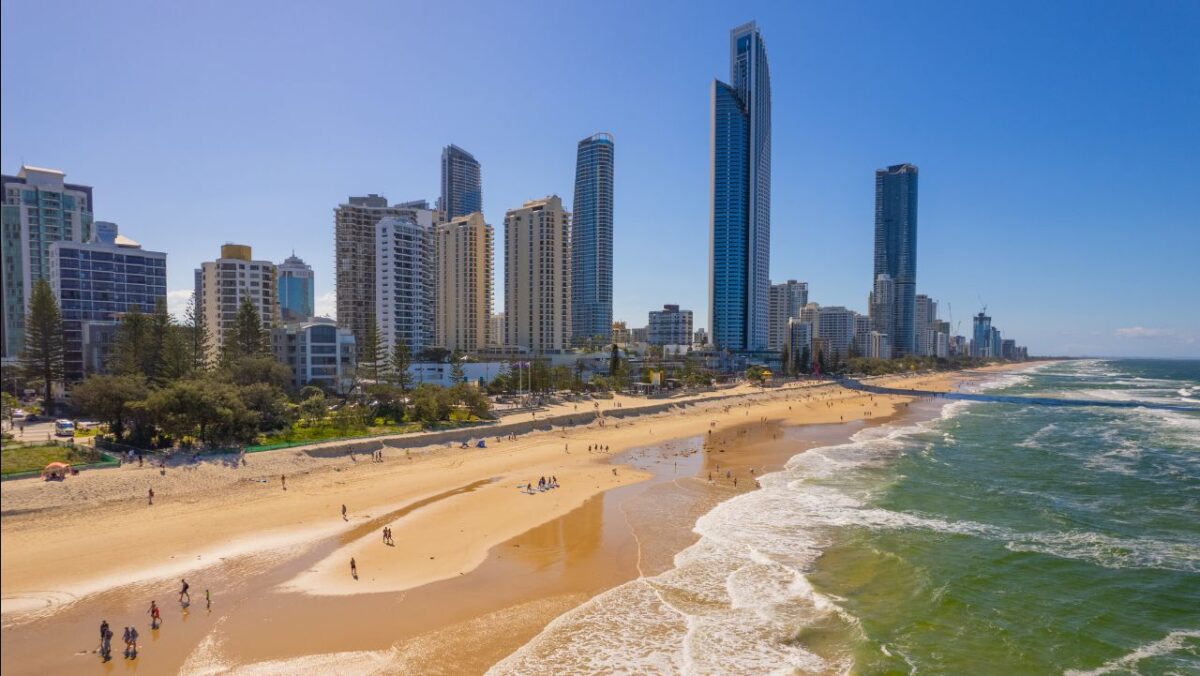
The Gold Coast is now outpacing Australia’s capital cities in economic growth, with 420+ new residents a week and housing supply lagging at under half demand.
The Gold Coast has officially overtaken every Australian capital city to become the nation’s fastest-growing economy.
Breaking free from its historical reputation as a seasonal lifestyle hub, a permanent structural shift is driving an unprecedented boom in the prestige property sector.
According to the Gold Coast Property Report 2026, a joint publication by COAST Buyer’s Agency and Ryder Property Research (Hotspotting), the region’s Gross Regional Product has hit a staggering $49.46 billion, outperforming forecasts by $775 million to solidify its place as Australia’s largest non-capital economy.
The city’s economy is forecast to expand by 10.07% over the next four years, well ahead of the national rate of 7.91%.
This acceleration is backed by a massive $91 billion infrastructure pipeline, with $54 billion in government projects and $37 billion in private sector investment.
Key Macro Drivers
Industrial Maturation: Construction is now the Gold Coast’s most productive industry ($5.04b), followed by health care ($4.5b) and manufacturing ($3.15b). This has driven unemployment down to a tight 3.5%, well below the Queensland average of 4.2%.
Relentless Demand: Over 420 new residents migrate to the Gold Coast every week , bringing projected population figures to one million by 2040 – six years ahead of schedule.
Systemic Supply Deficits: To meet demand, the city requires 9,250 new homes annually. However, building approvals for FY2025 sat at a mere 4,091, with the Property Council warning that 58% of approved unit projects are currently at risk of delay or cancellation.
Rental Squeeze: Regional vacancy rates have plummeted to a critical 1.3% , leaving only 900 properties available across the entire region. Median house asking rents rose 8.6% in 12 months.
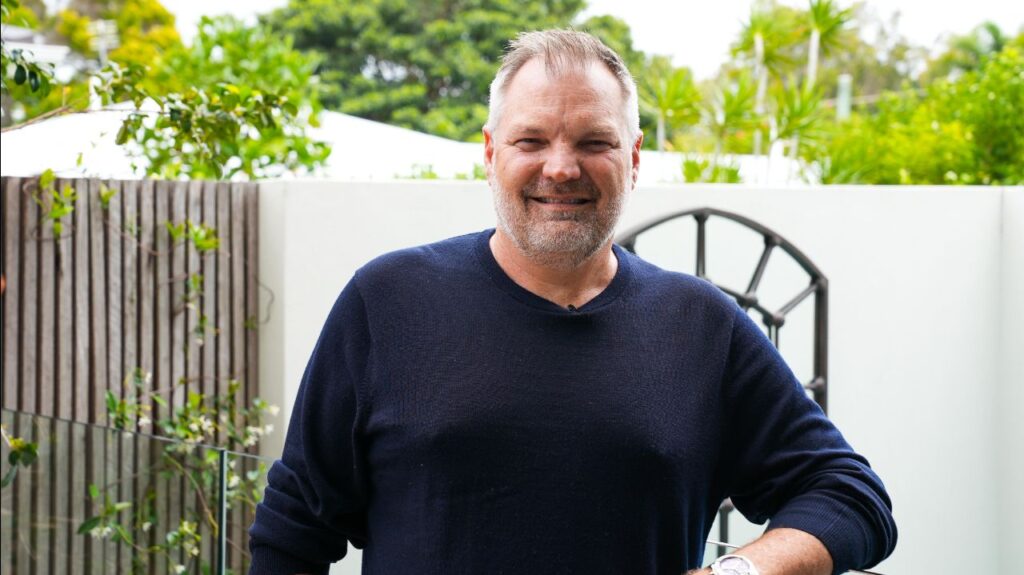
“The number I’ve always watched is migration, and right now the Gold Coast is absorbing more than 400 people a week into a market that simply isn’t building enough homes. When you’ve got too many people chasing too few houses, there’s really only one direction for prices,” said COAST Buyer’s Agency Principal, Joe Pullos.
COAST Buyer’s Agency principal Joe Pullos. Image: Supplied
Four Standout Prestige Suburbs
Mr Pullos highlighted four distinct geographical markets primed to significantly outperform the wider property sector:
Mermaid Beach: Trophy market and home to “Millionaires’ Row”. House prices surged 32% over the past 12 months to a median of $3.35 million. “Mermaid Beach is where the serious money goes, and the absence of any new beachfront land means the supply of these homes is fixed. When you have buyers competing for a finite pool of trophy homes in a market growing this fast, the only way is up.”
Broadbeach Waters: Prized for wide canal frontages. The median house price rose 15% to $2.575 million, accompanied by a major 46% spike in quarterly transaction volume. “If I had to single one out, it’s Broadbeach Waters. That 46% jump in transactions tells you buyers are moving with real conviction… the window to buy well is narrowing fast.”
Currumbin: The competitive entry point of the luxury residential tier , housing values jumped 28% in 12 months to a median of $1.8 million. “Currumbin has that authentic, laid-back beach-town feel that’s become incredibly hard to find, and increasingly valuable… the upside here is substantial.”
Palm Beach: Driven by striking beachfront developments , the suburb holds a median house price of $1.93 million. “Palm Beach has matured into a true prestige destination, but it hasn’t yet fully repriced the way Burleigh or Mermaid have. It remains eminently affordable by comparison, which is exactly why it’s got so much growth potential.”
With an additional $2 billion economic injection on the horizon from the 2032 Olympic Games , Mr Pullos concluded: “The fundamentals here are as strong as I’ve seen. This isn’t a speculative run, it’s a structural shift in where Australians want to live and work.”
Data sources: The Gold Coast Property Report 2026 (Joint Publication of COAST Buyer’s Agency & Ryder Property Research / Hotspotting) , incorporating data metrics from PropTrack, the ABS, Jobs Queensland, and the Gold Coast City Council.
The Brief
Start the day ahead of the competition
Who moved, what sold and how it got done, plus the numbers behind it. Every weekday morning. Free.