
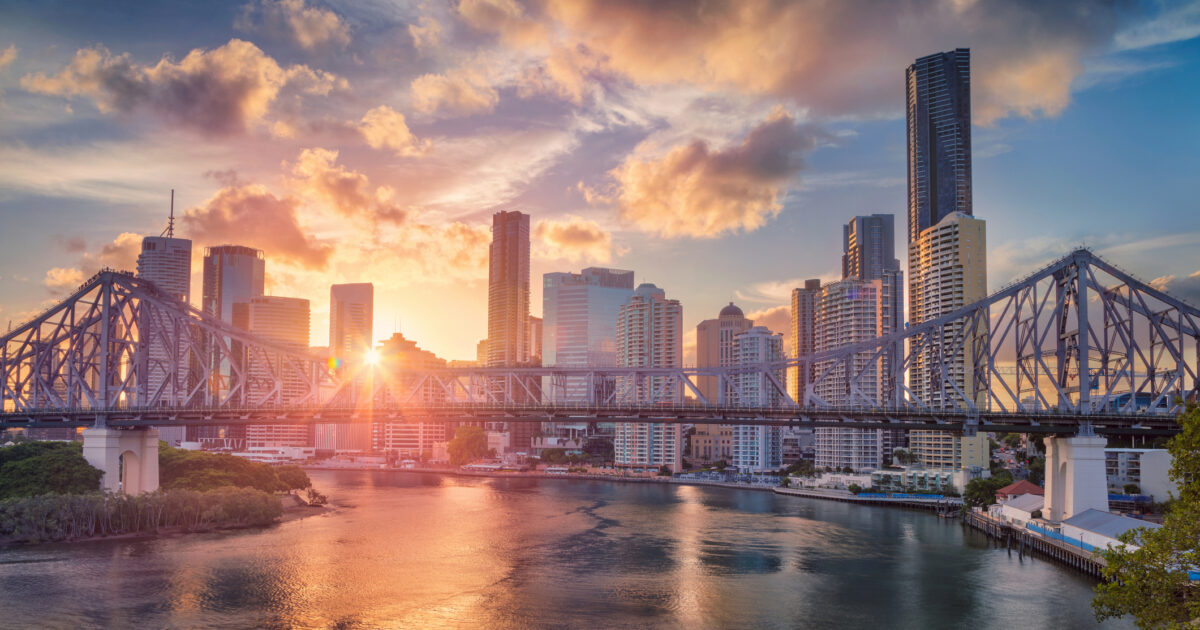
Brisbane is increasingly positioned as an upcoming luxury property market globally, supported by rising wealth creation, limited high-end supply, and large-scale infrastructure development.
Knight Frank’s Wealth Report shows Australia is among the fastest-growing wealth markets, ranking 4th globally for billionaire growth, projected to rise 77% by 2031, and 5th for ultra-high-net-worth individual (UHNWI) growth at nearly 60%.
Globally, 89 new UHNWIs are created each day, supporting sustained demand for luxury assets.
In the luxury residential sector, performance across Australia’s major cities remains uneven.
Melbourne has recorded a 4% increase in buying power over five years, while Sydney has declined 5%. Brisbane is down 5%, Perth down 11%, and the Gold Coast down 14%, though it continues to offer the strongest relative value.
Globally, luxury residential prices rose 3.2% in 2025, outperforming mainstream housing markets for a second consecutive year.
Within Australia, Perth led luxury price growth at 4.1%, followed by the Gold Coast at 2.8% and Brisbane at 2.1%, while Sydney and Melbourne recorded slight declines.
In the report, Brisbane was identified as key luxury growth location, supported by Olympic-related infrastructure investment and ongoing urban redevelopment.
Planning conditions have enabled fast-tracked development, with top-end apartment prices rising from around US$6 million (circa AU$9 million) to over US$10 million (circa AU$15 million) within a 12-month period.
Ray White Collective data highlights very tight conditions in the prestige segment. The group manages 12,000 inner-city private properties but currently has only 12 listings available, resulting in multiple applications and limited inspection capacity.
Matt Lancashire, who has just launched a new group for properties over $4 million called Ray White Collective Luxury, revealed that buyer inquiry for homes over $5 million was up 60 per cent, while stock was down 40 per cent.
Investor activity has shifted toward Brisbane, overtaking Victoria amid higher taxation settings, while owner-occupier lending has reached record levels.
The Federal Government’s 5% First Home Buyer scheme remains highly utilised, with some industry feedback suggesting price adjustments have followed policy thresholds.
At the top end of the market, demand is being driven by both migration and demographic change. Several recent $10 million-plus transactions have been completed by buyers in their 30s, while demand for luxury apartments is increasing among downsizers and rightsizers seeking low-maintenance, high-end living.
Ray White notes that steady weekly population inflows into Brisbane, supported by its reputation as a safe family-oriented city and ongoing skilled labour shortages.
Major precinct developments, including the Gabba redevelopment and Northshore Hamilton transformation, are expected to increase urban density beyond the traditional CBD.
Ray White Collective CEO Haesley Cush said: “We are bullish on Brisbane. We are advocates for growth and we love this city.”
What the Knight Frank The Wealth Report found:
- Luxury residential housing market – Brisbane named as one of the world’s hottest luxury property markets
- Brisbane is just one of a few cities globally experiencing unprecedented change in its luxury appeal
- The city is experiencing rapid growth propelled by the 2032 Olympic Games and significant government infrastructure investment
- A favourable planning environment has allowed developers to fast-track luxury projects, pushing top-end apartment prices from a historical ceiling of around US$6 million (circa AU$9 million) to more than US$10 million (circa AU$15 million) in just 12 months
- There was a 2.1% average rise in Brisbane’s luxury residential property prices over 2025, while the Gold Coast saw a 2.8% rise
- In 2027 Brisbane, the Gold Coast and Perth are expected to be the strongest performing luxury markets, with 2% forecast growth in luxury residential prices
- in Brisbane US$1 million now buys 5% less than it did 5 years ago. The Gold Coast has seen the biggest reduction in buying power at 14%, but still offers the greatest value for money