
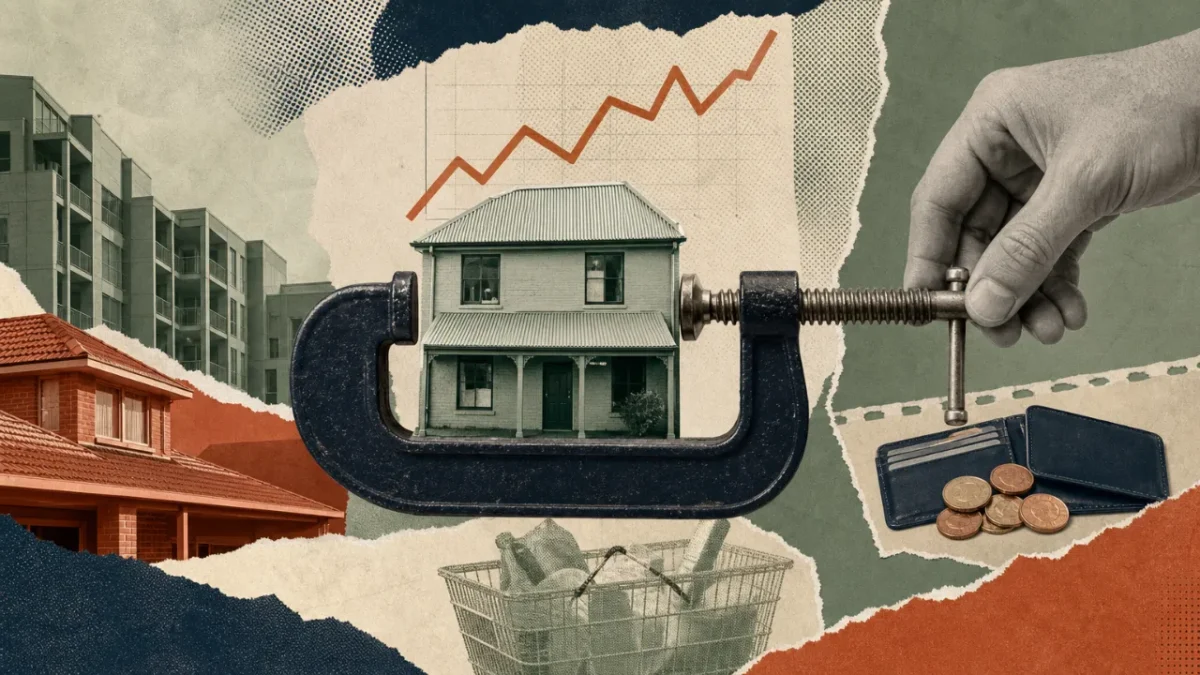
Nearly one-third of Australian mortgage holders are spending more than half of their take-home pay on loan repayments, according to new financial research exposing the severity of the country’s housing affordability crisis.
Fresh figures from Finder’s 2026 Home Loan Report show 29 per cent of borrowers now allocate over 50 per cent of their net earnings to their mortgage.
Overall, 43 per cent of mortgage holders, (roughly 1.4 million people), are spending at least 40 per cent of their income on monthly repayments. Furthermore, 55 per cent of borrowers spend more than 30 per cent of their net income servicing debt, pushing a clear majority of Australian homeowners past the traditional benchmark used to measure mortgage stress.
The average Australian borrower now dedicates 38 per cent of their take-home pay to home loans. Millennials carry the heaviest burden, surrendering an average of 41 per cent of their net pay, compared to 36 per cent for Generation X and 30 per cent for Baby Boomers.
The pressure is also forcing many borrowers into what analysts describe as “mortgage prison”. The report reveals that 36 per cent of homeowners are currently unable to switch to a better home loan, either because their borrowing capacity has dropped due to lower income and higher living expenses (22 per cent) or because they lack sufficient home equity to refinance (14 per cent).
Richard Whitten, home loans expert at Finder and author of the report, warned that extreme repayment stress was pushing households to their limits.
“When your home loan is consuming close to half your take-home pay, it leaves very little room for anything else,” Mr Whitten said. “There’s simply less money left to build savings, invest or cope with unexpected expenses.”
He added that trapped borrowers should explore all options to ease the strain: “If your mortgage is eating up too much of your income, it’s worth reviewing your home loan. Refinancing to a lower rate, negotiating with your lender, or finding a more competitive loan could reduce your repayments and free up thousands of dollars over the life of your mortgage.”
The findings coincide with a separate national survey of 615 respondents conducted by Money magazine between June 11 and July 12, 2026, which revealed deep public disillusionment with the property sector. Asked to describe the current market in under 25 words, respondents frequently branded it “broken”, “unfair”, “overpriced” and “out of reach”.
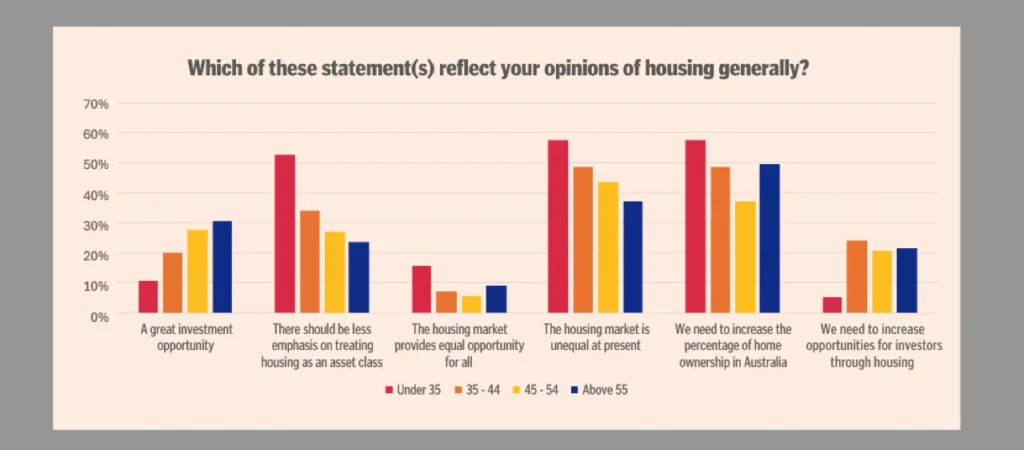
When asked to align their broader thoughts on housing, 46 per cent of Australians agreed that the country needs to increase overall home ownership rates, while 41 per cent stated the property market is currently unequal. Opinion remains split on property’s role in wealth creation, with 29 per cent viewing it as a great investment opportunity and 27 per cent arguing there should be less emphasis on treating housing as an asset class.
A sharp generational divide emerged across the data. Among Australians aged under 35, 58 per cent view the market as fundamentally unequal, and 58 per cent insist home ownership rates must be raised. Additionally, 52 per cent of under-35s argued that housing should be treated less as an asset class—nearly double the national average.
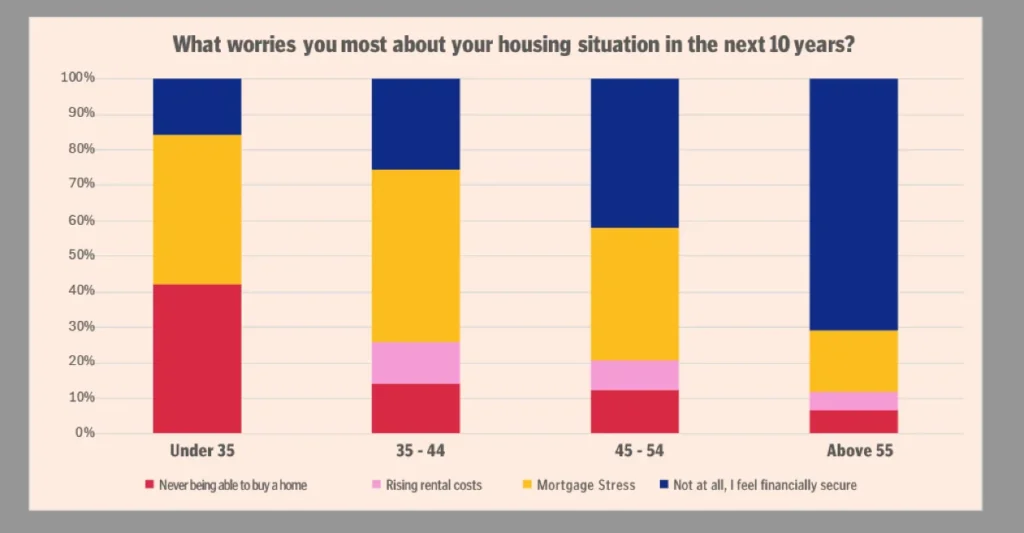
Long-term confidence among prospective young buyers has plummeted. Forty-two per cent of under-35s named the fear of never being able to buy a home as their single biggest housing concern over the next decade, compared to just 7 per cent of Australians over 55. Conversely, older Australians remain far more likely to view real estate positively, with 31 per cent of those aged 55 and over seeing it as a great investment opportunity, compared to just 11 per cent of young adults.
Vanessa Walker, managing editor at Money, said the language used by everyday Australians highlighted a growing sense of disenfranchisement.
“What stood out wasn’t just the numbers, it was the language Australians used,” Ms Walker said.
“Time and again people described the market as unfair, unattainable and out of reach. The dream of owning a home is still very much alive, but many Australians feel that dream is becoming harder to achieve.”
“Whether Australians already own a home or are trying to buy their first, there is a clear sense that housing affordability has become one of the defining financial issues facing the country,” Ms Walker added.
Financial strain is also spilling directly into daily household budgets. More than four in 10 respondents reported cutting discretionary spending to save money, while 10 per cent said they were completely unable to save. More than four in 10 respondents noted that their mortgage or rental payments directly cause financial stress, while almost half of renters listed rising rents as their single largest challenge.
Despite the mounting pressure, six in 10 Australians still believe buying a home remains a better long-term option than renting. However, three in 10 now believe both paths have become equally challenging.