
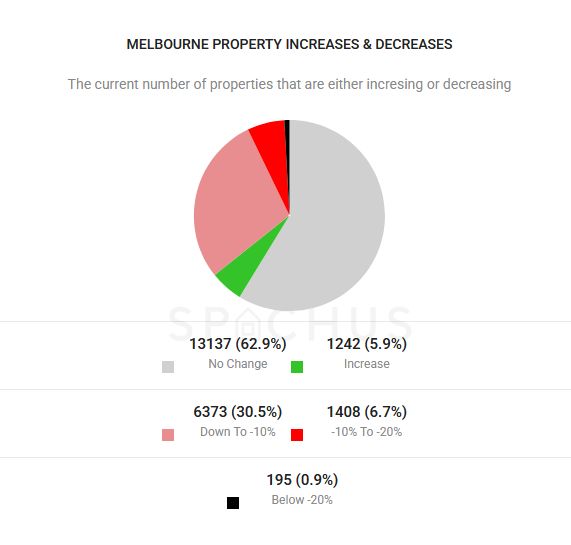
New data from independent property tracker Spachus Aus suggests Melbourne vendors are increasingly being forced to adjust their price expectations, with more than a third of listings now carrying price reductions as the market continues to rebalance from its 2025 peak.
According to the latest figures, 35 per cent of Melbourne properties listed for sale have been discounted from their original asking price, up sharply from 19 per cent just a month ago.
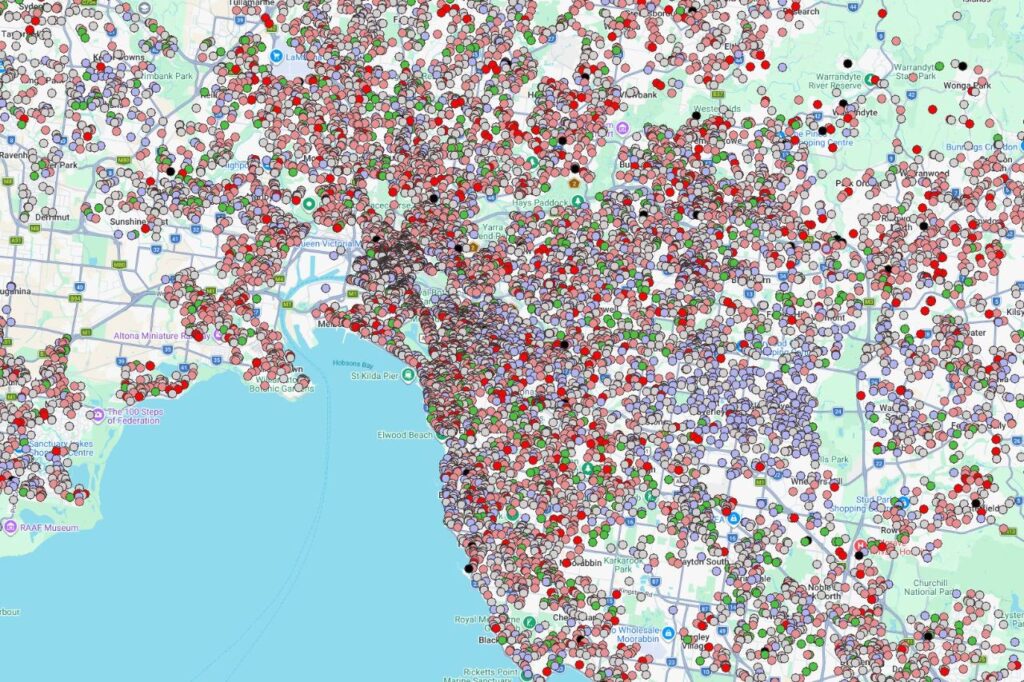
The findings indicate many sellers are still grappling with changing market conditions as buyers gain greater negotiating power.
However, according to Ray White Ferntree Gully sales consultant Christine Jones, the reality on the ground is far more nuanced than the headline figures suggest.
Ms Jones said the starting point for any conversation with a vendor was understanding their motivation to sell rather than focusing solely on historical price expectations.
“The first thing that I would pay attention to is clearance rates,” Ms Jones said.
“For anyone who’s thinking of transacting, coming to the market and selling their property, that’s the first thing that I would draw their attention to in understanding that the clearance rates are somewhat lower and probably the lowest we’ve seen in some time.”

Ms Jones said sellers who are genuinely motivated to move are generally more willing to accept market feedback, particularly when agents present clear evidence to support their recommendations.
“If their motivation is to genuinely sell, then the clearance rate and the reality of the price adjustment will automatically be part of the conversation,” she said.
The growing gap between vendor expectations and buyer sentiment has become one of the defining challenges for agents across Melbourne this year, particularly as higher interest rates continue to affect borrowing capacity.
Ms Jones said pricing conversations require honesty and evidence rather than optimism.
“These days, it’s not how high the price that you’re going to give your client,” she said.
“It’s the reality of, with some facts and figures that you’re backing up with evidence, being able to guide them through it.”
She warned that agents who promise unrealistic prices risk creating bigger challenges later in the campaign.
“If you’re matching a price expectation that as an experienced agent you can see is obviously not in line with reality, then you’re taking on what you’re asking for, because you then need to make the adjustments accordingly,” she said.
While comparable sales remain an important valuation tool, Ms Jones said rapidly changing conditions mean recent evidence carries more weight than historical results.
“You can work with a six-month period, but six months is a long time in real estate,” she said.
“I’d say within a two-month period, two to three-month period, is probably long enough to give a little bit more accuracy.”
Ms Jones said auction clearance rates remain one of the clearest indicators of market sentiment because they provide immediate feedback from active buyers.
“We rely on clearance rates on auctions to give us a more transparent indication of what’s happening in the marketplace,” she said.
Although Melbourne is increasingly being described as a buyer’s market, Ms Jones said strong buyer relationships have become more important than ever.
“Relationships with buyers even more so should be stronger because they’re pretty much deciding on the price of the property and what they’re prepared to pay,” she said.
Despite concerns about the broader market slowdown, Ms Jones said the current environment should not be viewed as a crisis.
“It doesn’t need to be seen as doom and gloom. It’s just a little bit more challenging,” she said.
“We’ve had some pretty good market conditions, and it’s easier to adjust and transact in that environment. But when there’s a little bit more of a challenge and price is a challenge and owners’ expectations are challenged, it’s a little bit more uncomfortable.”