
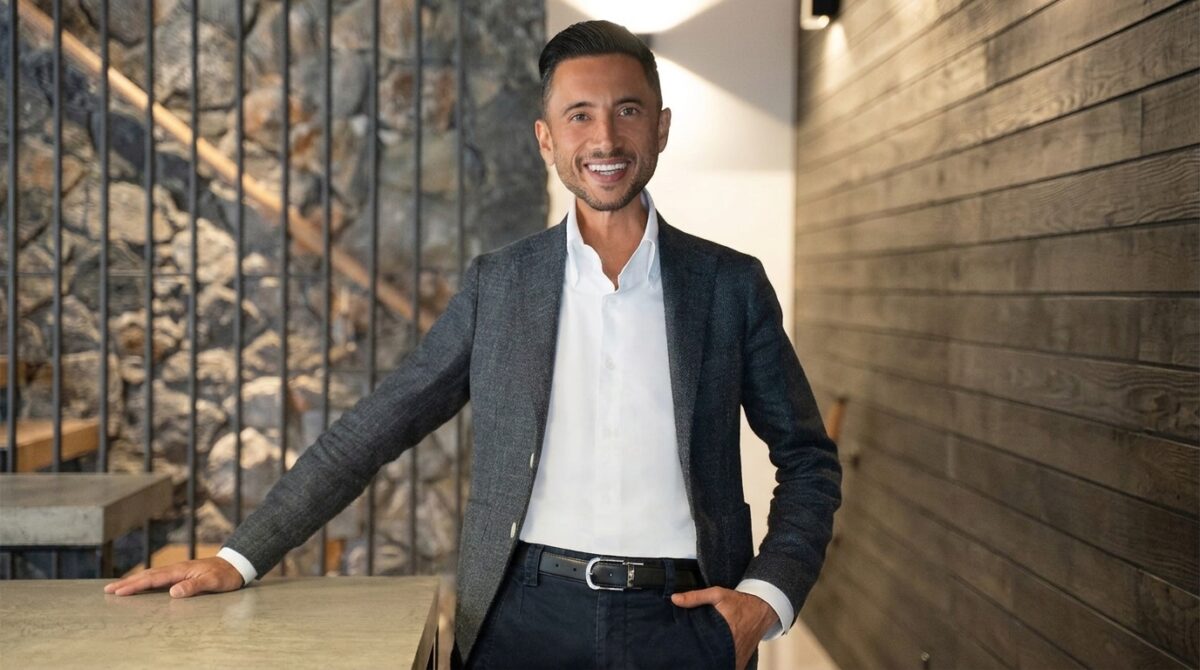
In 2011, Alex Jordan sat in a specialist’s office listening to a sentence that should have ended his career on the spot.
Living in Brisbane in the wake of devastating floods, he was financially broke, falling behind on his mortgage, and failing to build momentum in real estate despite a full decade of grind.
Then came the ultimate physical blow: a devastating dual diagnosis of Crohn’s disease and Ankylosing Spondylitis – a chronic spinal arthritic condition that progressively fuses the spine into a permanent hunchback.
“The specialist sat me down and said, ‘Alex, you’ve got to get out of real estate, because you’re not going to be able to drive a car or tie your shoelace in ten years’ time,'” Jordan recalls.
“I was financially broke and psychologically hurt because I was failing at real estate after more than a decade of trying. My wife was pregnant with our first child, she had to stop work, and I remember thinking: Holy moly, what am I going to do?”
It was absolute rock bottom.
Yet today, Alex views that moment as the greatest gift of his life. Facing a strict deadline on his physical mobility forced him to realise that time was a non-renewable currency, sparking a transformation that shattered every limit he had set for himself.
Fast forward to today: Alex hasn’t just adapted – he has rewritten the standard for Australian real estate.
Named McGrath’s Agent of the Year for five consecutive years and now a partner across five McGrath offices in Brisbane, he has multiplied his business by 25 times, consistently writing top-tier national volume.

The catalyst for that explosive growth wasn’t a tactical sales script; it was a total recalibration of his internal mindset, sparked when he met John McGrath during the brand’s expansion into Brisbane, at a time when Alex didn’t even believe he was worthy of an interview.
“I went into the interview thinking I wasn’t good enough and wouldn’t get the job,” he says.
“I’d failed for over ten years, but John had a belief in me that surprised me. He’s the best mindset coach I’ve ever met … when you’re writing $300,000 in commission and someone talks about writing $10 million, you doubt it. But he has a way of making you think anything is possible.
“I’ve literally 25x’d my business from where I was.”
The long game: detachment, “woo woo” resilience, and recovery time
With that renewed belief came a radically different way of operating on the ground and while most agents operate on immediate transaction cycles, Alex built his career on absolute detachment from short-term outcomes, operating as an unattached advisor rather than a deal-hungry salesman.
“In real estate, human instinct is that if you do something, you expect a result,” he says.
“Here, you’ve got to have a completely different mindset. Sometimes you’ve got to put a lot of effort in without much outcome, and then two years later, it comes back to you in multiples.
“We want to be in that trusted advisor role where you give advice that is from the heart, not for a return on investment, not to secure business, but very honest, arm’s-length advice. And sometimes the advice is that they shouldn’t sell. Hold on and wait for a better opportunity.”
That long-game philosophy requires an exceptional level of emotional resilience, a trait Alex considers far more critical than raw sales drive.
In an industry notorious for psychological highs and lows, he processes lost listings and fallen contracts through a lens that many in corporate real estate might find surprisingly spiritual.
“When something doesn’t go your way, I don’t see that as negative – I see that as a path of destiny that was meant to occur,” Alex says.
“If I miss a listing I really wanted, I rationalise it. Maybe if I won that business, I would have had a major car accident on the way to an inspection.
“You don’t know where life takes you, you’ve got to look at it as a lesson to help you evolve and if you carry negative energy to your next appointment, you compromise those opportunities too. The recovery time is what governs your final outcome.”
To fuel that recovery time and keep his physical condition manageable without pharmaceuticals, he enforces a strict personal discipline off the pitch: zero alcohol, a strict keto diet, early sleep routines (in bed before 8:30pm), and a relentless practice of daily gratitude.
“People would trade anything just to live in this country and have the safety we enjoy here,” says Alex, who escaped war-torn Iran as a child.
“I say thank you 50 to 100 times a day. If you operate from gratitude rather than a feeling of lacking, your emotional state completely shifts.”
Balancing growth, team dynamics, and personal goals
Despite expanding into co-ownership of five Brisbane offices alongside John McGrath, John Iceton, and Tony O’Doherty, Alex remains disarmingly frank about balancing a expanding agency footprint with high-volume selling.
That grounded approach extends to his day-to-day role in the office and despite his equity stake, you won’t find “Principal” or “Director” printed on his business card; this a deliberate choice designed to protect both team equity and client relationships.
“If you’re working in the office next to your colleagues and using those titles, it makes you look superior. Consumers will always try to deal with the ‘boss’, and that’s not fair to your team. If you’re a selling owner, be very careful with how you position yourself within the office.”
That emphasis on team dynamics isn’t just about office culture; it’s the foundation of his long-term strategy and as he looks toward the next five years, Alex’s ultimate ambition isn’t simply capturing market share, it’s using that team leverage to reclaim the personal time he lost along the way.
“I haven’t seen a single Saturday game of my daughter’s netball because of open home commitments,” he admits.
“All these sacrifices come with rewards, and I’m not complaining, but my real goal in five years is to have enough team leverage so I can be there on the sidelines.”