
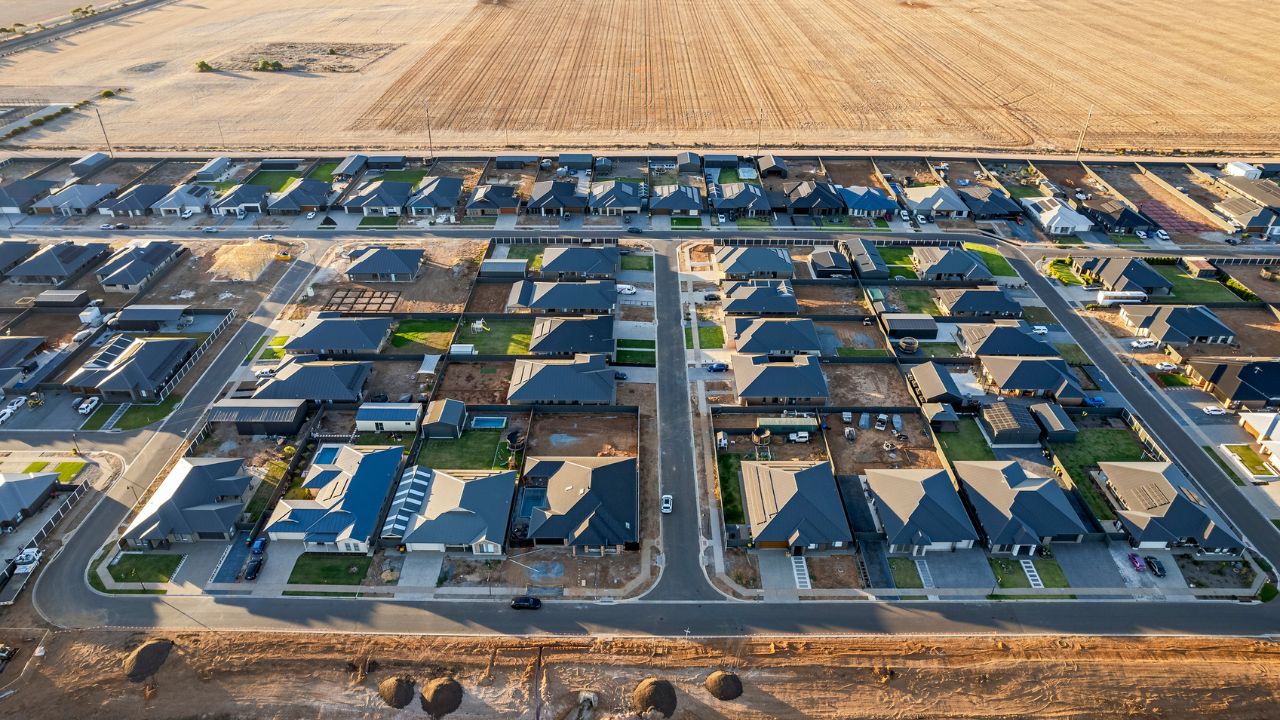
The primary constraint on home building in Australia isn’t labour or materials – it’s the supply of shovel-ready land.
That’s the main finding from the February 2026 HIA-Cotality Residential Land Report, which reveals the median price of residential land nationally reached a new record high of $391,420 in the September quarter 2025, up 10.3 per cent over the year.
Across capital cities, the median lot price climbed to $437,855, representing a 12.8 per cent annual increase.
Regional markets saw more modest growth of 3.2 per cent to $295,160.
“Land prices do not reflect the cost of dirt,” the report said.
“They reflect the cost of making land ready for housing.”
Since 2000, residential land prices have increased by more than 500 per cent, while construction costs rose approximately 150 per cent over the same period.
Even labour costs, often blamed for housing affordability pressures, have only slightly more than doubled.
Adelaide recorded the sharpest annual price increase among capitals, with lot prices up 39.5 per cent.
Perth followed at 21.5 per cent and Brisbane at 18.4 per cent.
Sydney remains the most expensive market at $685,000 per lot, more than 50 per cent higher than second-placed Brisbane at $452,250.
Capital city lot sales fell 35.4 per cent year-on-year to just 6,250 in the September quarter. Brisbane nearly reached a new record low, while Perth sank to its lowest quarterly sales volume in 25 years.
Regional Queensland and regional Tasmania hit new record lows for sales activity.
The report argues these constraints are largely artificial, created by planning systems and infrastructure funding models that load costs onto new housing rather than spreading them across the broader tax base.
“Before a new lot can be sold, land must be rezoned, serviced, and connected to infrastructure,” the report said.
“Increasingly, the cost of this infrastructure is not funded from general government revenue but instead charged directly to new housing through a complex web of taxes, fees, levies, and contributions.”
These upfront costs, including developer contributions, headworks charges, and utility connection fees, are ultimately borne by homebuyers.
Tasmania remains the weakest market in the housing recovery. Lot sales fell 6.6 per cent in Hobart and nearly one-third across regional Tasmania, while prices have more than doubled over eight years.
New South Wales shows tentative signs of recovery, with Sydney lot sales up 6.1 per cent and regional NSW up 33.1 per cent.
Prices remain flat year-on-year, though Sydney lots cost more than 50 per cent more than Brisbane equivalents.
Queensland, South Australia and Western Australia are further along the cycle.
Sales have begun falling again following brief recoveries, while prices have surged to new highs.