
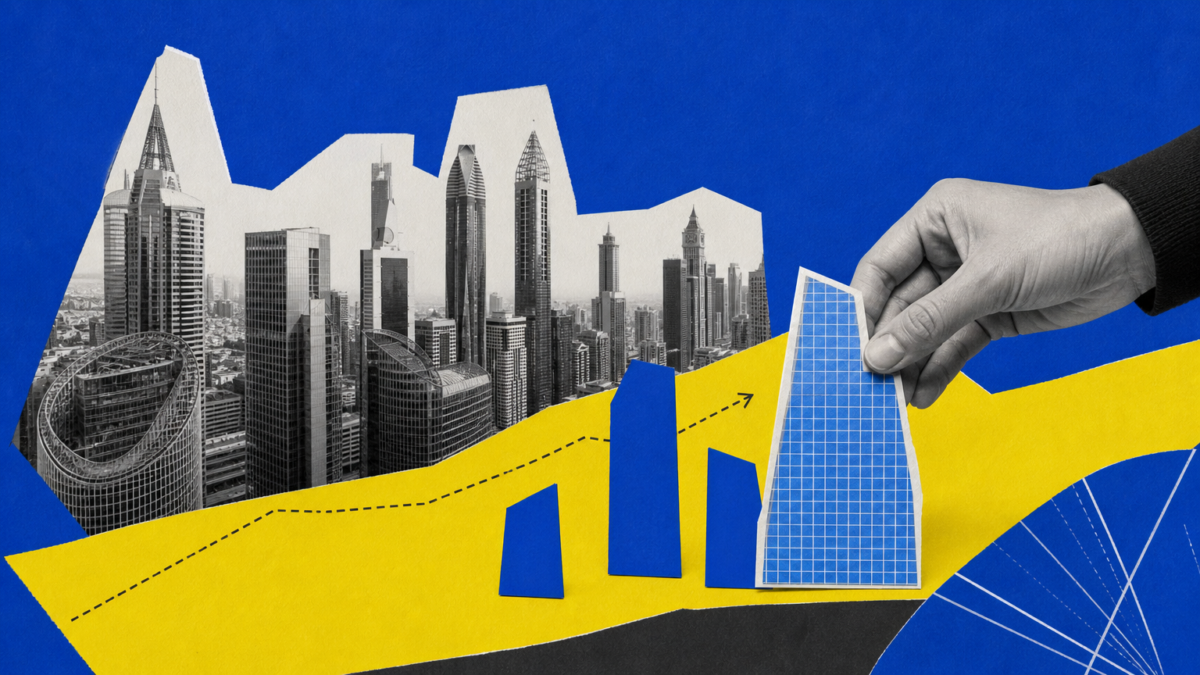
A four-building development featuring hotels, luxury residences and premium office space is under construction as Dubai navigates weaker property sales and rising building costs.
Dubai is pressing ahead with a US$1.4 billion (about AUD$2.15 billion) property development in its financial district, betting on the emirate’s long-term appeal despite a slowdown in transactions linked to the war in West Asia.
The Water Gardens project, led by developer H&H Development, comprises four buildings featuring two hotels, residential properties and premium Grade A office space. Construction is under way, with completion targeted before the end of 2028, according to a Bloomberg report cited by The Economic Times.
The development comes as Dubai’s property market faces weaker demand from foreign investors following Iranian attacks on the United Arab Emirates at the start of the conflict. Transaction volumes have declined, while construction costs have increased, although property prices and rents have remained relatively resilient, with only marginal falls reported.
H&H Development chairman Shahab Lutfi told The Economic Times that property sales were continuing despite the softer market.
“There are cycles in every industry and Dubai always comes out of these cycles much stronger,” Mr Lutfi said.
He added that the company had managed its finances carefully and was taking a long-term view of the market.
Recent transactions suggest demand for premium property remains. Two Four Seasons-branded residences in the new district sold for 35 million dirhams (about AUD$14.4 million) and 45 million dirhams (about AUD$18.5 million), respectively, according to the report.
About 85 per cent of the development’s branded residences have been sold, despite the broader slowdown.
Mr Lutfi said most of the development would be leased and operated rather than sold, indicating the project is designed to generate ongoing income as well as capitalise on Dubai’s position as an international business destination.
The investment also builds on the expansion of the Dubai International Financial Centre (DIFC), which is seeking to strengthen its role as a hub connecting businesses and investors across the Middle East, Africa and South Asia.
For property professionals, the project highlights the difference between short-term market conditions and developers’ longer-term investment strategies. While geopolitical uncertainty is weighing on transactions and construction costs, Dubai continues to invest in the commercial, residential and hospitality infrastructure underpinning its international business appeal.