
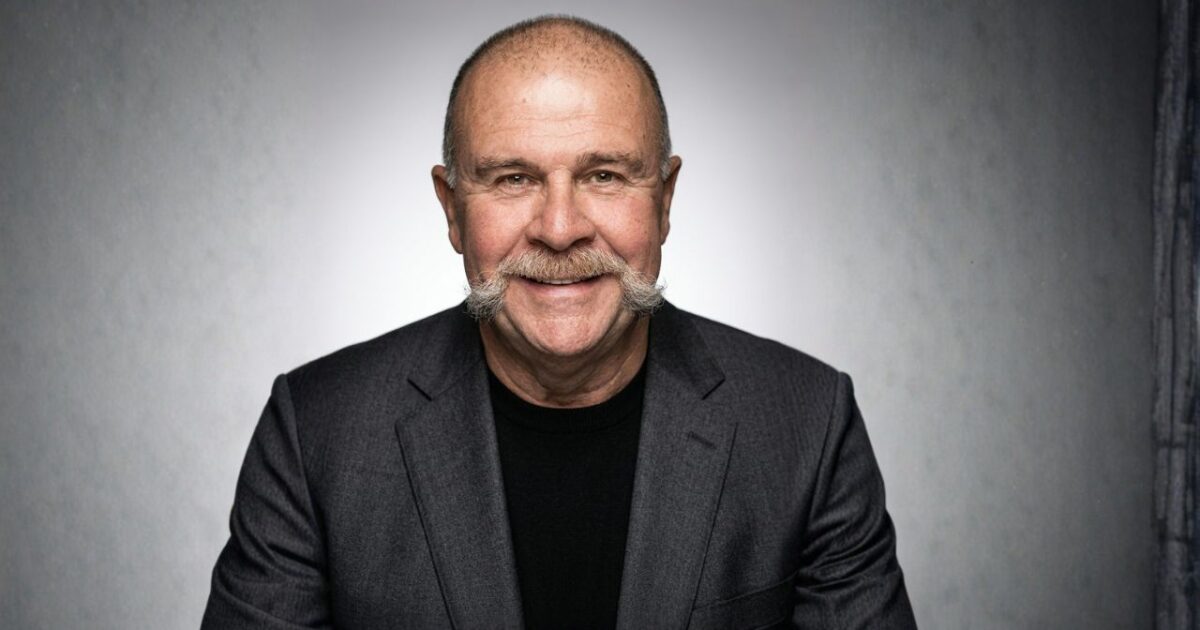
I’ve recently stepped away from a senior leadership role in an industry organisation. Ten years in that seat gave me a unique vantage point across the Australian real estate landscape.
Upfront: this piece does not speak for my former employer, nor does it necessarily reflect their views. These are mine. Mine alone.
This time around a week ago Samantha McLean wrote a powerful piece titled The Mirror Has Many Faces.
Sam bravely shone a very bright spotlight on some things that needed saying. More importantly, she said them at a time when too many people in our profession would prefer to stare at the floorboards and mumble something about “a few bad apples.”
She challenged the culture, the incentives, the enablers, and the hero worship. Good. Someone had to.
Because here’s the uncomfortable truth: for all the outrage we see when a practitioner ends up in regulatory trouble, far too much of that outrage arrives late, cheap, and dressed up as moral clarity.
Once the headlines hit, everyone becomes a saint. Funny that.
Sadly it probably shouldn’t come as any surprise that In the week since Samantha bravely shared those uncomfortable home truths that many of the biggest, loudest, and more prominent industry voices appear to have assumed the Ostrich.
Putting the gender imbalance in this quote aside, I think John Stuart Mill was onto something when he said; ‘The only thing necessary for the triumph of evil is for good men to do nothing’… The year was 1867.
Over the past decade I’ve often reflected on whether I, and others in leadership, could have made more impact on behaviour across the profession. I’d have liked to.
But let’s be honest about the limits of peak bodies and associations. They can advocate, educate, lobby, and sometimes discipline within their own membership frameworks. What they cannot do is sit in every lounge room, every car, every office, and every kitchen-table presentation across the country.
At some point, responsibility stops being theoretical and becomes personal.
You either know how to behave responsibly and ethically, or you don’t. You either choose values as a human being, or you don’t.
The first responsibility sits with the practitioner. The second sits with the business owner, employer, and leadership team who create the standards, tolerate the shortcuts, reward the behaviour, and choose what gets celebrated.
Then, where laws are broken, the responsibility sits with the regulator to investigate and enforce.
That’s how adult professions work.
One of the great failings in real estate, particularly in Queensland for many years, has been the absurd idea that ongoing learning was somehow optional.
For decades, people could get licensed, pin the paperwork to the wall, and wander off into the marketplace as if the law, the practice standards, and consumer expectations were all frozen in amber.
They weren’t. They aren’t. And yet for far too long, the system behaved as though staying current was a nice hobby rather than a professional obligation.
Think about what has changed in this profession over the years: legislative reform, rental reform, disclosure obligations, compliance burdens, consumer expectations, digital marketing, data, privacy, and now the looming expansion of anti-money laundering obligations.
Yet historically, too many in the profession have treated education like an optional side salad.
That should concern every consumer in the country.
In Queensland alone, thousands of new entrants pursue real estate careers every year. Too many are drawn in by the promise of fast money, low barriers to entry, and the fantasy that this is simply a matter of confidence, hustle and a decent headshot.
Then too many leaders make it worse by hunting for the cheapest and fastest training pathway they can find for recruits, rather than the best.
To those leaders, with respect: you can’t have it both ways.
You cannot buy cheap, rushed, minimal education and then act stunned when professionalism fails to magically appear later wearing a blazer and carrying a prospecting list.
Cheap inputs usually produce cheap outcomes.
If you want educated, ethical, capable professionals, then invest in education, capability, mentorship and standards. Not just scripts, pressure, targets, and a motivational soundtrack.
But it would be too easy, and too convenient, to dump all the blame on government or training alone. The buck does not stop only in ministerial offices or at the regulator’s front desk.
It also stops in agency boardrooms, franchise leadership teams, training rooms, conference halls, and anywhere else where a profession quietly teaches its people what really matters.
And for too long, we’ve taught that what really matters is volume, profile, GCI, market share, stage time, social media swagger, and the size of the shiny trinket on someone’s wrist.
I was taught early in life that what gets rewarded gets done.
Well, our profession has certainly lived by that. We’ve handed out applause, adulation, trips, badges, titles, and hero status based largely on turnover and transaction numbers.
And then we act shocked when some people conclude that the job is not to be excellent, but merely to be loud, visible, and financially successful.
That’s not a profession talking. That’s a scoreboard with a pulse.
One of the things that always fascinated me during my time in leadership was how offended some people became when excellence awards were not based on how much money someone made or how many properties they sold. Imagine the horror.
Some genuinely struggled with the notion that excellence might actually involve contribution to community, contribution to the profession, support of colleagues, lifting standards, mentoring others, and helping shape a better future. You know, excellence.
A wild concept, apparently.
If we pedestal the wrong people for the wrong reasons, we shouldn’t be surprised when the next generation copies the wrong behaviours.
And that, for me, is where Samantha’s article hit hardest. Her argument was not just about individual misconduct.
It was about the ecosystem that built, rewarded, platformed, and tolerated it. She was asking the profession to look in the mirror and be honest about what it sees.
That is not a comfortable exercise.
Because if we’re honest, this is not merely a story about a few practitioners who crossed lines. It is also a story about a profession that has too often confused commercial success with character.
It is a story about audiences who cheer the loudest voices, conference organisers who love a crowd-puller, businesses that want growth at speed, and people who are happy to overlook a whiff of smoke if the numbers are big enough.
We all know this. We just don’t all say it out loud.
And we should.
Because once a profession starts endorsing behaviour by association, it creates a dangerous message for the next generation: win first, worry later. Get attention. Build a following. Make noise. The rest is just admin.
That poison does not stay in one office or one postcode. It spreads.
Now, to be very clear, I’m not interested in telling grown adults who they can and cannot associate with. That’s their call.
But I am interested in reminding them that every public association, every endorsement, every shared stage, every glowing introduction, every social media selfie, and every “thrilled to learn from the best” caption says something about values.
And values, as Jeff Turner has wisely said, are your true brand.
Not your watch. Not your leased car. Not your follower count. Not your GCI. Your values.
Former Australian Army chief David Morrison put it even more clearly: “The standard you walk past is the standard you accept.”
That idea still bites because it’s true. If you keep walking past conduct that degrades the standing of the profession, you’re not neutral. You’re participating.
Now, before anyone starts clutching pearls and accusing me of painting the whole industry with the same grubby brush, let me say this plainly: the overwhelming majority of people in Australian real estate are good people. Bloody good people. Decent humans. Hard-working professionals. People who care deeply about their clients, their communities, and their teams.
I’ve worked beside them, learned from them, laughed with them, and been proud to call many of them friends.
But like every profession, we have a percentage who make life harder for everyone else.
I’ve sometimes called it the 10 percent dickhead factor.
Some think that’s too blunt. I think it’s generous.
And one of my frustrations for years has been hearing people inside our own ranks refer to real estate as “the game” or “the caper.”
I hate those terms with a passion. It gives me the serious ick. Because words matter. If you treat this work like a game, don’t be surprised when the public starts seeing players instead of professionals.
This is not a caper.
This is people’s money, homes, hopes, stress, marriages, retirements, borrowings, risks, and futures.
If you want the public to respect this occupation as a profession, then the people in it need to speak about it and conduct themselves accordingly.
During my time in leadership, I found it increasingly difficult to defend the profession publicly when parts of the profession were actively undermining it privately.
You can only stand at the lectern so many times and say, “Most agents are doing the right thing,” before you start wishing a few more of the wrong ones would stop proving the public’s suspicions right.
For years, I half-joked that I’d have loved to captain a branded Sherman tank down the streets of Queensland and park it outside offices whose conduct drags the rest of the profession through the mud. Sadly, neither my colleagues nor the authorities saw that as an appropriate regulatory model.
Probably for the best. The insurance premium alone would have been hellish.
So what is acceptable?
For me, it’s actually very simple. Every time someone in this profession says, “Someone should do something,” they should be handed a mirror and invited to become that someone.
Because the reset we need will not come from one speech, one regulator, one lobbyist, one LinkedIn post, one government announcement, or one public pile-on.
It will come when enough individuals and enough businesses decide that standards are not somebody else’s problem.
So let me be blunt.
If a competitor behaves poorly, don’t just grumble in the carpark. Pick up the phone. Buy them a coffee. Ask them, face to face, whether that conduct is the standard they want for the profession. Leadership is not always a panel discussion. Sometimes it’s an uncomfortable conversation.
If a training provider teaches rubbish, stop funding them.
If an event keeps platforming people whose conduct or values should disqualify them from the microphone, stop buying tickets.
If your own office is rewarding the wrong behaviour, fix your own bloody lounge room before lecturing the industry.
And if you are one of the people who has quietly sold out your own values for proximity to profile, power or popularity, don’t worry – the market has a funny way of remembering. So do clients. So do staff. So do communities.
What goes around does tend to come around. My father was right about that, too.
The more I look at this moment, the more convinced I am that the profession is at a crossroads. Not because this is the first time there has been misconduct.
Sadly, it isn’t. And not because one article, one ban, or one scandal changes everything overnight. It won’t.
We are at a crossroads because the old excuses are running out of road.
Consumers are smarter. Records are easier to find. Behaviour leaves digital footprints. Trust is more fragile.
Transparency is becoming a competitive advantage rather than a burden. And the people who still think charm, swagger and selective storytelling will outrun accountability may be in for a rude surprise.
The profession now has a choice.
We can keep pretending that the problem is merely a few rogues at the edges. Or we can admit that the bigger issue is what we reward, what we tolerate, who we platform, what we excuse, and what we teach.
That’s the real mirror.
And it has many faces.
A Reset for the Profession: Four Things We Must Do Now
If we’re serious about leaving this profession in better shape than we found it, then here are four actions every person and every business in Australian real estate should embrace.
1. Redefine what we celebrate. Stop confusing production with excellence. Keep recognising performance, by all means, but add character, contribution, client outcomes, mentorship, ethics, and community impact to the equation. Volume without values is not excellence. It’s just arithmetic.
2. Spend your training dollars like standards matter. Choose training, coaches, events and mentors based not on hype, celebrity or shortcuts, but on substance, credibility and values. Stop feeding the cheap-and-nasty end of the pipeline and then complaining about what comes out the other end.
3. Call poor conduct what it is, early. Not privately over drinks six months later. Not anonymously in whispers. Early. Clearly. Responsibly. Inside your own office, inside your network, inside your franchise, inside your event programs. The standard you walk past is the standard you accept.
4. This is not a sprint. Let’s each build businesses on trust, relationships, transparency and repeat advocacy, not wham-bam-thank-you-ma’am transactions. The future belongs to professionals whose behaviour stands up to scrutiny, whose values are visible, and whose reputation still makes sense when the spotlight gets brighter.
Here’s my closing thought.
The real estate profession in Australia does not need fewer successful people. It needs more respected ones.
It does not need louder heroes. It needs better examples.
And it does not need more people saying “someone should do something.” It needs more people willing to look in the mirror and go first.
Given our professions deep passion for bright and shiny pieces of plastic it took all the restraint I could muster to not hand out a few shite accolades of my own for people who’ve mastered the art of looking concerned but not actually following through.
But they can wait. For now.
In the end, your values are your true brand. And the profession we leave behind will be shaped by what we choose to reward, what we choose to reject, and what we choose to become from here.
So, if you agree ‘the only thing necessary for the triumph of evil is for good men (or ladies) to do nothing’ is true, the question is simple; What part will you play at this important crossroad of time? What will your legacy be?
Samantha has opened the door for us. Will you walk through it?