
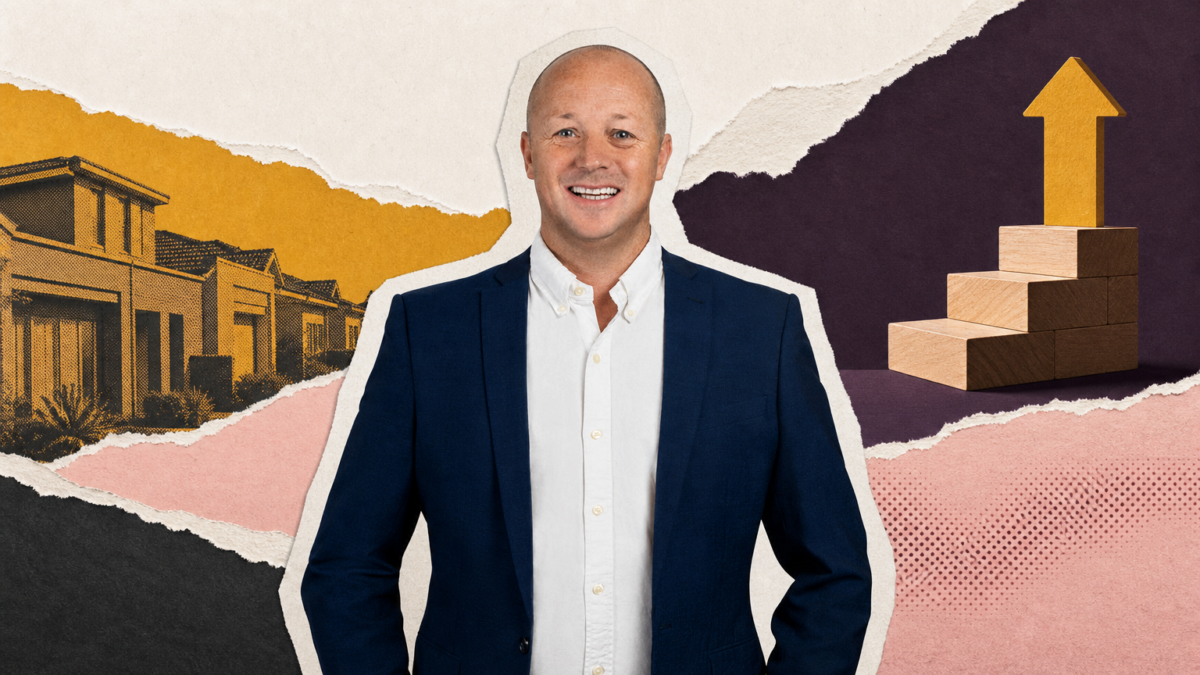
When Lenny Bellinger, director of OBrien Real Estate Carrum Downs and Langwarrin, and his wife Michelle Stephens took over the business in February 2024, they inherited an established sales operation but made the deliberate decision not to take on the existing rent roll, choosing instead to start the property management side of the business from scratch.
It was an unusual starting point for a business that already had a strong presence in its local market, but Lenny said neither he nor Michelle considered themselves rental experts at the time and they preferred to build the department gradually, learning what worked as the portfolio grew rather than buying hundreds of managements and trying to work it out afterwards.
“We were happy to start from scratch and learn as we went because we weren’t rentals experts,” he said.
“We were of the opinion that we’re not experts, so let’s learn as we grow. And when you make a mistake with 40 or 50 houses, it’s a lot less costly than making a mistake when you’ve bought 500.”
A little over two-and-a-half years later, Lenny said the portfolio had reached over 350 properties, while the sales side of the operation had continued to perform strongly, with the office becoming OBrien’s number one sales office and recording just over $6.2 million in the previous financial year.
Rather than trying to build property management as a separate operation, Lenny said the original plan was to use the strength of the sales business to create opportunities for the rental department, while building a service that could ultimately support those sales relationships over the longer term.
Michelle, the office’s lead sales agent, could have between 20 and 30 open homes on a Saturday, Lenny said, putting the team in front of between 100 and 150 people and giving it regular contact with investors who could potentially become property management clients.
“We wanted to be able to complement our sales business with a quality rental business,” he said.
“So not about numbers, but more about service, in the intention that that would then return help our sales business in the long term.”
It meant that from the beginning, the rent roll was viewed as more than a source of management fees, with the business seeing an opportunity to continue looking after investors between transactions and maintain those relationships until they were ready to sell again.
Bringing a sales mindset to rentals
One of the key decisions was to build the new department around someone who already understood how the sales business operated rather than bringing in an entirely separate team.
Jae Lukey had spent years working within Michelle’s sales team, including as its team leader and manager, before moving across to establish the rental division, where Lenny said she initially handled business development, property management and leasing herself.
As the portfolio grew, her position changed several times and she eventually moved into a standalone business development role, with Lenny attributing much of the department’s growth to her willingness to take on something new and adapt as the business expanded.
“She has an undeniable talent of listing houses,” Lenny said.
“It is, it’s been really nice to see someone go from a supporting sales role to, like, a very stand alone person and a very, very good asset to our business in her own right.”
Starting with someone from the sales side of the agency also influenced the way the new department approached leasing, with Lenny saying the team brought across many of the practices it already used when selling a property rather than treating a rental listing as a fundamentally different proposition.
That included considering what the team genuinely believed a property could achieve in the rental market, presenting it accordingly and running rental open homes with the same level of engagement it expected at a sales inspection.
“We would run an open home like it was a sales open home. We would actually talk to people,” Lenny said.
“Actually having conversations with people allowed us to make sure we got really good quality tenants, but at the same time to make sure we got the right dollar figure for the homes that we thought.”
He said the team pushed rental pricing strongly during its first 12 months, and those results began generating business beyond the referrals coming from the sales department, as landlords saw what properties had leased for and contacted the agency to find out what it might be able to achieve for them.
It was, he said, essentially the same approach the office had long applied to sales.
“If you strive to get the absolute best result for your vendor, present the home in its best possible light, actually interact with people and get the best result, the results will lead to more results,” Lenny said.
“We just use that same, you know, that same formwork into property management, which has allowed us to start that growth.”
Playing the long game on property management
Perhaps the clearest difference in Lenny’s approach is the way he looks at the financial contribution of property management while the division is still growing, because he does not believe the rent roll necessarily has to deliver a large profit to justify the investment being made in it.
Instead, he sees its value in the service it provides to existing sales clients and the opportunity to maintain those relationships over several years, so that when a landlord eventually decides to sell, the agency has not lost the relationship because of a poor experience with property management.
“We don’t try to make a massive money or profit out of rentals,” he said.
“We are more than happy to run rentals at a loss or at least at breakeven while we’re in this growth phase because we see it as that long term complement to our sales business.”
For Lenny, focusing too heavily on extracting a profit from a management can become counterproductive if an owner receives poor service and takes the eventual sales listing somewhere else.
“It’s not a matter of going, well, you know, we made a little bit of money out of rentals over the two or three years we managed it, but lost a $25,000 commission on the other end because they actually weren’t happy.
“They never got the service. They didn’t get the phone calls. They didn’t get the updates they require, or they just weren’t getting that sort of, you know, care that they probably deserve when it’s, you know, it’s still someone’s largest asset at the end of the day.”
For Lenny, that last point is central to why he does not believe sales and property management should be treated as having different levels of importance within an agency.
“Whether they’re selling it or leasing it, it’s the same principle,” he said.
“We’re dealing with something, you know, one of the largest purchases someone’s gonna make. But I think we have to treat them in the same sort of level and same sort of respects.”
That philosophy is now influencing the way the business staffs the growing department.
When the rent roll reached about 300 properties, Lenny said the team considered whether it should use a virtual assistant to support its property managers or employ another person locally, and ultimately decided to invest in another staff member despite the additional cost.
“We went down the route of investing in a person because I just feel that if you’ve got someone on holidays, you’ve got someone sick, it’s really hard for a VA to physically be boots on the ground,” he said.
The decision means the department currently has more capacity than it strictly requires, something Lenny is comfortable with while the portfolio continues to expand.
“I’d like to think we’re overstaffed but over servicing our clients at the moment.”
Keeping sales and property management on the same side
Rapid growth has also required the business to think carefully about culture and, in particular, preventing the divide between sales and property management that Lenny said he had seen in other businesses.
Because the rental department grew out of the existing sales team and Jae was already part of that business, the two sides began with an established relationship rather than operating independently, and he said that had helped sales agents become comfortable referring their clients into property management because they trusted those relationships would be looked after.
The same approach extends to office meetings, where property management is not treated as a separate discussion or confined to the rental team.
Whether someone works in reception, administration, sales or property management, Lenny said everyone is involved, with the business discussing rental open-home numbers, leasing results and properties under management alongside its sales figures.
“We talk about rentals just like we talk about sales, and we do it all together,” he said.
“And I think keeping everyone together and celebrating the wins together as an entire office and an entire business, has really helped us sort of keep everyone together on that page of, like, everyone’s going in the right direction. Everyone’s pushing the same way.”
Lenny said maintaining that culture as the team expanded had required adjustments and the business had made hiring decisions that did not always work, but he believes keeping someone who does not fit the culture simply because the business needs another person creates a larger problem.
The advice he was given when he was younger, he said, was to “fire fast and hire slow”, and it remains an approach he follows as the team expands.
“If someone comes in and you think you’ve done the right thing and you’ve read them the right way in an interview and they come in and that and it becomes evident, you know, that maybe they’re not the right fit, it’s better to not have them and deal with being short staffed than to keep them around just for the sake of filling a seat,” he said.
Culture is also something Lenny believes needs to be demonstrated by the people running the business rather than simply discussed with staff, with both he and Michelle remaining heavily involved in the day-to-day operation of the office.
For Lenny, being a director does not exempt him from doing the small jobs that keep an office running, whether that involves knocking on someone’s door, taking out rubbish or removing stickers from boards.
“Just because I’m the director doesn’t mean that I’m above anyone else,” he said.
“I’ll pull stickers off boards. I’ll do whatever’s required to help the overall team.”
The next stage of growth
The agency works across Carrum Downs, Langwarrin, Skye, Sandhurst and Seaford, with Lenny describing the surrounding area as relatively affordable and well positioned between Melbourne and the Mornington Peninsula, while also pointing to infrastructure and government spending in the local area as factors that have attracted first-home buyers, families, downsizers and interstate investors.
Looking ahead, Lenny expects the investor market could slow somewhat, but believes the characteristics of the local housing market will continue to create opportunities, particularly through new development and sites capable of accommodating more than one dwelling.
He pointed to the availability of land and blocks suitable for dual-occupancy and three-dwelling projects as areas where investors could continue adding new rental stock, rather than relying solely on the traditional family home on a larger block.
“Although we feel it’ll probably slow a little bit, I think that, we’re still going to have plenty of investor money coming to this area at the moment at our current price point.”
For the property management business itself, however, Lenny believes the next phase of growth will not depend entirely on new investors entering the market.
As the team becomes more established and has the staff capacity to take on additional properties, he sees an opportunity to win existing landlords from other agencies by demonstrating the level of service the business can provide.
“Our growth now will come not just from new landlords entering the market, but from proving what we can do and showing clients the quality of service we provide. I think those opportunities to take over managements from other businesses are going to grow,” he said.