
In a profession long defined by early starts, late finishes and relentless prospecting, the definition of “growth” in real estate is shifting in a way that feels both subtle and seismic.
For decades, success was measured by output: more calls made, more doors knocked, more conversations had in driveways and kitchens at the end of long days.
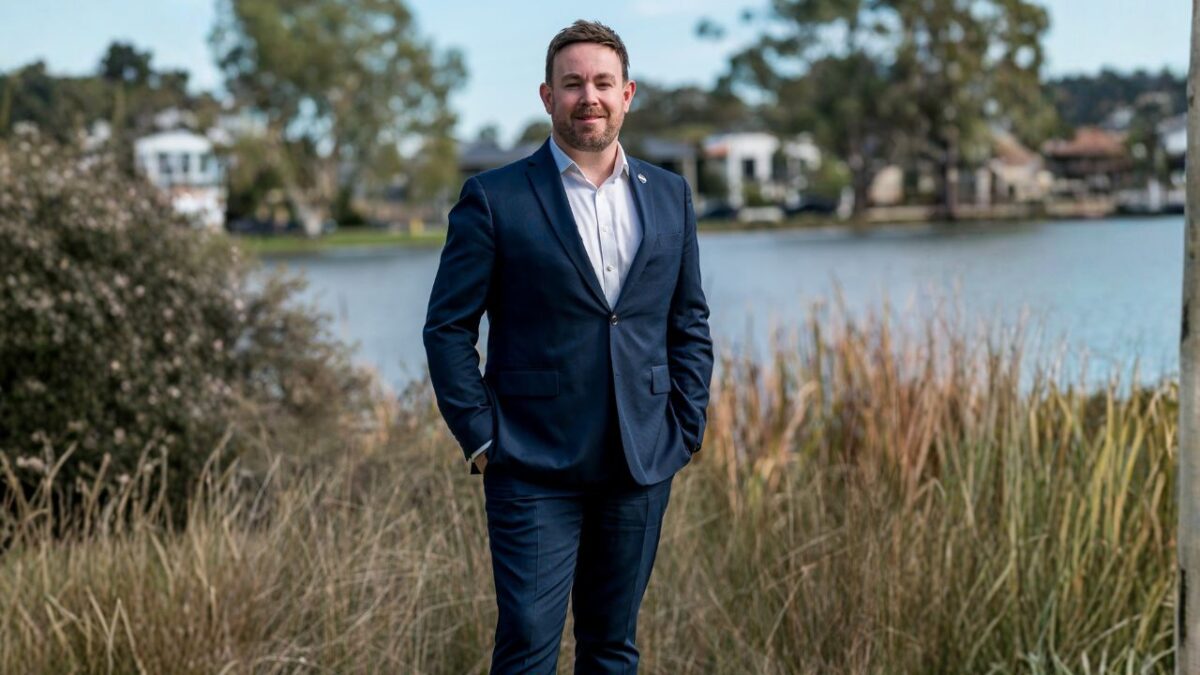
But according to Simon Withers, WA Business Growth Manager at REMAX Australia, that formula is starting to lose its dominance, not because effort matters less, but because effort is being redirected.
“Growth is no longer just about working harder,” Simon says. “In the old days it was about number of contacts, calling people, knocking on doors, sending letters out, getting your face out there.
“There’s still somewhat about that, but today it’s changed. It’s all about AI technology, processes, and automating your systems so you’re spending less time prospecting and more time in front of your clients.”
What he’s describing is not the disappearance of traditional real estate behaviours, but a rebalancing of where time actually gets spent.
Prospecting still exists, door knocking still happens, and conversations still matter, but increasingly they are being supported, and in some cases replaced, by systems designed to do the repetitive work in the background.
The real shift is not simply technological, but behavioural and Simon says growth now depends on an agent’s willingness to reimagine how their business actually operates, particularly in the early stages of their career.
“For new entrants to the business, we introduce more of this technology at the start,” he explains. “Setting up these processes early makes your life easier down the track. Established agents, obviously, are more used to the old-fashioned ways.”
That tension between old habits and new systems runs through almost every part of the industry at the moment.
On one hand, there is a growing toolkit of automation, AI-driven follow-up, and integrated CRM systems; on the other, there is a deeply embedded identity in real estate that still values hustle, visibility and physical presence above all else.
Nowhere is that tension more visible than in how agents are expected to market themselves.
Your digital presence, Simon argues, is no longer an extension of your business. It is the business.
“We had our national website redeveloped,” he says. “All of our business websites now feed directly into remax.com.au, which improves SEO for all of our businesses around the country. We’re seeing really great results from that, directly through the traffic in those offices’ websites.”
Alongside this centralised digital infrastructure sits a growing expectation that agents themselves are part of the marketing engine. Social media is no longer treated as a branding add-on or a place to post listings; it has become, in effect, the front door of the business.
“All of those platforms – Instagram, TikTok, Facebook – they’re all part of it,” he says.
“But it’s got to be entertaining. It’s got to be different. People are bored of seeing ‘I’ve sold this house’ or ‘we’ve listed this property’. They want to know who their agent is, what their personality is, more about the person they’re trusting with their greatest asset.”
In many ways, that shift has forced agents into a new kind of visibility; one that is less about polished corporate messaging and more about personality, consistency and familiarity.
“It’s a relationship business,” he says. “And it’s a lot harder to build that relationship electronically. But if you can do it through video, through TikTok, it’s a digital way of knocking on their door.”
Even for experienced agents, that change is not always comfortable and Simon is candid about his own reluctance.
“I hate taking video of myself,” he admits. “But it’s just a method to get in front of people nowadays. Especially with younger generations, people in their twenties, they don’t like answering the phone. They don’t really like face-to-face cold approaches. So the way into their living rooms is through social media.”
The implication is that growth is no longer just about increasing effort, but about increasing relevance. Being seen is no longer enough, he says, you have to be encountered in the right way, on the right platform, at the right time.
But while digital tools and automation dominate much of the conversation, Simon is careful not to overstate their importance at the expense of something more traditional, and arguably more fragile: relationships.
“At the end of the day, you still have to form relationships and get in front of people,” he says. “As you develop a relationship, that person becomes sticky to you. They refer business to you. Word-of-mouth is still the best form of marketing.”
That balance between systemisation and human connection is also shaping how agencies scale. One of the biggest mistakes, he believes, is not the lack of technology – but the overuse of it.
“Most common mistakes is just taking on every technology they can initially,” he says.
“Overwhelming themselves with systems, and also overwhelming themselves with subscription fees, which add up extremely quickly.”
Instead, he advocates for a more staged approach and building infrastructure gradually rather than trying to implement everything at once.
“It’s about what works best for you initially and scaling from there. When you start your business, some things will work best for you. Down the track, you can take on additional technologies to streamline the business.”
That philosophy extends into how REMAX Australia supports its network. As a franchise model, much of the decision-making around technology is filtered and curated rather than left entirely to individual business owners.
“One of the benefits of a franchise group is that we filter through all of those various technologies and AI solutions and recommend the best to our business owners,” Simon explains. “So they don’t have to do it themselves.”
But perhaps the most interesting shift Simon describes is not technological at all, it is cultural.
A high-performing agency, he says, is no longer defined purely by production numbers or individual achievement, but by retention, culture and internal alignment.
“It’s about maintaining a positive culture within your business,” he says. “Retention of high-performing staff is always difficult because when someone is successful, everyone wants them.”
The solution, in his view, is to rethink how leadership is framed internally.
“The business owner should see their salespeople and property managers as their clients, and focus on providing them with the best environment to run their business.”
It is a reframing that positions internal teams not as employees in a hierarchy, but as operators within a supported ecosystem. And for Simon, that shift is essential to long-term performance.
“You’re providing them the platform to run their individual business underneath your business,” he says. “And that’s what actually drives outcomes.”
And that, ultimately, circles back to the original point. Growth is no longer a solo pursuit driven purely by individual output. It is becoming something more distributed, across systems, across teams, and across networks.