
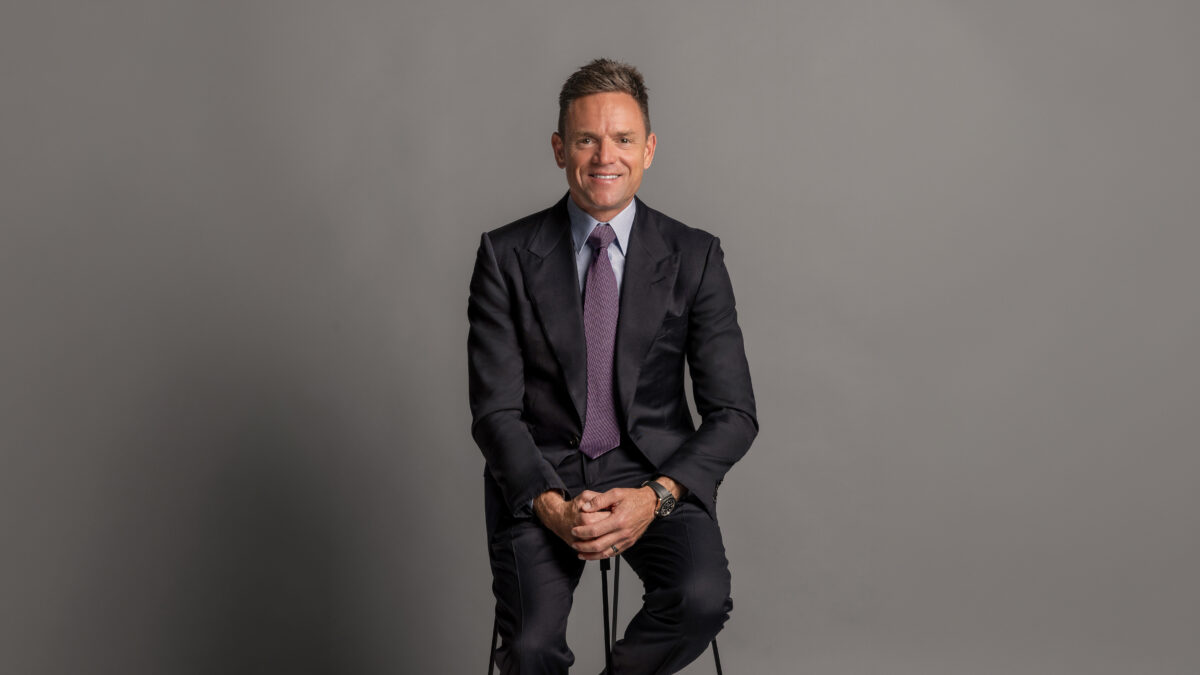
A generous commission split might be enough to get an experienced agent’s attention, but according to Highland founder David Highland, it takes considerably more to convince them to build their future with a business.
After almost two decades building his independent real estate group, David has come to believe that the agencies best positioned to attract and retain talent are not necessarily those offering the biggest financial incentives, but those creating an environment where people can develop professionally, share in the success of the business and see a clear path towards their long-term ambitions.
It is a philosophy that has shaped Highland’s approach to recruitment, internal development and equity ownership, with some employees remaining with the organisation for more than a decade and others having been there throughout almost its entire 19-year history.
For David, the starting point is recognising that a successful salesperson and the right person for a business are not necessarily the same thing.
“We take an approach that’s probably more culture-centric than performance-based in the first instance,” he says.
“So we kind of focus on that before we focus on how many transactions are they doing per annum.”
It is a distinction he believes many principals overlook when recruiting, particularly when the temptation is to bring an established performer into the business based on their sales figures alone.
David is more interested in whether a prospective employee shares the organisation’s values, understands how its teams operate and is prepared to contribute to an environment where collaboration is encouraged rather than treated as a threat to individual success.
“I’ll pick culture over a top performer with the wrong attitude, put it that way.”
The same thinking extends to the size of his teams, with David questioning the industry’s tendency to measure agency growth by the number of agents working under a particular brand.
“A lot of principals just focus on headcount. It’s actually the wrong metric,” he says.
“We’d rather run our offices … our Cronulla business is arguably one of the best sales teams in the country, and we’ve only got eight sales teams in Cronulla.”
For David, the strength of the Cronulla operation is not simply its performance, but the longevity of its people and the way they work together, with many having spent years building relationships that extend beyond their own individual sales activities.
Rather than operating in an environment where agents compete internally for every opportunity, the team has developed an approach that encourages shared business, collaboration and the exchange of expertise.
“We promote a mindset of abundance,” he says. “There’s a lot of internal co-agencies as well because we’re independent and not franchised. We’re not limited by territory.”
That independence allows agents working in different Highland offices to collaborate across geographical markets, drawing on established client relationships and the expertise of colleagues who may be better positioned to service a particular buyer or vendor.
David believes this willingness to work together has been fundamental to the Cronulla team’s longevity, while also establishing a standard that can be carried into other offices as the organisation grows.
“They lift the rest of the organisation because of their standards and the way they work with each other,” he says.
“They’re kind of the roadmap for success when we’re looking at other offices and other joint ventures and recruitment in other markets.”
But establishing the right culture is only part of the retention equation, particularly when ambitious agents begin considering what comes next in their careers.
For generations, the traditional progression for a successful real estate salesperson was to build a substantial client base, establish themselves as a leading performer and eventually open an independent agency.
David believes that pathway has become considerably less attractive as the cost and complexity of operating a real estate business have increased, particularly for agents whose strengths lie in listing and selling rather than managing staff, compliance, finance and administration.
“The economies of scale have changed in a way that it’s too expensive to run small real estate offices in the current market,” he says.
“It’s becoming harder.”
Having spent years performing multiple roles within his own business, David understands the operational pressures that come with agency ownership and questions whether the traditional model still makes commercial sense for many high-performing agents.
“How could you do all that in 2026 and still be successful in terms of generating revenue for the office?” he asks.
His response has been to develop a partnership structure that allows senior people to acquire equity within Highland while continuing to operate with the support of a centralised business.
The group currently has approximately 20 partners across its network, with ownership opportunities extending beyond sales to professionals working in property management, finance and other senior operational roles.
For David, the arrangement provides a way to recognise and retain valuable people while building a leadership structure that is less dependent on any one individual.
“You need people around you that are aligned with the vision,” he says.
“Having a very tight-knit team of business owners with you along that journey makes the business a lot more predictable.”
He also believes shared ownership changes the relationship between an agent and the organisation, creating a greater sense of responsibility for the business as a whole rather than simply focusing on individual transactions and commission earnings.
From a principal’s perspective, that can create greater stability and make expansion more manageable, while for agents it provides an opportunity to build an ownership interest without having to establish and operate an entirely separate business.
“The new way of doing real estate is to build out an ownership structure that is syndicated, that everyone has a role,” David says.
“So they can just get out there and do what they’re good at.”
The distinction is particularly important when considering the lifestyle implications of agency ownership, with David arguing that many successful agents underestimate how much time and energy can be consumed by the responsibilities that come with running an office.
Under Highland’s structure, partners can draw on specialist teams covering marketing, legal, finance, property management and other business functions, allowing them to remain focused on their core responsibilities.
“It also gives them the ability to have a proper lifestyle,” he says.
“We can actually create a lot more balance for them.”
While equity ownership is an important part of the model, David is equally conscious that not every employee wants to become a business owner, and that meaningful career progression must also be available to people working across other departments.
Within Highland, career development is discussed during quarterly reviews with department leaders, giving employees an opportunity to identify their ambitions and understand what steps they need to take to move into more senior positions.
For those entering sales, the pathway can begin in lead generation before progressing through sales assistant, sales associate, agent and contractor roles, with partnership a potential longer-term opportunity.
However, David believes developing people internally is just as important in the operational side of the business, particularly as agencies become increasingly reliant on specialist expertise and strong departmental leadership.
“We’ve got a very strong leadership team per department,” he says.
“So we’re constantly looking to identify talent within those departments and then grow their own skills and unlock their potential and move them up. Because it’s great for them, but it’s great for the group.”
One example is Highland group sales manager Jaymie Kelly, who joined the business at 20 years of age as a junior sales associate and progressed through a series of roles before being promoted to her current position about a year ago.
Ten years on, Jaymie holds a senior position overseeing sales teams across the group’s offices, despite not being an equity partner.
Her progression reflects David’s preference for developing existing employees who understand the organisation’s culture and operations, rather than automatically recruiting externally when a senior role becomes available.
“I’d much prefer to train from within and elevate from within the existing team than look outside of the business,” he says.
It is an approach that also influences what he looks for when interviewing people at the beginning of their careers, with ambition, presentation and a willingness to learn carrying considerable weight alongside previous experience.
After three decades in the industry, David says he has developed an instinct for recognising potential, although he acknowledges that identifying the right people is never an exact science.
What matters most, particularly in sales, is whether someone has the resilience and determination to keep improving, even when the market becomes more challenging.
“The best agents in our business regardless of age have an unstoppable mindset when it comes to their performance,” he says.
“I can’t train work ethic, but I can train everything else.”
The emphasis on development is supported by a working environment designed to expose employees to different teams, markets and ways of operating, including a policy that allows staff to work from any of Highland’s seven offices.
David says the flexibility gives younger agents opportunities to spend time alongside established performers outside their own immediate teams, while also helping to build stronger relationships across the network.
Rather than working from home, employees can use different Highland offices, including moving between markets such as Cronulla and Double Bay, to learn from colleagues and gain exposure to different sales environments.
The broader objective is to create a business where professional opportunities are not confined to a single office or department, and where employees can continue developing without feeling they need to move elsewhere to advance their careers.
That philosophy is also reflected in the group’s approach to expansion, with David determined to maintain the independent ownership structure rather than pursue the franchise model adopted by many larger real estate networks.
He believes the ability to control recruitment, leadership and operating standards across the organisation is essential to preserving the culture that has helped retain employees over the long term.
“My belief is that with franchising, for us, it’s probably more just about diluting those core values that we just talked about, culture being one of them,” he says.
“Even though our brand would be suited to a franchise model, we’re going to remain independent.”
Highland intends to continue expanding through joint venture partnerships in established blue-ribbon markets, with David indicating the group is considering approximately three additional offices over the next 12 to 24 months.
However, he maintains that the priority will be finding the right people and businesses rather than pursuing growth simply to increase the size of the network.
“We’d rather have more quality offices over quantity,” he says.
For principals facing the ongoing challenge of attracting and retaining good people, David’s approach raises a question that goes beyond remuneration: what does an agency offer its best employees once they have achieved the sales results and financial rewards they originally set out to attain?
A competitive commission structure may remain important, but for ambitious professionals looking beyond their next transaction, the opportunity to develop new skills, move into leadership or acquire a stake in the business can be equally compelling.
And in an industry where the responsibilities of ownership are becoming increasingly complex, David believes creating those opportunities within an established organisation may be a more attractive proposition than expecting every successful agent to eventually go it alone.