
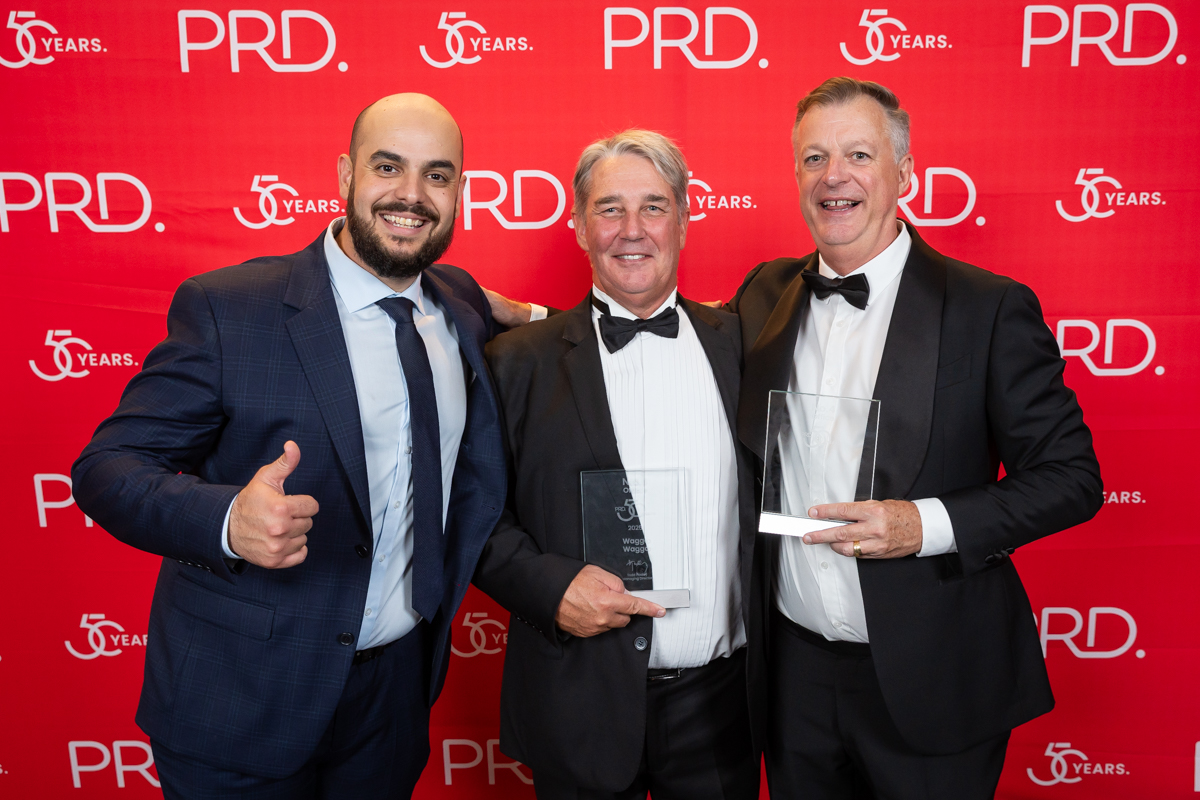
Simon Freemantle has spent 25 years at the helm of PRD Wagga Wagga, a period that has taken in the Global Financial Crisis, a pandemic, sweeping technological change and an increasingly complex regulatory environment.
In that time, the business has grown into a substantial regional operation. It now manages close to 1,500 rental properties, more than 600 strata properties and an estimated 300 to 400 commercial properties, alongside its residential and commercial sales operations.
It’s a significant evolution from the business Simon first joined as a young property manager in 1989, after completing a stock and station, auctioneering and real estate course at Hawkesbury.
He began his career with Nationwide Realty Group, had a stint selling television advertising, then returned to real estate and bought into the Wagga Wagga business in 2001.
Asked what has kept the business moving forward across 25 years, his answer centres on people.
“I think one of the key parts is the people you’ve got around you,” he said.
“Having the right people in the business, the right people supporting the business, but also your partner, wife, family and even friends to help talk you through the tough days and the tough times.”
Simon settled his purchase of the business in August 2001. Six weeks later, the September 11 attacks shook markets worldwide, and the years that followed brought the Global Financial Crisis along with significant changes to how real estate businesses operate.
He doesn’t see resilience as something business owners simply have.
“There’s resilience that has to be built up over a period of time,” he said.
That resilience was tested again during COVID-19, when the responsibility extended well beyond the owners of the business. With around 30 to 40 staff and their families relying on it, walking away was never an option.
“We’ve got to make it work,” he said.
After more than three decades in the industry, Simon believes reputation is one of the greatest assets an agent or business owner can build.
“It’s like compounding interest, compounding experience and compounding reputation,” he said.
“To have those things over multiple years, decades and beyond, it becomes easier to a certain extent because people know what they’re going to get because your reputation’s held.”
It’s also behind his advice to the next generation of business owners to resist chasing the next opportunity.
“It’s easier to stick with one thing and do it, and do it well, and improve it, than it is to chop, change and chase the latest, shiniest thing somewhere else,” he said.
“Ultimately, what works best is just putting your head down and getting the job done.”
Simon said regulation remained essential to maintaining industry standards, but the growing compliance workload had made running a real estate business considerably more complex – one reason he values relationships with other business owners.
“It’s being able to chew the fat on a regular basis with a lot of people that are like-minded and going through similar challenges,” he said.
“Sometimes you walk away going, ‘I’m not going that bad,’ and other times you go, ‘Wow, thanks for your help.'”
There’s a symmetry to his succession plans. Simon’s own path to ownership began when he bought a share of the business from former owner Geoff McGilvray in 2001, before he and his wife, Margie Freemantle, took on full ownership several years later. In recent years, the business has brought several key team members in as shareholders, laying the groundwork for the next generation to take an ownership stake in its future.
His final piece of advice isn’t about business at all.
“Enjoy the balance,” he said.
“Set yourselves little mini goals. You’ve got to have a reward for your efforts, and there’s got to be a light at the end of the tunnel.
“Being in small business is a long, hard slog, and it can be very lonely at times.”