

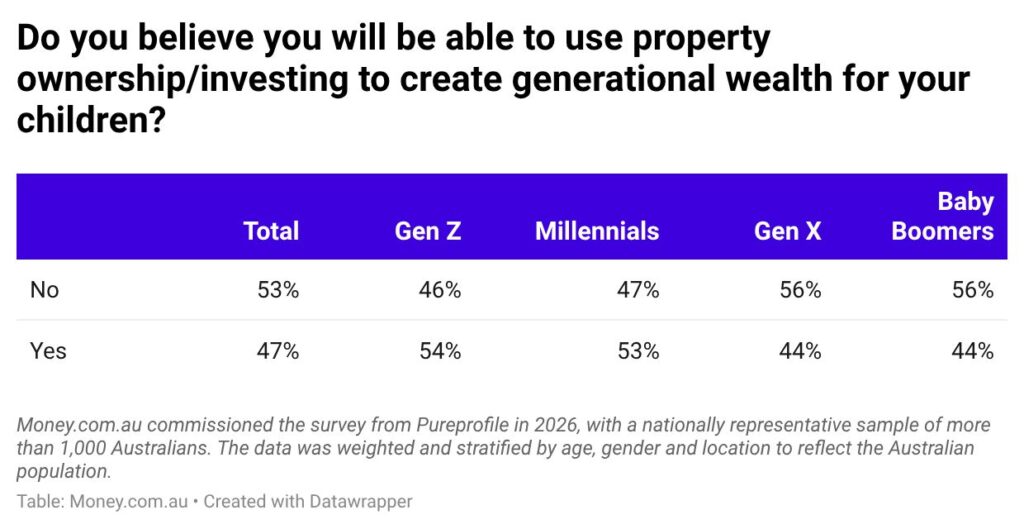
More than half of Australians – 53 per cent – no longer believe they’ll be able to pass property on to future generations.
The nationally representative survey by money.com.au of more than 1,000 Australians found just 47 per cent still believe homeownership or property investment can deliver that kind of legacy.
The findings land as the Government overhauls property investment settings, including changes to negative gearing, the replacement of the 50 per cent capital gains tax discount, and a ban on SMSFs borrowing to invest in residential property.
The research points to a broader trend of declining confidence in property as a vehicle for generational wealth.
Nick Burgess, property expert at Money.com.au, which conducted the survey, says confidence in property as a wealth-building tool is fading.
“Property has traditionally been seen as one of the most reliable ways to build wealth through capital growth and rental income, and to create some financial legacy for future generations. But now, more people believe that opportunity is slipping away and confidence in bricks and mortar is eroding,”
Mr Burgess said.
Affordability remains the primary concern, but policy is also weighing on sentiment.
“Affordability remains the biggest obstacle, but it’s notable that many Australians believe government policy is making property investment less rewarding.
“Changes to negative gearing, CGT concessions and SMSF borrowing are pouring cold water on the aspirations of millions of Australians, many of them mum-and-dad investors, to build wealth through property and pass it on to their children and grandchildren,” he said.
Older Australians are the least confident of all. The survey found 56 per cent of both Gen X and Baby Boomer respondents don’t believe they’ll be able to pass on property wealth, compared with 47 per cent of Millennials and 46 per cent of Gen Z.
Mr Burgess says that shift is notable given older Australians are closer to actually handing down wealth than younger generations.
“Older Australians are the generation closest to passing on their wealth, so they’re naturally more sceptical about how changing affordability and investment settings could affect what they’ll actually be able to leave behind.
“If they’re losing confidence that property will deliver the legacy they once expected, that’s a significant shift.”
He suggests the generational gap comes down to different priorities.
“On the other hand, younger Australians are likely more focused on the challenge of buying their first property than the practical realities of one day passing wealth on to their children,” he said.
On the barriers themselves, 51 per cent of respondents point to high property prices and mortgage costs as the reason property no longer feels like a path to generational wealth.
Another 27 per cent say wages haven’t kept pace with housing costs, and 22 per cent blame government taxes and policy settings for reducing investment returns.