
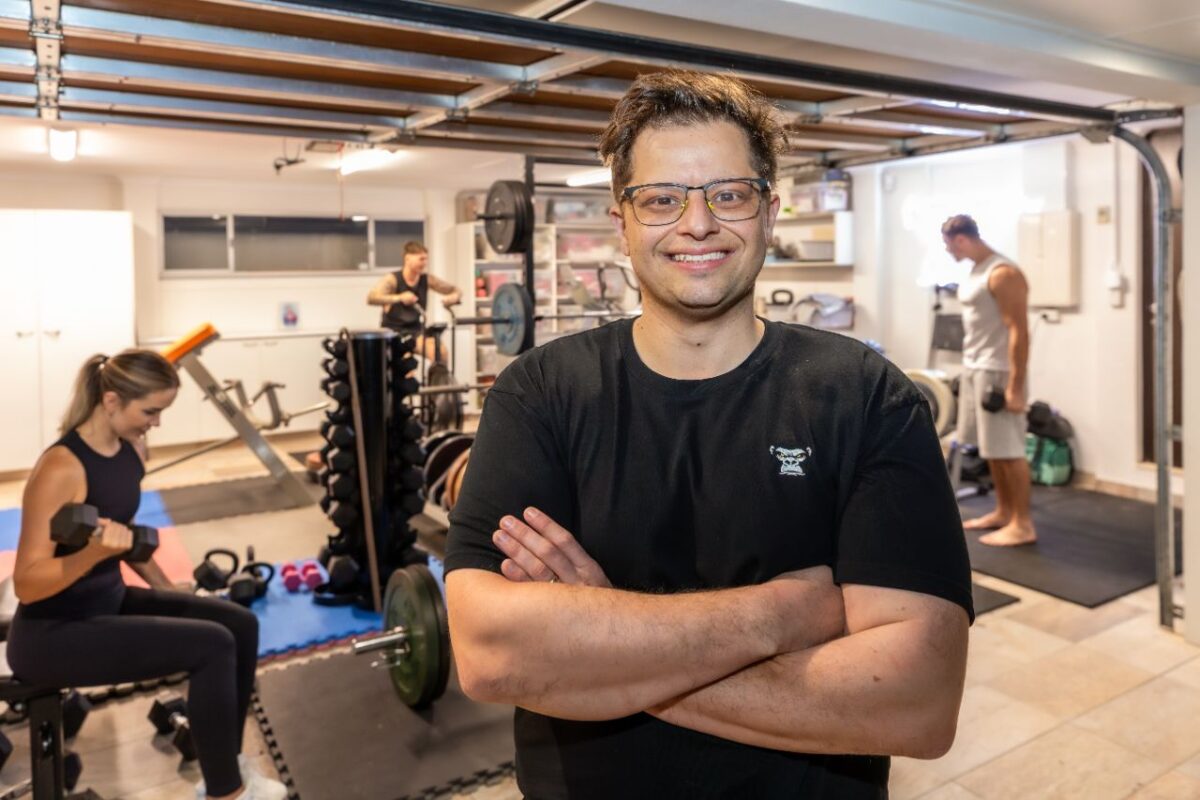
Before sunrise on the Gold Coast, long before the first inspection or listing presentation, a group of real estate agents are already deep into a different kind of performance environment – one that has less to do with property and more to do with physiology.
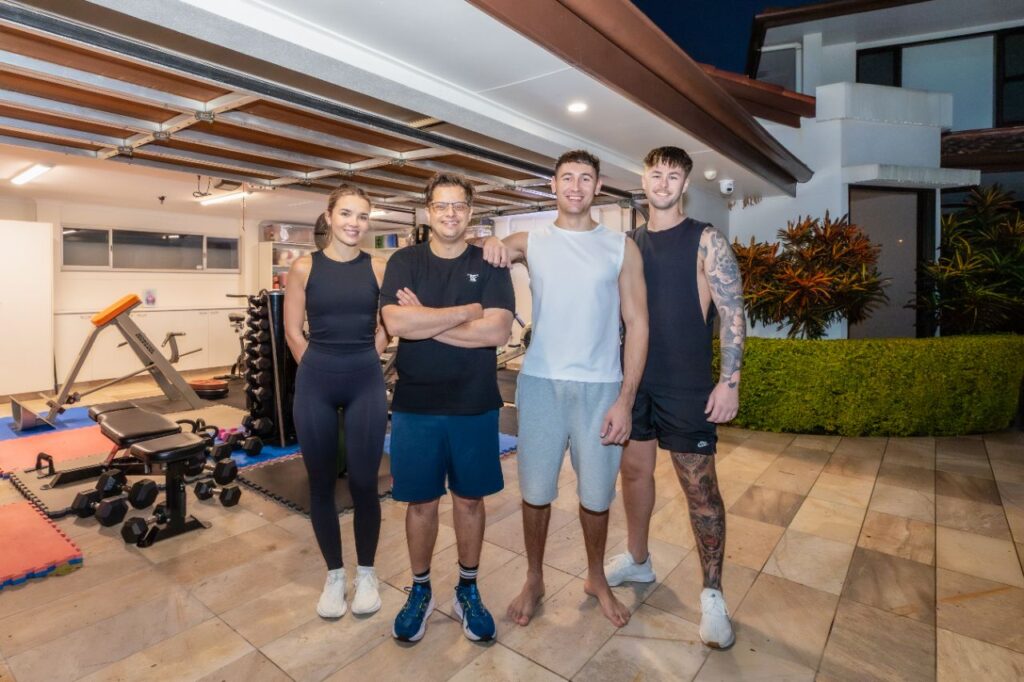
It’s 4:45am in Broadbeach Waters. A converted garage is lit, music is playing, and a small team is rotating through strength work, conditioning drills and an ice bath that demands complete control of breath and mind.
They call it the “Pain Cave”.
For Matt Micallef, Owner and Selling Principal of Ray White TMG across the Gold Coast, it began as a personal commitment to rebuild his health after a decade in real estate, but has since evolved into a structured performance environment sitting at the centre of his leadership philosophy.
“At my fittest before real estate I was 83 kilos,” he says. “At my heaviest I hit 109 kilos and around 40 per cent body fat.”
And to be clear, the shift wasn’t about appearance, it was about behaviour.
“I made a promise to myself that this would be the fittest I’ve ever been,” he says. “And I realised accountability was the thing I was missing.”
What followed was almost accidental in its expansion. At a company event, he told his team he would open his home gym every morning for anyone willing to commit: no rollout plan, no structure, just a decision made in the moment.
“I hadn’t even checked with my wife,” he says. “But once I said it, it was locked in.”
From there, the Pain Cave emerged – a hybrid training environment combining strength, cardio and controlled exposure to discomfort, finished with a four-minute ice bath designed to strip performance down to its most basic requirement: control.
“The first challenge is getting out of bed,” Matt says. “The second is getting through the workout. And the third is controlling your mind in the ice bath.”
But while the Pain Cave may appear like a culture experiment inside a real estate business, it is also part of a much broader shift happening across Australian luxury property – one where wellness is no longer an add-on, but an embedded system shaping how homes are designed and experienced.
According to Ray White Head of Research Vanessa Rader, Australian luxury real estate has entered a new era where invisible technology increasingly outweighs visible opulence. As she explains, Australia’s $141 billion wellness economy, (now representing 7.8 per cent of GDP) is driving a transformation that is happening behind the walls rather than in what is visibly presented.
Artificial intelligence, biometric monitoring and environmental systems are turning homes into responsive health ecosystems.
In leading Australian developments, AI-powered platforms now continuously monitor air quality, temperature, humidity and light, making thousands of micro-adjustments daily to optimise human health. Lighting systems replicate circadian rhythm, shifting from blue-spectrum morning light that supports alertness and cortisol production, through to warm evening tones that encourage melatonin release and restorative sleep.
Sleep and health tracking is also moving beyond wearables. Integrated systems built into flooring, mirrors and sleep environments now passively capture biometric data – from gait and posture to cardiovascular and respiratory indicators – feeding AI platforms that continuously adjust environmental conditions in response.
This convergence of wellness and living environment is already translating into measurable value. Properties incorporating integrated wellness systems are achieving premiums of 15 to 30 per cent above comparable luxury stock, as buyer expectations shift from status display toward personal optimisation.
Against that backdrop, Matt’s Pain Cave begins to look less like an outlier and more like a behavioural counterpart to the same philosophy: engineered environments designed to influence performance, recovery and consistency.
The Pain Cave itself operates on similar principles, albeit in a stripped-back, human form. It is not about technology, but it is about design – increasing structure and reinforcing behaviour through repetition and discomfort.
“If you book in, you show up,” he says. “That’s it.”
If not, staff face the now-infamous “sh*t wheel”, a light-hearted but highly visible accountability system that ensures commitment is never theoretical. Consequences range from workplace dares to team-wide forfeits, but the intent remains consistent: follow-through matters.
So far, only a small number of staff have had to spin it, but its influence sits well beyond those moments. The expectation alone has shifted behaviour across the team.
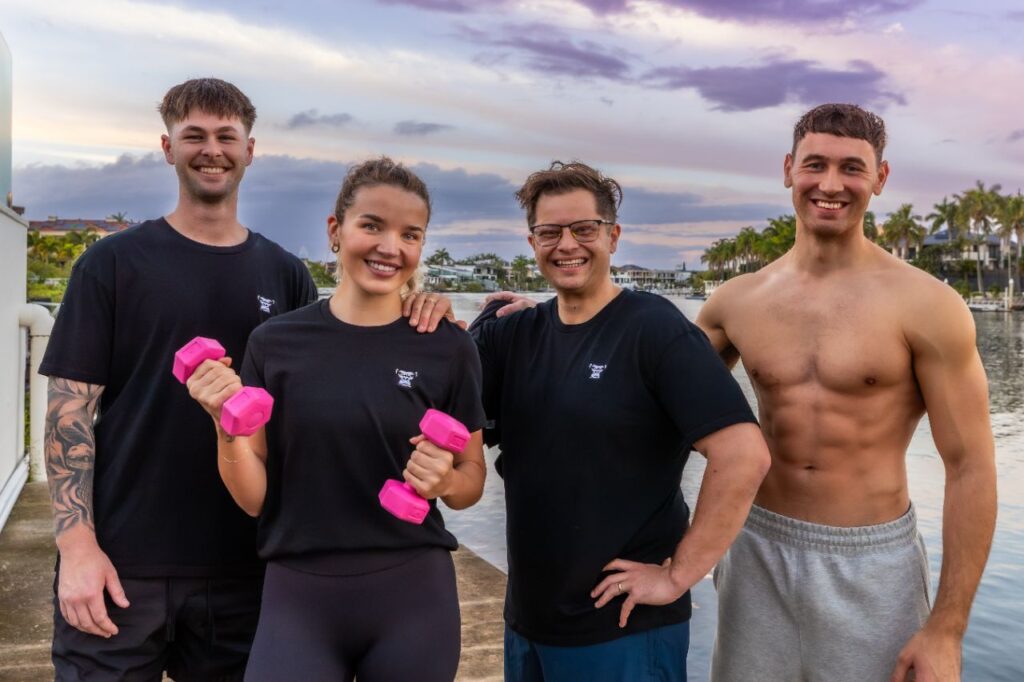
What has emerged is the cultural effect; shared exposure to discomfort – particularly in the ice bath – has created a level of trust and communication rarely seen in traditional office environments.
“That’s where you see it,” Matt says. “One person wants to get out, and someone else is telling them to breathe. Stay calm. Keep going.”
It is also where leadership becomes less conceptual and more physical. The same principles he applies in training, accountability, presence and discipline, are now mirrored in how the business operates day to day.
“We’re not trying to fill seats,” he says. “We’re building high performance.”
And increasingly, that mirrors a wider shift in both property and performance culture – where optimisation, environment and behaviour are becoming deeply interconnected rather than separate ideas.
In that sense, the Pain Cave is not the opposite of intelligent housing systems emerging in luxury real estate. It is the human expression of the same principle: engineered environments designed to shape how people think, recover and perform.
“It’s a privilege to be in there,” Matt says. “You’re challenging yourself physically, mentally and emotionally. And when you start your day like that, everything else feels easier.”