
In A-grade sport, confidence is never as stable as it looks from the outside. A few missed opportunities, a stretch of poor results, or a run where nothing quite clicks can be enough to shake even seasoned professionals.
What separates those who recover quickly from those who spiral is rarely talent; it’s rhythm, structure, and emotional control.
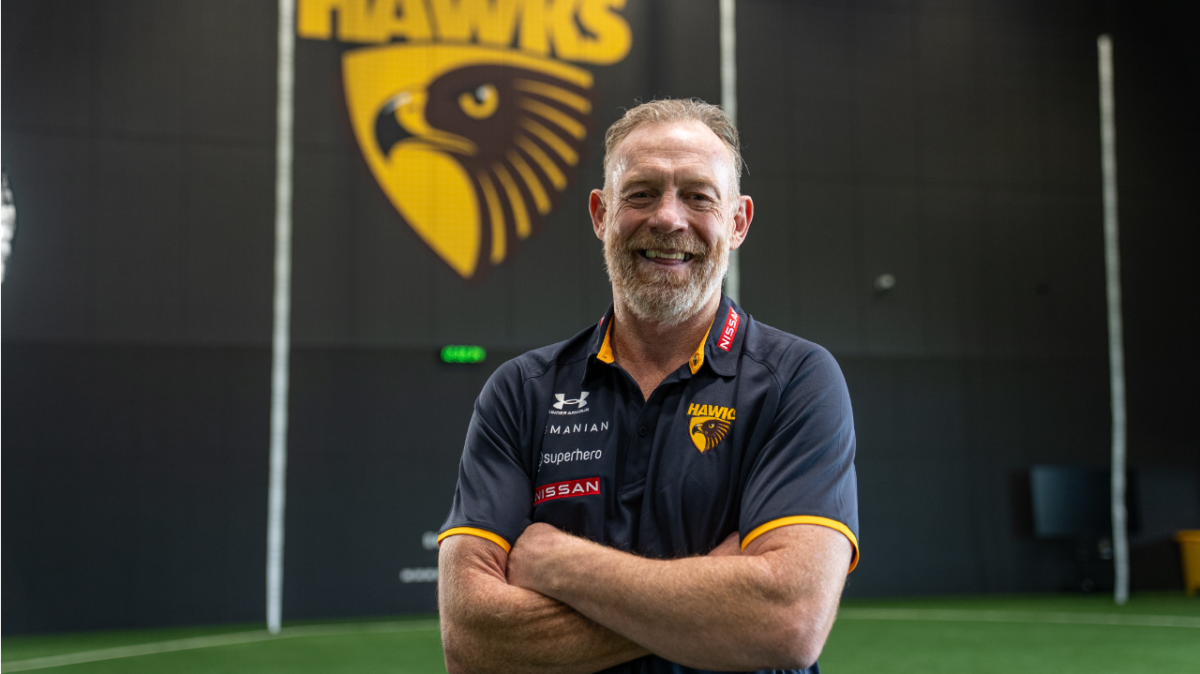
And that was the central message delivered during a recent high-performance session between The Agency and Hawthorn Football Club assistant coach Adrian Hickmott, where more than 100 agents came together to explore what consistency actually looks like when pressure is constant and outcomes are unpredictable.
For The Agency executive director, Andrew Jensen, the connection between AFL performance and real estate is not theoretical, it is lived experience inside high-pressure environments where results are public, immediate, and deeply personal.
Andrew said the emotional cycle in real estate is one of the hardest parts of the job to manage, particularly when results don’t reflect effort.
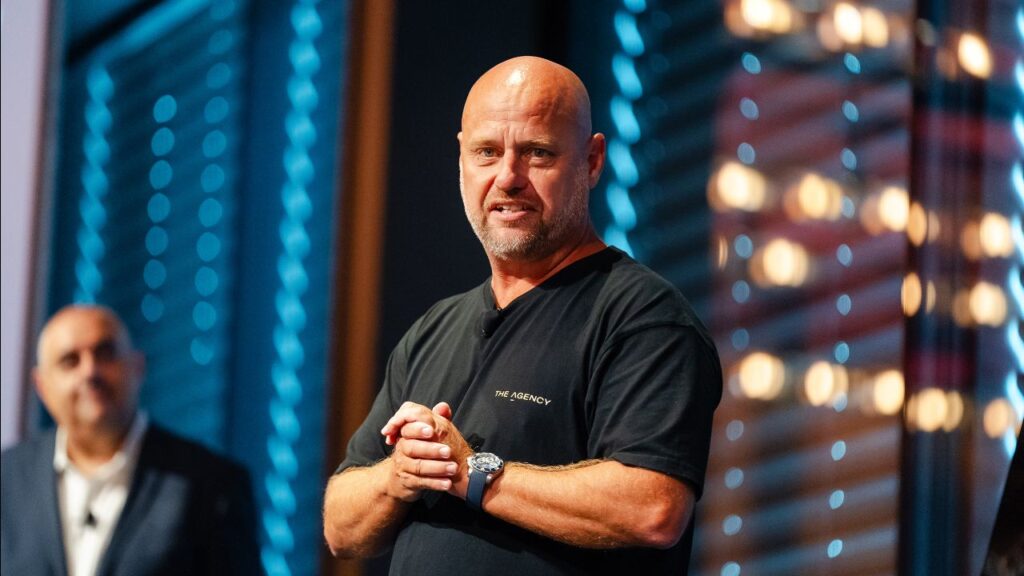
“In real estate, the wins and losses can feel extremely personal because agents are constantly exposed to outcomes in real time,” he said.
“You can go through a period where you lose a few listings in a row, or miss opportunities you felt confident about, and very quickly the internal dialogue shifts. People start asking whether it’s strategy, effort, timing, or something else entirely.
“What Adrian reinforced so strongly is that high performers don’t get trapped in that emotional swing; they learn how to step back, reset, and return to process.”
The partnership between The Agency and Hawthorn was originally formed during the company’s expansion into Victoria, but Andrew said the alignment went far deeper than brand visibility or sponsorship.
“When we moved into Melbourne, we were very deliberate about the kind of organisation we wanted to align with,” Andrew said.
“Hawthorn stood out because of their culture. They’re structured, they’re disciplined, but they’re also deeply community-driven. When you look closely at how they operate, there are strong parallels with how we want to build The Agency over the long term.”
At the time, Melbourne’s real estate market was already dominated by entrenched local competitors, and Andrew said there was early scepticism about whether a non-Victorian brand could establish real traction.
“There was definitely a perception that interstate groups struggle to break into Melbourne,” Andrew said.
“So for us, the Hawthorn partnership became more than marketing. It was a statement of intent; it said we’re here, we’re committed, and we’re building something long-term.”
But over time, the partnership has evolved into something more operational – particularly through access to elite coaching environments and mindset frameworks used in professional sport.
What stood out most for Andrew in Adrian’s session was the emphasis on emotional regulation and consistency across both success and failure.
“One of the strongest messages from Adrian was that high performers don’t live at either extreme,” Andrew said.
“They don’t get overly high when things are going well, and they don’t collapse emotionally when things aren’t. They stay steady enough to continue training, learning, and performing again the next day; that ability to stay balanced is what actually sustains performance over time.”
That message resonated strongly across the room, particularly with agents operating in a market where conditions can shift quickly from week to week.
“Real estate doesn’t really stop,” Andrew said. “You might have a strong weekend with auctions or listings, but by Monday you’re effectively starting again. You still have to prospect, still have to engage clients, still have to manage expectations.
“The reset is constant, and if you can’t control your emotional response, it becomes exhausting very quickly.”
Another key focus of Adrian’s session was how elite environments manage time and attention.
Andrew explained how Adrian spoke about how Hawthorn’s coaching group intentionally reduces unnecessary meeting time and simplifies communication during key performance blocks, ensuring players are focused only on what directly improves outcomes.
For Andrew, that idea translated directly into how real estate teams should think about productivity.
“In high-performance environments, noise is one of the biggest risks,” he said.
“Adrian talked about protecting time and sharpening focus, and that really resonated. If people are constantly pulled into meetings, updates, or distractions that don’t directly improve performance, you lose rhythm. And rhythm is everything.”
But perhaps the most practical takeaway for agents came from Hawthorn’s approach to reviewing performance after setbacks.
Rather than reacting emotionally to a loss, Adrian explained that the club uses structured review processes built around evidence, to isolate what actually changed the outcome.
“Through the numbers, the KPIs, the vision, you can see why a game was lost,” Andrew said.
“But what’s equally important is that they don’t only focus on what went wrong. They also identify what worked well, so players understand what needs to continue as much as what needs to change.”
That balance between correction and reinforcement is something Andrew believes many industries, including real estate, often overlook.
“Sometimes after a missed listing or a poor campaign, the instinct is to overcorrect everything,” Andrew said.
“But more often, it’s one or two specific adjustments that make the difference – not a complete reinvention. The key is being precise about what needs to change, rather than emotionally dismantling the whole process.”
The session also opened up broader conversations around leadership and the challenge of managing different personality types within high-performance teams.
Adrian discussed how AFL coaches work with a wide spectrum of personalities, including highly expressive, instinct-driven players who operate differently from structured or analytical teammates, and how success depends on allowing those differences to exist rather than flattening them.
“That really stood out,” Andrew said.
“In real estate, we have the same dynamic. Some agents are highly structured and process-driven, others are instinctive and expressive. The mistake leaders sometimes make is trying to standardise everyone into the same mould. But often, the high performers are high performers precisely because they’re different.”
Instead, Andrew believes leadership is increasingly about adaptation rather than uniformity.
“The strongest teams aren’t built by making everyone the same,” Andrew said.
“They’re built by understanding people properly, giving them the right environment to operate in, and then allowing those strengths to compound across the group.”
Within The Agency, that philosophy shows up in how agents are supported through internal coaching, peer learning, and access to senior performers who actively help lift others during difficult periods.
“If someone is consistently performing at a high level, we want others to learn from that directly,” Andrew said.
“That might mean sitting in on appraisals, listening to how they communicate, or breaking down what they’re doing differently. In many ways, it mirrors what happens in elite sport – senior players lifting the group around them.”
Ultimately, Andrew believes the value of the Hawthorn partnership is not just access to sport, but access to a mindset that normalises pressure rather than fears it.
“In every high-performance environment, pressure is constant,” Andrew said.
“What matters is not avoiding it, but learning how to stay steady inside it. That’s what Adrian reinforced – consistency, emotional control, and the ability to reset quickly so you can perform again.”