
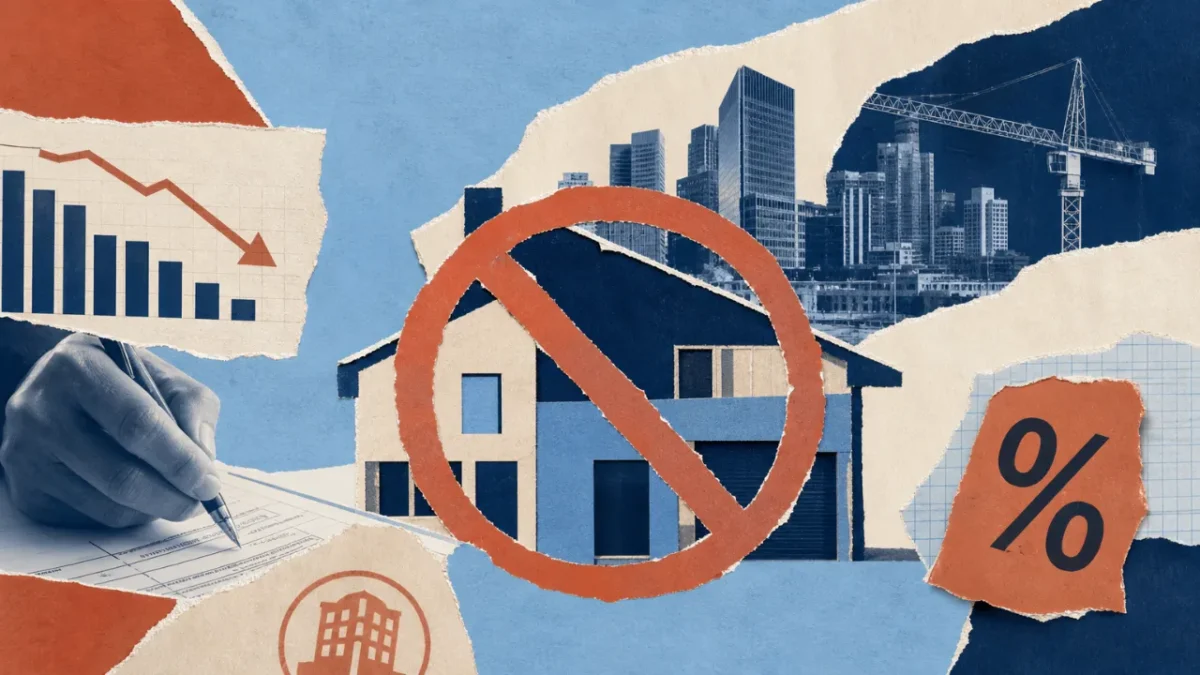
Purchases of Australian residential property by overseas investors have plunged following federal policy interventions.
According to the Productivity Commission’s annual Trade and Assistance Review, investment approvals granted to foreign buyers fell by more than 22% to 5,284 in the 2024–25 financial year.
Commission analysts confirmed that the sharp decline was almost entirely driven by a contraction in residential real estate approvals.
The slowdown reflects immediate market cooling following federal moves to restrict overseas buyers in established residential markets.
In its May budget, the Albanese government extended the foreign purchase ban on existing residential homes by an additional two years and three months, pushing the prohibition through to June 2029.
Under the rules enforced by the Australian Taxation Office (ATO), the extension means non-citizens and non-permanent residents are completely banned from purchasing established residential homes – meaning any property that has already been built and previously lived in.
The restriction applies to standard houses, townhouses, and apartments, and is designed to stop foreign capital from competing against local buyers for existing housing stock.
However, foreign investors can still buy newly built homes, off-the-plan properties, or vacant residential land, provided they get approval from the Foreign Investment Review Board (FIRB)
.They can also invest in large-scale residential developments—such as build-to-rent projects or redevelopments that add significant new housing supply—because the overarching goal of the policy is to direct foreign money into building more homes rather than buying up what’s already there.
Because the expanded ban formally comes into effect in April 2025, the Productivity Commission noted that current figures reflect only the initial market response, with the full impact expected to show in subsequent financial reporting.
According to the ATO’s Register of Foreign Ownership, foreign buyers reportedly account for just 0.5% of total residential acquisitions nationwide, down from 0.8% in previous cycles.
This drop follows the government’s decision to triple FIRB application fees for established dwellings, which reach up to $42,300 per property for offshore buyers.
Despite the pullback in suburban housing, foreign capital continues to enter Australia at historic scale and total offshore investment value grew by 32% to $256.4 billion over 2024–25.
Commercial approvals account for 98% of total foreign investment value as institutional funds pivoted away from residential dwellings and into commercial assets.
The downturn in individual foreign residential buying coincides with fresh tax legislation passed through parliament. Under the new laws, foreign residents face a 30% Capital Gains Tax (CGT) rate on asset sales.
To protect critical infrastructure capital, parliament included a crossbench amendment extending a 15% CGT concession for foreign investors in renewable energy projects by 10 years, running through to 2040.
In an official statement, Treasurer Jim Chalmers outlined the targeted nature of the tax framework:
“After consulting with stakeholders, we’re providing a concessional period for these investments to 2040 to more closely align with the investment horizons typical of renewable energy projects.”