
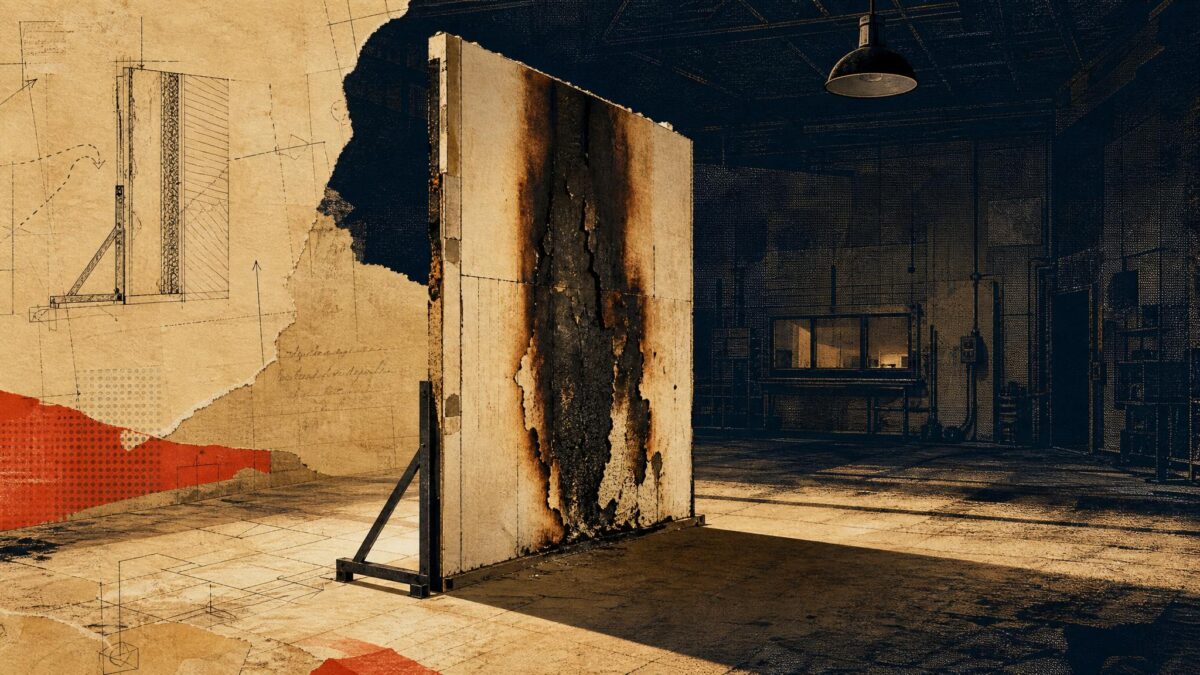
The Housing Industry Association has raised concerns over the planned closure of CSIRO’s North Ryde Fire Technology Laboratory, warning it could disrupt the testing pipeline that new building products rely on before they reach the market.
The facility, used for fire-resistance testing of construction materials and systems, is scheduled to close when its lease expires in December 2026.
According to HIA, the laboratory has been a core part of Australia’s building and construction testing network, supporting product certification, National Construction Code compliance, research and development, and the commercialisation of new building products.
The association says its closure would remove up to half of Australia’s large-scale fire-testing capacity, at a time when demand for testing and certification is increasing.
HIA Chief Executive Industry and Policy Simon Croft said the timing was poor for a sector under pressure to build more homes faster.
“The closure of CSIRO’s North Ryde Fire Technology Laboratory is more than the loss of a testing facility, it is the loss of nationally significant innovation infrastructure,” Simon said.
“Independent testing capability is fundamental to developing new building products, supporting housing delivery and accelerating modern construction methods.
At a time when Australia faces a housing shortage and is seeking to boost productivity, we should be strengthening these capabilities, not reducing them.”
Simon said the sector’s ability to adopt new products and construction systems depends on access to timely, affordable and independent testing.
“Every new building product, construction system, prefabricated solution, engineered timber product or bushfire-resistant housing component must pass rigorous testing before it can be widely adopted by the industry. Without that capability, innovation slows, costs increase and housing delivery becomes harder.”
Simon said industry stakeholders had warned that reduced testing capacity could lead to longer approval timeframes, higher certification costs and further pressure on housing supply.
“Australia cannot afford to lose decades of specialist expertise and nationally significant testing capability without a clear replacement strategy,” he said.
“If Australia is serious about building more homes, embracing innovation and improving productivity in construction, we need world-class testing and certification infrastructure. The North Ryde facility has played a vital role in providing exactly that.”
Simon called for a coordinated response from government, industry and CSIRO to keep independent fire-testing capability available in Australia.
“Governments, industry and CSIRO must work together to ensure independent fire-testing capability remains available in Australia and that there is no gap in the infrastructure needed to support housing innovation and research and development,” he said.
“HIA is calling for an urgent national response to preserve Australia’s building testing capability and ensure researchers, manufacturers and builders continue to have access to the facilities required to bring innovative housing solutions to market.”
For agents selling new-build stock or working with developers, any slowdown in product certification or a rise in testing costs could flow through to build timeframes and pricing further down the supply chain.