
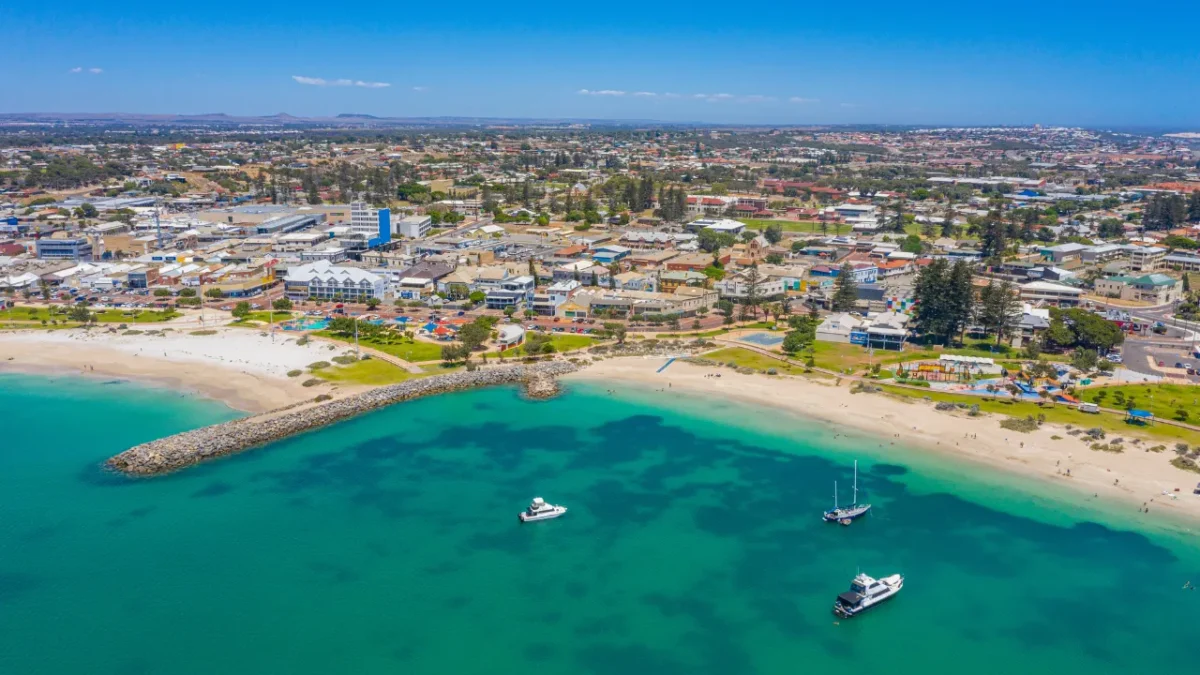
A major shift in local demographics has triggered one of the most dramatic real estate turnarounds in regional Australia, transforming the coastal city of Greater Geraldton from a stagnant post-mining market into a high-demand housing hotspot.
Located about 420 kilometres north of Perth on Western Australia’s Mid West coast, Geraldton spent much of the 2010s battling falling property values and a declining population.
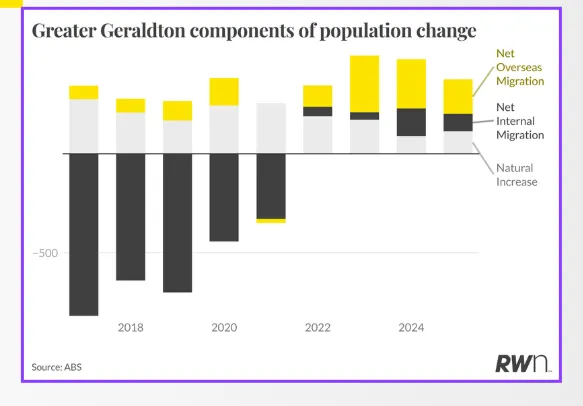
Between 2014 and 2019, the region lost nearly 2,800 residents – a 6.8 per cent contraction.
Crucially, the outflow wiped out key demographics that generate long-term housing demand, including almost 1,700 working-age adults aged 25 to 44 and nearly 960 children under 15, even as the local retirement-age population continued to grow.
That trajectory reversed sharply after 2019. Driven by a surge in economic activity, Greater Geraldton added more than 4,000 residents over the next five years – a 10.5 per cent population expansion that fully erased the losses of the previous decade.
The influx brought a net gain of more than 1,100 people aged 25 to 44 and over 350 children under 15, sending immediate shockwaves through the local property market.
According to Ray White Group Chief Economist Nerida Conisbee, the correlation between the city’s population recovery and its property surge was immediate.
“Geraldton’s housing market started to recover at almost exactly the same time as its population stopped shrinking,” she said.
Before the rebound, median house prices in Geraldton sat around $280,000, while median unit prices trailed under $200,000.
Today, median house prices have surged to around $660,000, and units have climbed to $420,000.
The rental market experienced a similar squeeze, with houses now renting for roughly $575 a week and units fetching around $420 a week.
While early gains coincided with the pandemic-era movement toward regional living, local industry momentum ensured the growth outlasted initial COVID trends.
Strengthening activity across iron ore, mineral sands, and metal concentrates, alongside robust agricultural exports, revitalised the regional economy.
Major capital works – including the multi-million-dollar Geraldton Port expansion, hospital upgrades, road developments, and renewable energy projects – have generated sustained local employment.
Additionally, Geraldton has emerged as an increasingly popular base for fly-in, fly-out (FIFO) workers seeking coastal lifestyle amenities and lower living costs compared to the Pilbara.
“COVID made regional living more attractive, but stronger economic opportunities gave working-age residents more reason to stay,” Ms Conisbee said.
“In just five years, Geraldton lost almost 1,700 people aged 25 to 44. Then, it gained more than 1,100 over the following five years. This shift fundamentally changed housing demand.”
Real Estate Institute of Western Australia (REIWA) historical tracking showed Geraldton repeatedly leading regional WA in annual house price growth as supply failed to keep pace with rapid demand.
Building delays and rising construction costs pushed buyers toward established housing stock, shortening sales turnaround times and driving competitive bidding wars across the Mid West.
Unlike the temporary shifts seen in other regional areas during the pandemic, Geraldton’s demographic growth has proved sticky.
Year-on-year domestic out-migration has largely halted, with net positive migration from elsewhere in Australia and a steady rise in overseas arrivals providing a continuous stream of new residents.
While broader Australian housing markets show signs of stabilising after years of aggressive growth, experts suggest Geraldton rests on far sturdier foundations than it did a decade ago.
“Like the rest of Australia, Geraldton property prices are now starting to soften after several years of exceptional growth,” Conisbee said.
“Prices can still correct from current levels, but without a return to sustained population decline, it is difficult to see Geraldton returning to the exceptionally weak housing conditions of last decade.”