
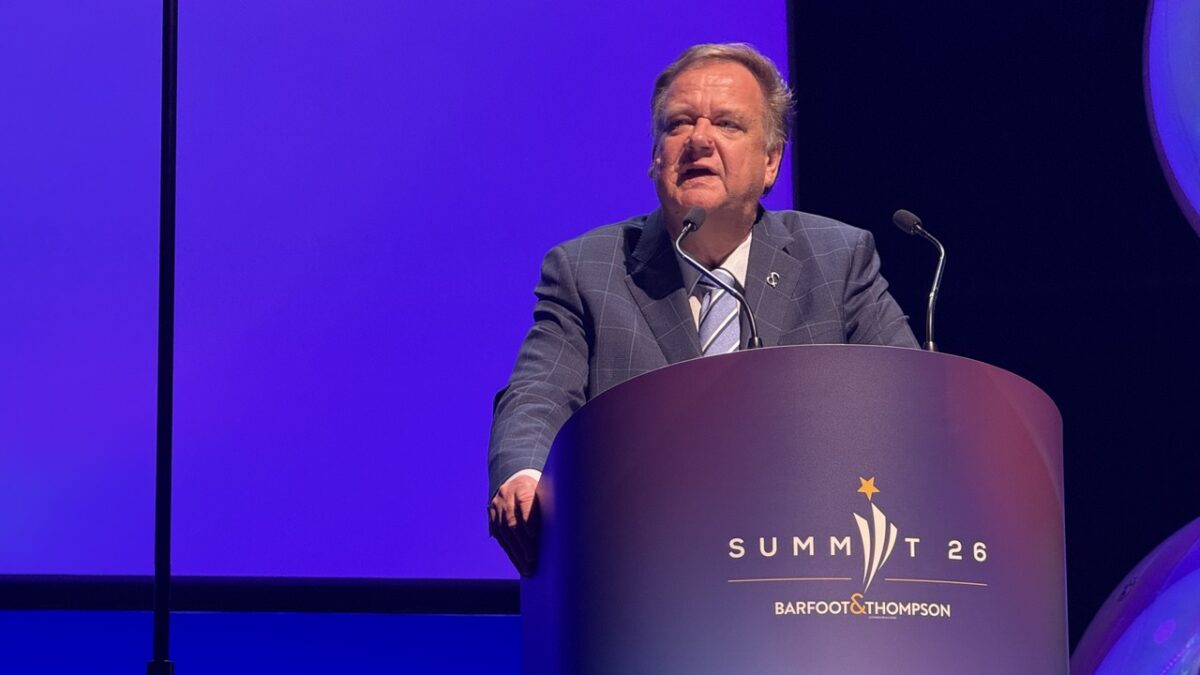
There aren’t many real estate companies that get to open a conference with the words “best in the world” and have the paperwork to back it up.
Barfoot & Thompson is one of them.
At the company’s summit in Auckland last week – held under the banner Winning Is Just The Beginning – Managing Director Peter Thompson reminded a 1,500-strong room of salespeople, property managers, and support staff exactly what they had achieved at the International Property Awards in London in January, where the company took out three world titles in a single year: Best International Real Estate Agency (over 20 offices), Best International Lettings/Rentals Agency, and Best International Real Estate Agency Marketing.
According to Mr Thompson, no company had ever pulled off all three in the same year.
“Who are the real champions behind those three titles? It’s you. It’s us. It’s the person sitting next to you. It’s the Barfoot & Thompson family,” he told the room.
“We’ve told the world, ‘This is us. This is how we do it, and this is what we’ve achieved.'”
But the celebration came with a warning attached. “With success comes challenges, and the hunting pack will be even more determined to bring us back down,” he said. “It’s why this summit is titled Winning Is Just The Beginning.”
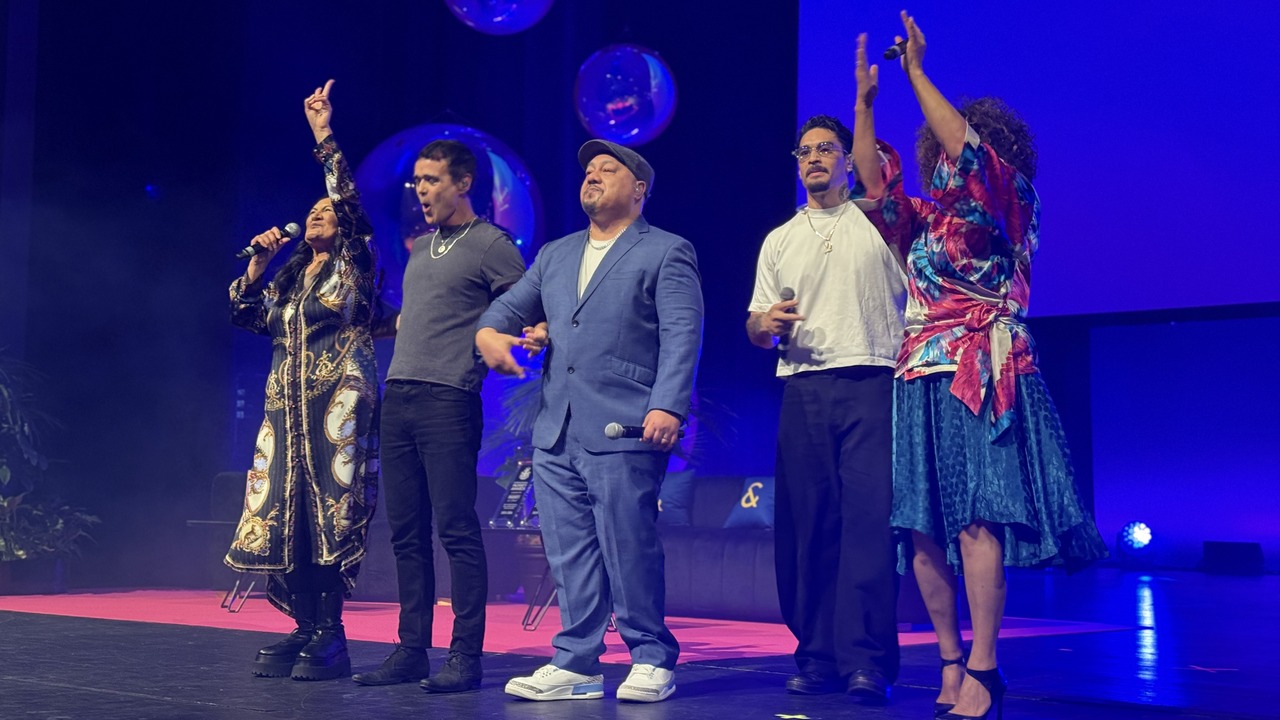
The numbers behind the titles
Mr Thompson, who was made a Companion of the New Zealand Order of Merit in the 2026 King’s Birthday Honours, said the company consistently sells more than two of every five homes sold in Auckland, with Hamilton partner Lodge not far behind in its own market. Market share is growing in Northland and the company’s new Bay of Plenty venture, he said, while its new Whanganui office is already the local market leader.
On the rental side, he said Barfoot & Thompson is the country’s largest private residential property manager, with more than 22,000 rental properties under management.
“Let me repeat that number: twenty-two thousand,” he said. “That’s the equivalent of managing every single dwelling in a community the size of Nelson, or twice the size of Cambridge.”
But the message wasn’t about protecting the lead. Mr Thompson challenged the team to prove the company’s residential success could be repeated across commercial, rural, projects, and body corporate.
“While the competition will go after our market share, we’re not in the business of simply defending what we have,” he said. “Our strength is our people. We have the skills and expertise. We have the desire.”
Borrowing the brand
The heart of the address was values – and Mr Thompson was specific about when they count. He urged the team to live the company’s standards “day in and day out, and not only when it’s convenient to do so.”
“Live them where it might cost us business. Live them when it would be easier to turn a blind eye when we’re confronted with something that is not right,” he said. “Following an alternative path leads to mediocrity and trouble.”
“We’re not in the transaction business. We’re into long-term relationships,” he continued, likening the Barfoot & Thompson brand to the All Blacks jersey. “When you commit to the Barfoot & Thompson brand, you are borrowing it, and your responsibility is to enhance it. No individual, regardless of their standing, is greater than the team.”
That responsibility, he said, doesn’t stop at the office door. It flows into personal lives and community work – from the company’s major commitments such as Starship and its big sporting sponsorships down to helping out at the local school. “Every contribution is observed, valued, and is sincerely appreciated.”
He reached for one more image to make the teamwork point stick – the Spanish tradition of castells, human towers built up to ten people high, where the person saluting at the top is literally standing on the shoulders of up to one hundred others. The company’s top performers stand in the spotlight, he said, but they stand on the shoulders of branch managers, the support centre, and the senior executive team quietly creating the opportunities beneath them.
“The real victor is the tower, and it’s the strength of the individuals acting as one that makes victory possible.”
The next challenge on the horizon
On the economy, Mr Thompson said the signs pointing to 2026 as a year of modest growth had been blunted by the Middle East conflict, but economic confidence was beginning to grow again – which is why, in his view, it’s time to face the industry’s next emerging challenge: artificial intelligence.
“AI could be the big one, a beast of a menace if we allow it to be one,” he said, pointing to its likely impact on forecasting market trends, valuing property, staging, marketing, matching buyers with vendors, and reducing costs – the very areas where customers see agents as the experts.
His prescription was not resistance.
“Resist AI, and it will damage us. Shape it to work for us, and it will make us stronger and more dominant in all our markets.”
He said the company’s international partnerships would act as “the canary in the cage” on AI’s growing influence – an advance guard for what works and what doesn’t – with new marketing innovations arriving later this year and AI progressively built into all aspects of the business.
And he asked for ideas from everywhere in the room, not just the top of the tower. “No idea is a poor idea. No intuitive insight is too fanciful. Do not leave it to others to provide answers.”
Where attention goes
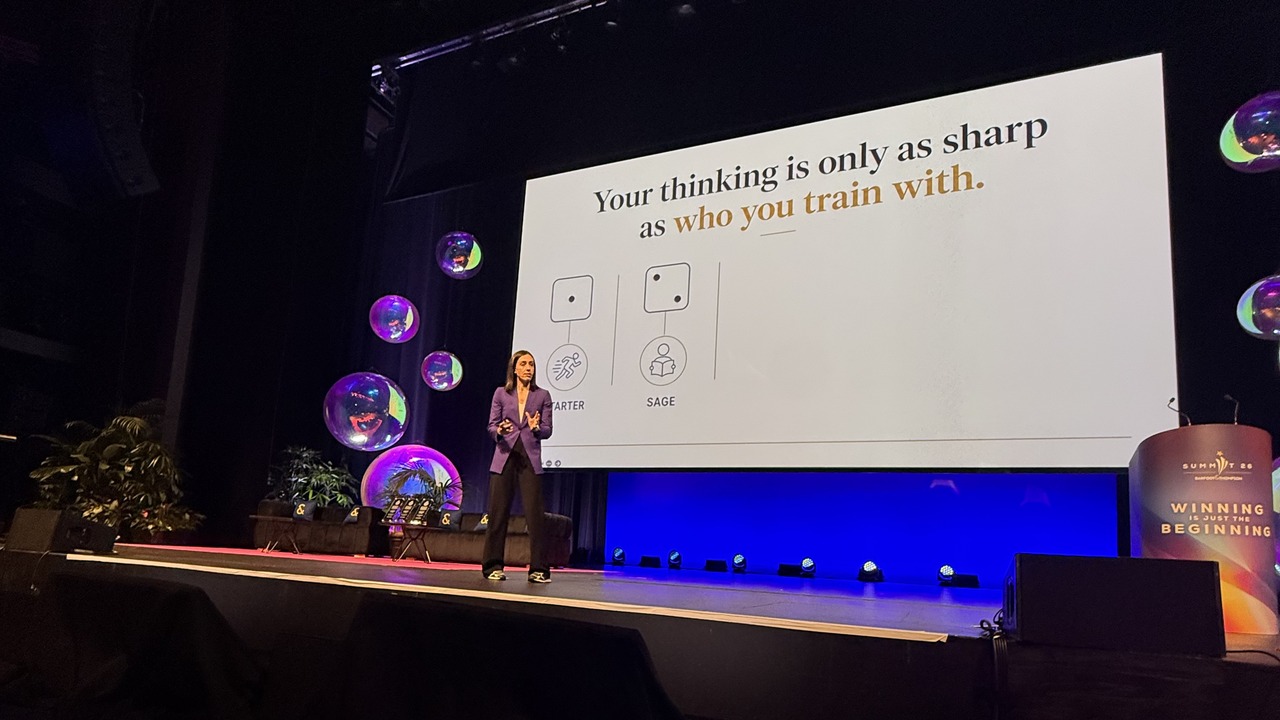
The international keynote came from Australian speaker Holly Ransom, who picked up the summit’s theme immediately – “To have your leader get up here moments ago and say winning is just the beginning is a sign of the appetite to continue to lead the pack globally” – then took the room deep on the one resource nobody in real estate has enough of: attention.
Every ping, she said, costs 23 minutes of refocus time, “which basically means we never get back to full focus unless we’re protecting from the next distraction.”
Her second idea was about where to spend the attention you have. She had the room list every touch point a vendor has between listing and settlement – most managed ten to fifteen, against the 130 that New York’s Eleven Madison Park famously mapped across a single dinner service – then pointed to research spanning 355 brands and 22 industries: of the three drivers of customer loyalty (success, ease, and emotion), emotion delivers an elevenfold lift in advocacy.
The story that made it stick was an agent in St Louis who overheard that his vendors’ eight-year-old son was heartbroken about leaving his soccer team.
Two months after the family settled in Atlanta, a ball arrived on their doorstep with a note: “Dear Zach, I hear the Atlanta Rockets have just recruited their latest superstar.” Ms Ransom heard the story on the other side of the world.
Her homework for the room: alongside the to-do list, write a weekly “to-test list” – one small experiment to make a customer moment more emotional.
Hearing from their own
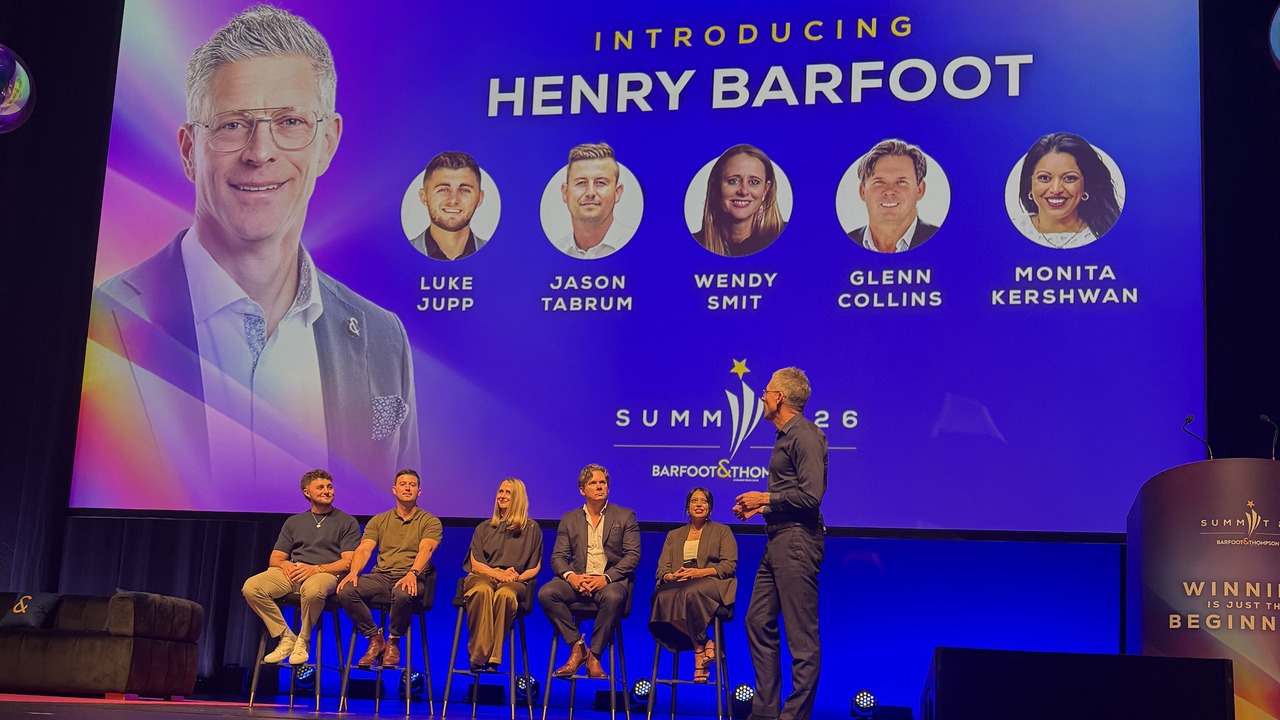
Director Henry Barfoot then hosted what he called one of the highlights of every summit – a panel of the company’s own people, live in front of 1,500 of their peers: Pukekohe lifestyle and rural partners Luke Jupp and Jason Tabrum, Browns Bay sales manager Wendy Smit, Papatoetoe head of property management Monita Keshwan, and – flying the flag for Hamilton partner Lodge – Glenn Collins, who has held the number one spot at Lodge for 22 years.
Collins put his longevity down to mindset rather than rivalry. “We got really good at not looking over our shoulder anymore – just looking ahead and focusing on what we want to achieve.”
Mr Barfoot’s reply borrowed from triathlete Hamish Carter: “To stay number one, train like you’re number two.”
Ms Smit, the panel’s self-taught social media specialist, gave the room three rules: be authentic (“don’t let perfection ever get in the way of progress” – people would rather watch you wrestle a directional sign in the wind than see another perfect post), add more value than you ask for (80 per cent pull, 20 per cent push), and be consistent, because social media is no longer an instant listing generator – it’s how you stay visible between them.
Mr Tabrum and Mr Jupp made the case for boundaries: their Friday off is non-negotiable, and the partnership runs a five-day week. “You can always make more money,” Mr Jupp said. “You can’t make more time.”
And Ms Keshwan drew the loudest response with the Papatoetoe team’s work alongside the Kai Ika project, which redirects fish heads and frames – nutritious parts of the catch that would otherwise be discarded – to South Auckland families doing it tough.
“Poverty is real. The cost of living is also real,” she said.
The afternoon also featured Infometrics Principal Economist Brad Olsen, who opened with a warning about anyone promising certainty on the housing market: his crystal ball “has got pretty scratched up the last couple of years – looking a little bit more like a snow globe.”
Thinking AI-first
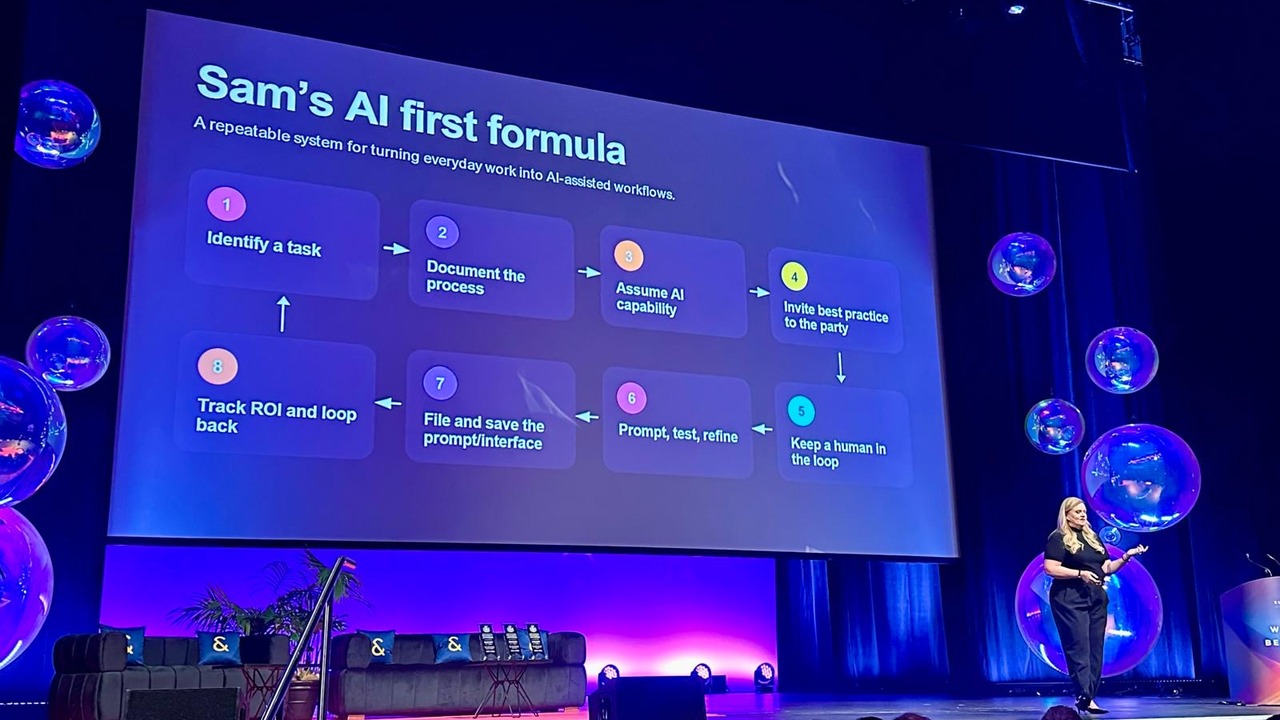
The afternoon session began with a keynote from Elite Agent Managing Editor Samantha McLean, who picked up where Mr Thompson’s AI challenge left off: the industry’s mistake so far has been bolting AI onto old ways of working – like swapping a steam engine for an electric one without redesigning the factory.
It’s why, she argued, real estate hasn’t yet seen the productivity gain everyone keeps promising.
Sam walked the room through what AI-first preparation for a listing presentation actually looks like: consent captured up front in a pre-meeting survey, AI-assisted research on the property, the vendor, and the area while you wait for it to come back, communication tailored to the client’s profile – and three or four persona-based ads written before the appraisal, not after the listing is won.
“You can use AI to write three or four ads before you go into the listing and walk in so prepared, and so good, that they think they cannot ignore you.”
On winning attention, her reframe was blunt: stop calling it social media. “It’s interest media.”
Platforms now behave like broadcasters, showing a new post to strangers before followers – so content has to earn the interest of people who don’t know you.
Her example: marketing a home near a golf course with an AI-generated flyover from the fairway to the front door, disclosed as AI.
Her one hard line: the relationships stay human. If anyone offers to install a system that dials 50 people at once, she told the room to say no.
“Don’t automate your relationships – protect them.”
The road to 2030
Mr Thompson closed his address with the company’s vision – to be, by 2030, the company of choice in the communities and business areas in which it operates – and a reminder that it won’t be won in a single year, but by building success on success, this year, next year, and the year after.
“I’m up for it. Are you? Let’s do it together.”