
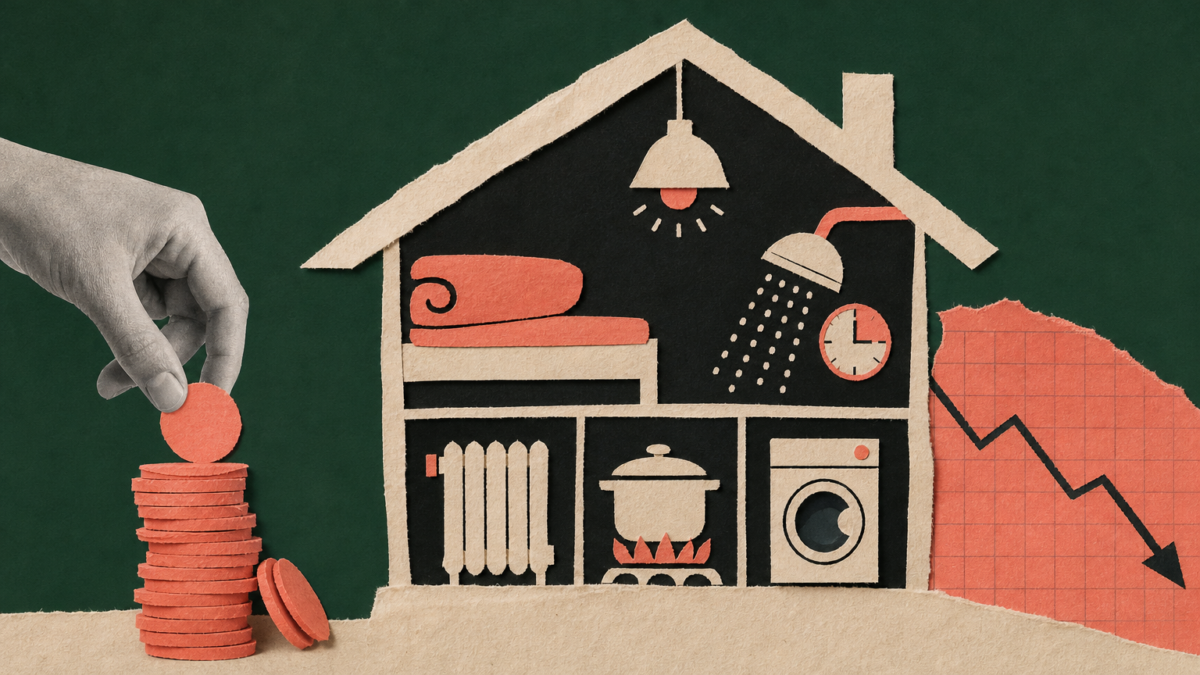
Owning or renting a home is becoming an increasingly expensive exercise for Australian households, with millions cutting back on everyday comforts to manage rising bills.
New research from Finder’s 2026 Household Report found 62 per cent of Australians, or 13.5 million people, had taken at least one measure in the past year to cope with rising household expenses.
Some are even sitting in the dark to save money.
Dubbed “owl-ing”, the practice involves deliberately switching off lights to avoid using electricity. Finder found 10 per cent of Australians, equivalent to 2.2 million people, were doing it.
The findings highlight the financial pressures extending beyond rent or mortgage repayments, with the cost of running a home adding another layer to household budgets.
Cutting back on heating and cooling was the most common response, with 33 per cent turning down their air conditioning to save on electricity.
Others were making more personal sacrifices, with 16 per cent showering less often or for shorter periods to reduce water and energy costs.
Almost a quarter (23 per cent) had cancelled or downgraded a streaming service, while 19 per cent had switched to cheaper mobile or internet plans.
Finder utilities expert and report author Mariam Gabaji said the findings showed how far Australians were going to manage rising household expenses.
“When people start rationing showers, turning the lights off earlier or avoiding the heater or air con, it’s a sign they’ve run out of easier ways to save,” Ms Gabaji said.
“No one should have to choose between staying comfortable and paying their power bill, but that’s the reality for many households right now.”
The research also found 15 per cent of Australians had skipped or delayed paying a bill, while 11 per cent had gone into debt or used buy now, pay later services to cover an expense.
Some families were making further sacrifices, with 6 per cent withdrawing children from extracurricular activities such as sport, music and swimming lessons, while 5 per cent had downgraded or cancelled private health insurance.
Ms Gabaji warned that delaying payments could create bigger financial problems over time.
“Delaying a bill might buy you a bit of breathing room today, but you could be setting yourself up for a larger issue down the track,” she said.
“The real risk is that these short-term coping strategies quietly snowball into much bigger debt problems.”
She encouraged Australians struggling with payments to contact their providers before falling behind, noting that many energy, water and telecommunications companies offer hardship programs and more manageable payment arrangements.
For real estate professionals, the findings are a reminder that housing affordability is about more than the purchase price or weekly rent.
The ongoing cost of running a property is also placing pressure on household budgets, with implications for the conversations agents and property managers have with buyers, sellers, landlords and tenants.