
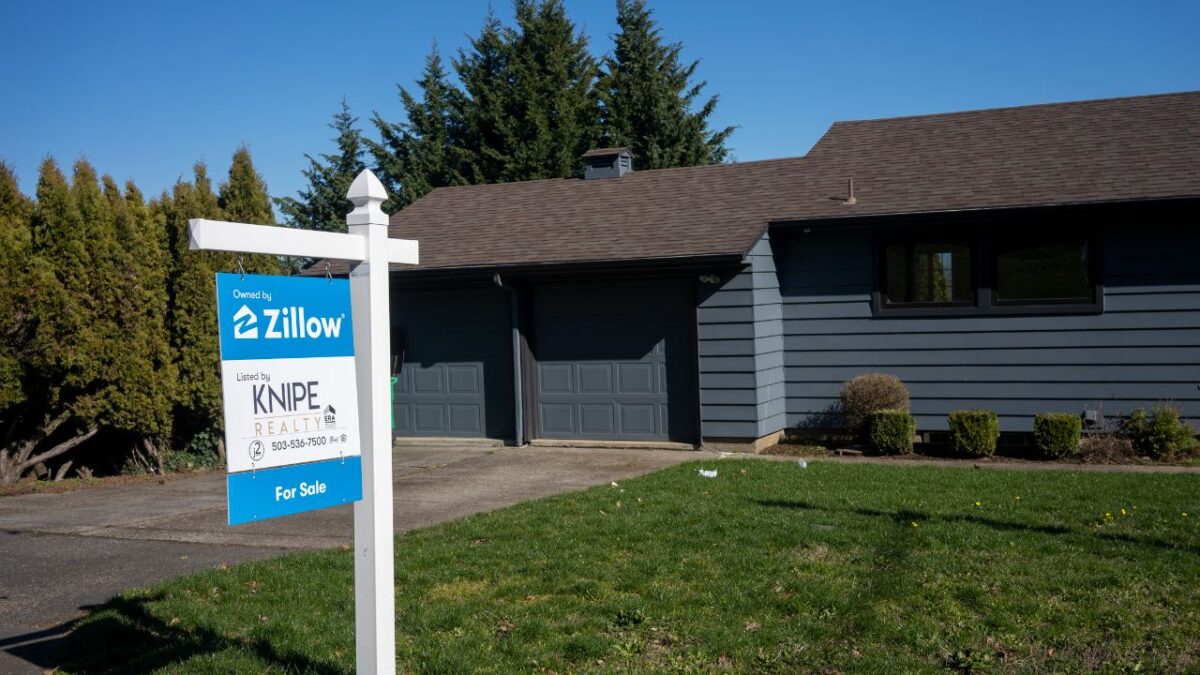
Zillow has taken its fight against private listings to federal court, filing an antitrust lawsuit against Compass International Holdings and Midwest Real Estate Data (MRED), the multiple listing service serving the Chicago region.
The lawsuit, filed on Tuesday in the U.S. District Court for the Northern District of Illinois, alleges the two companies illegally conspired to threaten Zillow’s access to listing data; a move Zillow claims harms consumers and violates competition laws.
At the centre of the dispute is MRED’s Private Listing Network (PLN), which allows sellers to market properties to a limited audience before listing publicly on the MLS. Compass, the largest residential brokerage in the United States, has championed this approach as part of its “seller choice” marketing strategy.
Inman reports that Zillow has long argued that private listing networks undermine market transparency and violate its Listing Access Standards, which require properties marketed publicly to be syndicated broadly via the MLS.
The breaking point
According to Zillow’s complaint, The Real Deal also stated that tensions escalated rapidly in early May.
On May 5, MRED allegedly threatened to terminate Zillow’s listing feed after Zillow suppressed Compass listings in Florida, Georgia and California that it deemed in violation of its standards.
On May 8, Compass terminated all direct listing feeds with Zillow nationwide, according to the lawsuit.
“Compass has thus terminated Zillow’s direct feed access to more than 25 percent of the current listings in Chicagoland, and ratcheted up its conduct from Chicagoland to nationally,” Zillow wrote in its complaint.
While Zillow maintains direct feeds with MLSs, meaning no listings are currently missing from its platform, the company warned that could change as more MLSs adopt rules protecting Compass’ private listings.
A national expansion
The lawsuit arrives weeks after MRED announced plans to expand its services nationwide, with Compass agreeing to subsidise membership costs for up to 100,000 of its agents. The partnership positions MRED’s Private Listing Network as a national alternative to traditional MLS syndication.
Shortly after, Realtracs, the MLS serving the Nashville area, announced its own nationwide expansion – also in partnership with Compass. Zillow alleges Realtracs changed its rules to require Zillow to display listings that violate its standards or lose access to the feed entirely.
An MLS serving Los Angeles, known as TheMLS/Claw, made similar rule changes last week, according to Zillow.
“In effect, the rule change requires Zillow to display, notwithstanding its Standards, all Compass listings or risk termination of all Realtracs feeds across all brokerages,” Zillow wrote.
What Zillow wants
Zillow is seeking an injunction to block MRED from enforcing the rules at issue and from cutting off its data access. The company is also seeking treble damages and attorney fees.
“This action seeks to restore competition and transparency in residential real estate,” Zillow stated in its filing.
The lawsuit marks a reversal from earlier this year, when Compass dropped its own antitrust case against Zillow after the portal loosened some of its listing standards.
Compass responds
In a statement, a Compass spokesperson said Zillow was “punishing agents” for following their clients’ wishes.
“Compass believes homeowners should have the right to decide how to market their homes. The industry is evolving to give consumers more choice, and we support that progress.”
MRED did not immediately respond to requests for comment.
While this is a US dispute, the outcome could influence how listing platforms and brokerages interact globally, particularly as debates about pre-market listings and data access intensify.
The case also raises questions about who controls listing data – the agent, the MLS, or the portals – questions that have surfaced in Australia’s own discussions about listing syndication and data ownership.