
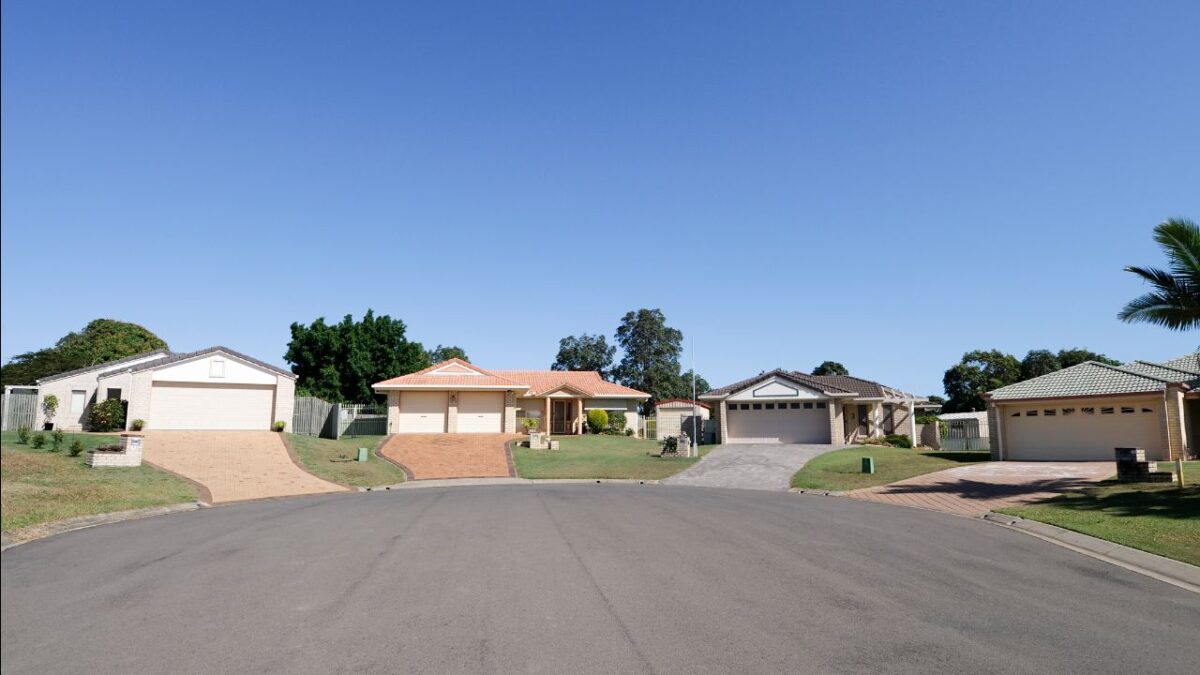
Australia’s property landscape has hit a startling new milestone, officially pricing out the concept of a “modest” seven-figure budget.
Long considered a gateway to luxury or a substantial wealth portfolio, a $1 million budget has officially been demoted to the baseline entry price for a standard family home across much of the country.
The revelation stems from Herron Todd White’s (HTW) June 2026 Month in Review report, which for the first time in its history expanded its investment tracking segment from $750,000 to a flat $1 million.
The change reflects a fierce, structural squeeze driven by high construction costs, massive population growth, and a chronic undersupply of housing stock.
A capital divide
Despite three consecutive interest rate rises in 2026 pushing the cash rate to 4.35%, property values have refused to retreat. Instead, a dramatic, fragmented multi-speed market has emerged between major capital cities.
In Sydney, the lower quartile of the market, where most first homebuyers and entry-level investors compete, is actually propping up the city’s broader flatlining metrics.
Buyers holding $1 million are increasingly forced into high-density apartments or detached homes on the absolute outer fringes; conversely, in cities like Perth and Adelaide, what used to be a premium budget is being heavily swallowed up by standard suburban footprints.
The fallout from the federal budget continues to serve as a primary headwind for investor psychology.
From the Ground Up
“After a relentless run of rate rises, the Reserve Bank held the cash rate steady at 4.35 per cent at its June meeting which is the first pause this year,” but HTW CEO Peter Maloney warns the federal budget’s proposed changes have proved so unpopular that the government has already softened its CGT position for small business, and any policy that dampens investor returns risks tightening rental supply precisely when the nation can least afford it.
In his first economic update for the Month in Review, HTW Chief Economist Cameron Kusher said that national dwelling values remained flat in May 2026 as a clear value divide opens up between population centres around the nation.
With population growth outpacing housing delivery, national rents are up 5.9 per cent over the year and vacancy rates have tightened to just 1.5 per cent, with Brisbane, Adelaide, Perth, Hobart and Canberra all now sitting below 1 per cent.
“The combination of high inflation, higher interest rates, weakening economic growth, and softening consumer and business sentiment is starting to weigh on conditions.”
He said for more than a decade, we’ve examined the ‘lazy money’; theme, progressively ratcheting up our benchmark figure as markets across Australia recalibrated. This month, for the first time, it becomes the lazy $1 million.
“That alone tells you how far the goalposts have moved. A seven-figure budget is now the baseline for a standard family home across much of the country, and our teams reveal exactly where a million dollars buys a trophy, where it buys genuine value, and where the smart money is heading.”
The broader commercial and rural squeeze
The property pressure cooker isn’t just restricted to residential real estate, the retail sector is facing an acute feasibility crisis of its own.
While outer suburban corridors are crying out for new convenience and neighbourhood hubs to service expanding populations, high construction overheads and steep tenant incentives are rendering greenfield retail builds completely unfeasible.
Meanwhile, the agricultural sector is battling its own environmental and economic split. In rural sectors, worsening climate patterns are shifting the map. A distinct two-tier grazing market has surfaced: prime, highly reliable, well-watered country continues to command stiff competition at benchmark rates, while lighter-carrying, secondary country is languishing on the market with heavily reduced buyer pools.