

The residential property landscape is fracturing into two distinct speeds, with a steady accumulation of sales stock directly contrasting against a shrinking pool of long-term rental properties.
This widening divergence is shifting the day-to-day dynamics of the market, giving selective buyers more room to negotiate at auction while leaving property managers and tenants to navigate an increasingly competitive leasing environment.
Crucially, industry leaders note that these market conditions provide a critical baseline for analysing how upcoming policy initiatives, such as the Federal Budget and proposed negative gearing tweaks, will impact real estate portfolios nationwide.
Ray White Chief Economist Nerida Conisbee stated that current data exposes a market already undergoing structural changes, even before the full weight of the government’s legislative adjustments flows through to agencies.
“The latest listings data shows a clear split opening up in the housing market: more homes for sale but fewer homes available to rent,” she said.
“This is not yet evidence of the full impact of the Federal Budget or the proposed negative gearing changes. The data only runs to the end of May, and the budget was announced on 12 May.
“But it does show the market conditions those changes are landing in. Buyers are seeing more choice, while renters are facing a tightening availability problem.”
Buyers Reclaim the Upper Hand
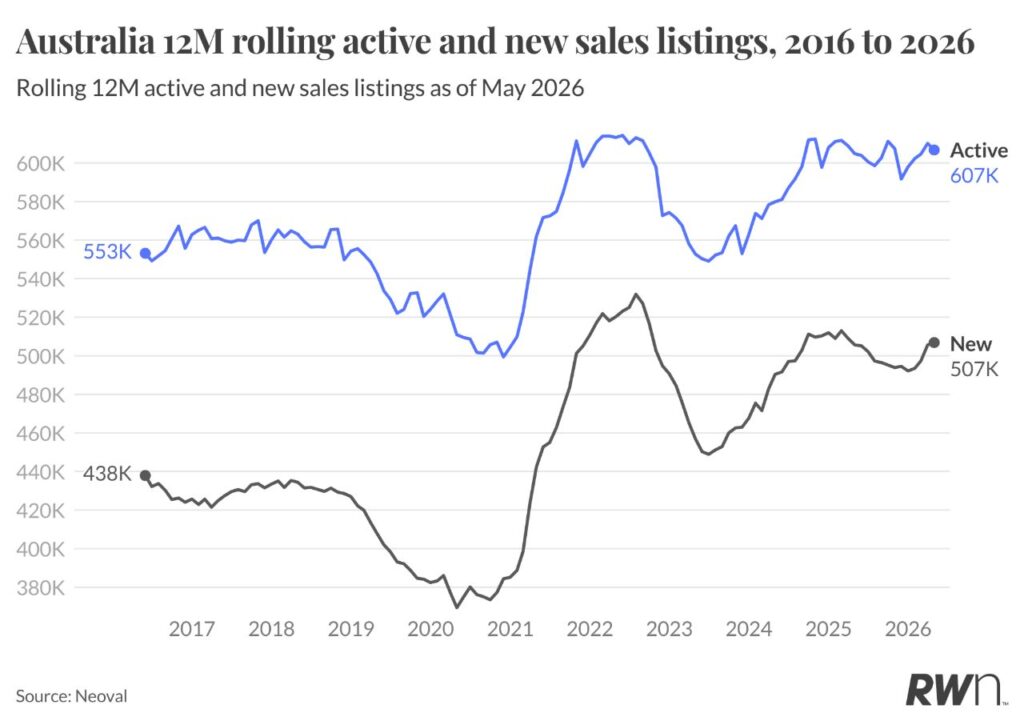
For real estate agencies on the sales front, the cyclical tide is showing clear signs of change. Nationally, the 12-month rolling number of active sales listings has climbed to approximately 607,000, bolstered by 507,000 fresh properties hitting the market.
According to Ms Conisbee, this supply injection “suggests more vendors are coming to market and buyers have more choice than they did through the tightest part of the cycle.”
However, this newfound freedom of choice is highly localised; Canberra leads the nation with a powerful 7.9 per cent annual lift in active sales listings, closely followed by Melbourne at 5.3 per cent and Sydney at 2.2 per cent.
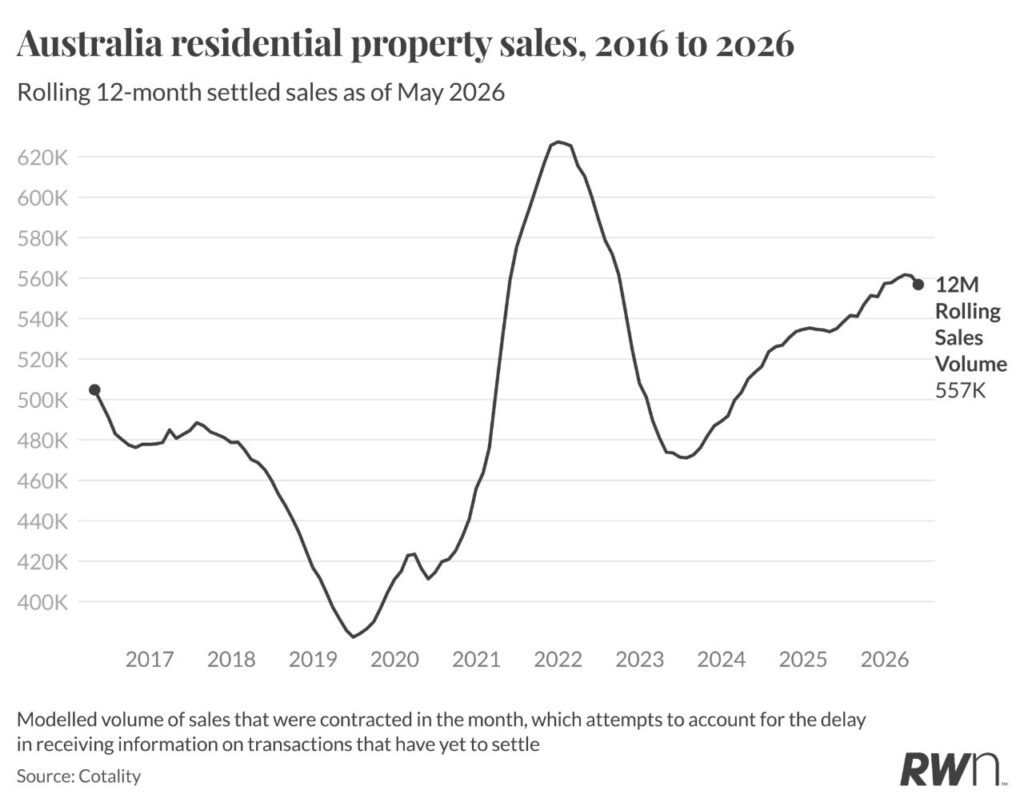
Crucially, transaction numbers are failing to keep pace with the influx of new stock, with the 12-month rolling number of residential property sales flattening out at around 557,000, a clear trend of buyer fatigue and caution is emerging.
“At the same time, sales volumes are not rising at the same pace,” Ms Conisbee said.
“The 12-month rolling number of residential property sales is now around 557,000, but the latest trend appears to be easing. That points to a market where more homes are being listed, but buyers are becoming more selective.”
This shift in psychology is cooling down hot markets, giving purchasers the breathing room required to haggle down inflated asking prices.
While sales teams celebrate a more active landscape, property management departments face a far more constrained environment.
Total active rental listings across Australia hover around 697,000, with new lease options stagnant at roughly 644,000.
Economists note that these figures sit precariously below historical averages, proving that the rental sector has utterly failed to replicate the supply recovery seen in the sales sector.
“This is the key issue for renters: a home listed for sale does not help someone looking for a lease,” Ms Conisbee warned. “Rental availability is what determines how much choice renters have.”
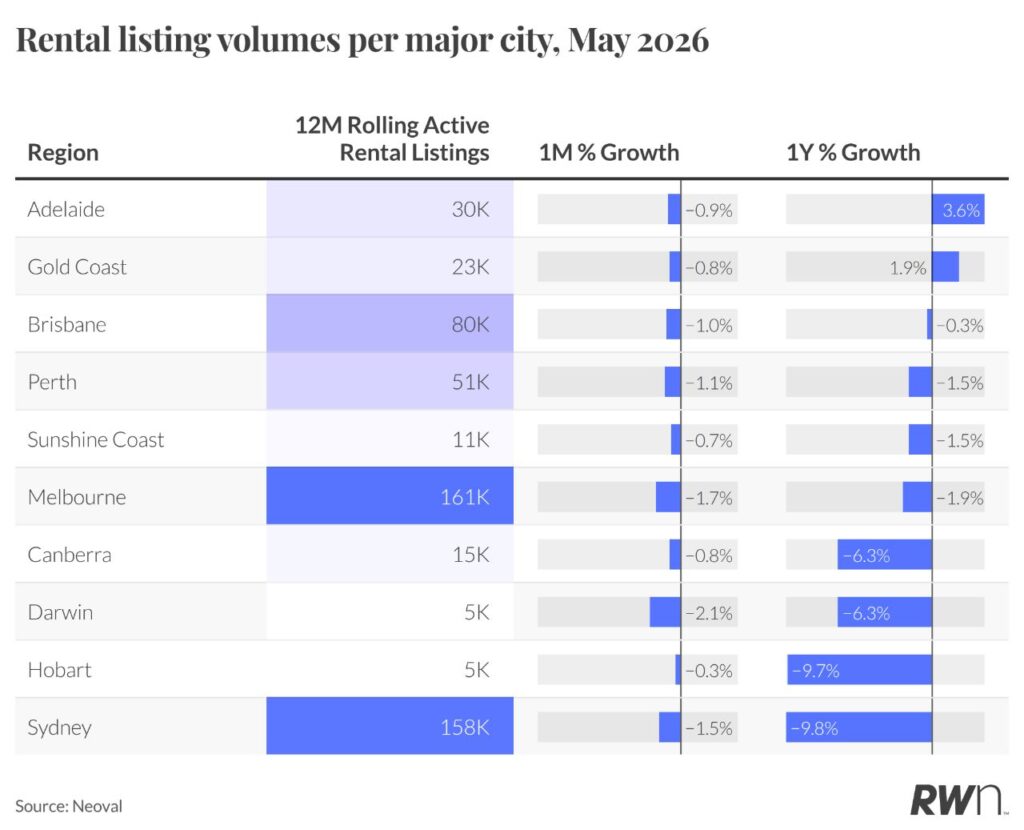
The rental squeeze is biting hardest in Sydney, where active rental listings have plummeted a staggering 9.8 per cent over the past year, alongside sharp annual falls recorded in Hobart, Canberra, and Darwin.
“So while the sales market is giving buyers more options, rental markets in a number of cities are tightening,” she said.
“That is the risk in the current environment: more homes may be available to buy, but fewer are available to rent.”
The Budget’s structural intentions
The data sheds a critical light on the Federal Budget’s core philosophy, which deliberately aims to systematically disincentivise real estate investors in order to free up established stock for aspiring owner-occupiers.
While the policy may achieve its goal of diluting investor competition at weekend auctions, analysts warn it treats the housing ecosystem as a delicate balance where shifting a property from one column directly impacts the other.
Ms Conisbee explained that the structural push to transition properties away from the rental pool could have severe consequences for local leasing stock.
“The Budget is designed to encourage more established homes to move from investor ownership into owner-occupation. In that sense, more homes coming to the sales market is what the policy is trying to achieve: more choice for buyers and less investor competition for established properties,” she said.
“The risk is the rental side of that shift. If more homes go to owner-occupiers, fewer remain available to rent. That is particularly problematic given rental availability was already falling before the Budget changes had time to flow through.”