

A migration of capital is underway across the Australian property market, triggered by a structural loophole left wide open in the 2026 Federal Budget.
While residential landlords absorb a devastating financial blow from the removal of negative gearing for established residential property and changes to the capital gains tax regime, the nation’s commercial sector has essentially been handed a government-backed monopoly on property tax shelters.
According to realcommercial.com.au Senior Economist Anne Flaherty, who authored the June 2026 Commercial Property Update, the regulatory hammer dropped on housing is the exact catalyst driving this new investment wave.
“Commercial property retains full negative gearing benefits, creating a structural advantage for the sector. These changes are likely to encourage more investors to explore commercial as an alternative to residential investment,” she said.
“Looking ahead, market performance will depend on how competing forces play out. Elevated
interest rates and slowing economic conditions are likely to keep weighing on activity, while high
stock levels, resilience in key sectors and the relative attractiveness of commercial property
following the Federal Budget help to support demand.”
Retail suburbs and mega-deals
While investors navigate elevated interest rates and global instability, money isn’t leaving the pitch; it’s aggressively reallocating.
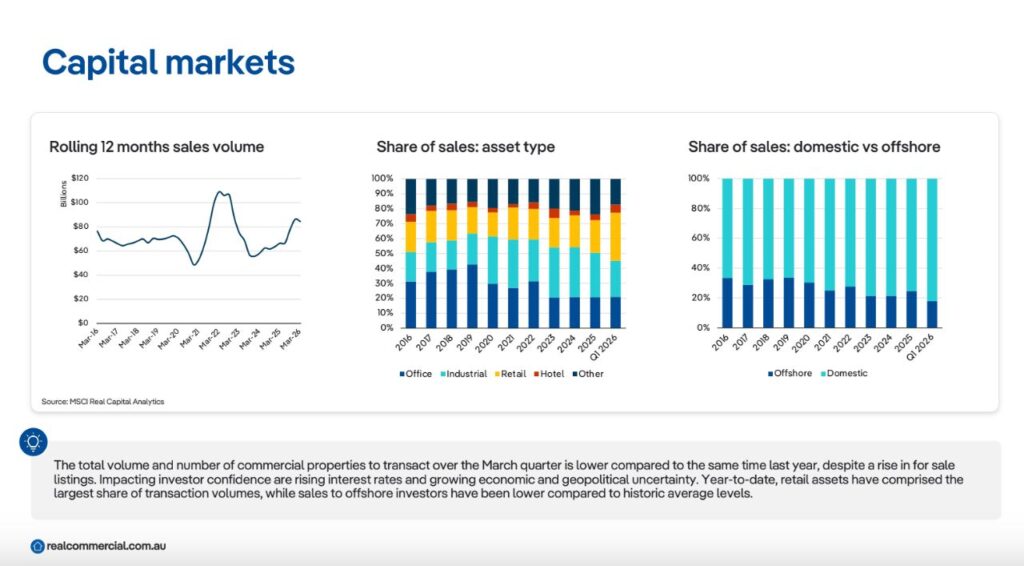
Year-to-date, retail assets have comprised the largest share of transaction volumes, driven by an appetite for essential, high-performing assets.
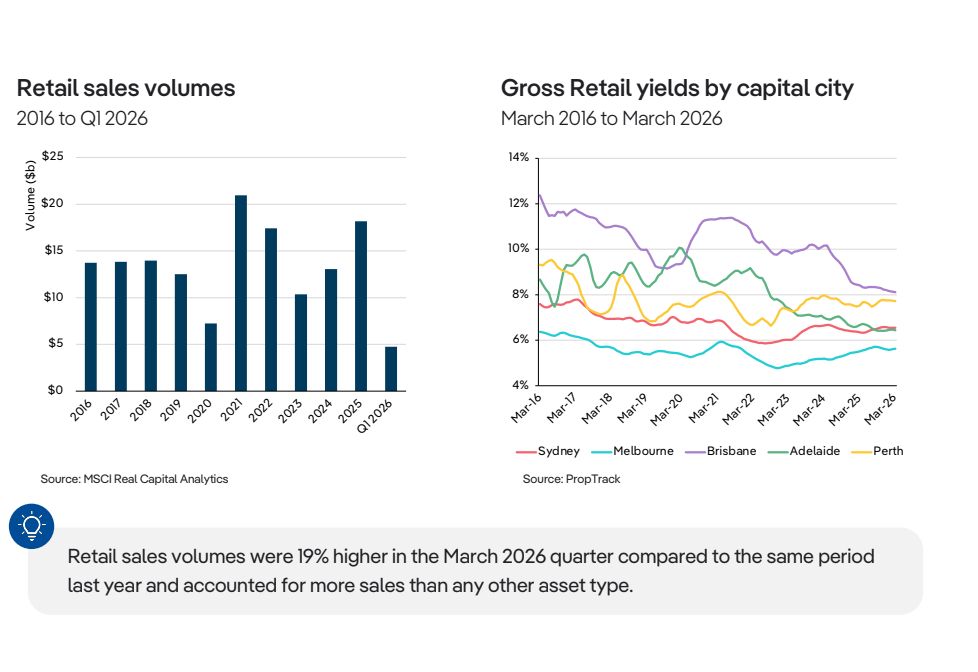
Retail sales volumes alone were “19% higher in the March 2026 quarter compared to the same period last year and accounted for more sales than any other asset type.”
Instead of houses, massive institutional and private dollars are flowing into premium retail hubs. Two blockbuster deals dominated the quarter:
- The mega-sale of Erina Fair on NSW’s Central Coast by Lendlease and NPS to Fawkner Property for $895 million.
- Scentre Group selling a 20% stake in Westfield Sydney to the Australian Retirement Trust for $864 million.
Medical and logistics boom
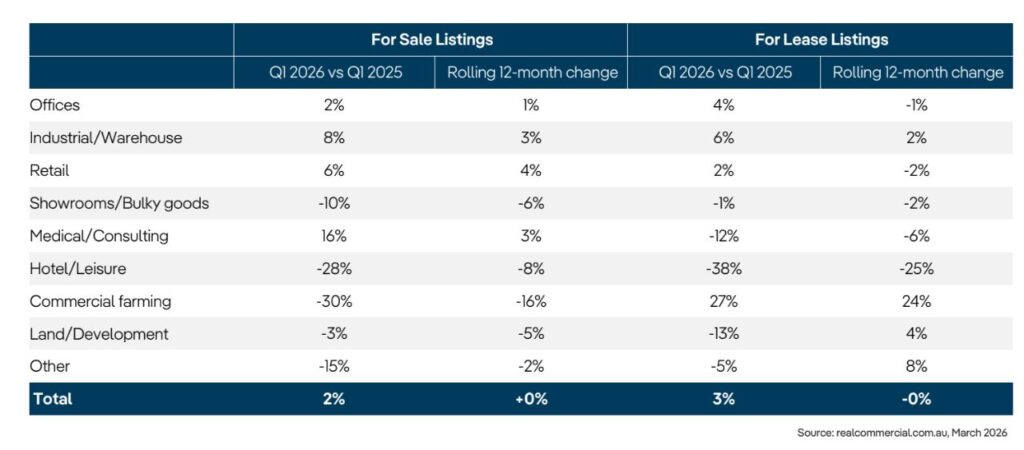
The underlying listing data proves that landlords are positioning themselves for this shifting demand. Across the board, new choices are hitting the market, but defensive sectors are experiencing a massive surge.
Comparing Q1 2026 to Q1 2025, listing growth has exploded in highly specific categories:
| Asset Class | For Sale Listing Growth (Q1 2026 vs. Q1 2025) |
| Medical/Consulting | +16% |
| Industrial/Warehouse | +8% |
| Retail | +6% |
On the flip side, the hospitality sector is facing a severe supply drought. For-sale listings in Hotel/Leisure plummeted 28%, while for-lease listings in the same category cratered by 38% over the same period.
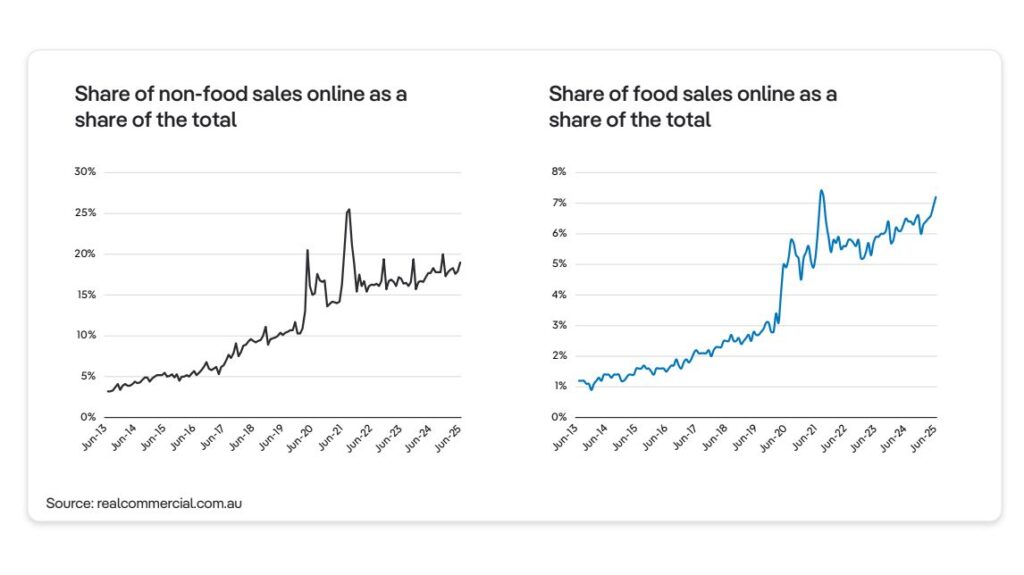
Meanwhile, warehouse spaces remain an absolute darling for investors. Even though the hyper-growth of the pandemic has normalised, “online retail continues to support warehouse demand, with rising online spending, particularly in food helping, underpinning the long-term case for industrial property.”
The residential game has fundamentally changed, and savvy investors know it. Backed by a massive negative gearing advantage that residential real estate has just lost, commercial sectors like medical clinics, warehouses, and premier retail spaces are looking less like an alternative play and more like the main event for the rest of 2026.
“Looking ahead, market performance will depend on how competing forces play out. Elevated interest rates and slowing economic conditions are likely to keep weighing on activity, while high stock levels, resilience in key sectors and the relative attractiveness of commercial property following the Federal Budget help to support demand,” said Ms Flaherty.
“The commercial property market has had a subdued start to 2026 following a rebound in growth in 2025. Higher borrowing costs and a softer economic backdrop are making investors more cautious, even as elevated stock levels mean there is still plenty of opportunity for buyers.”