
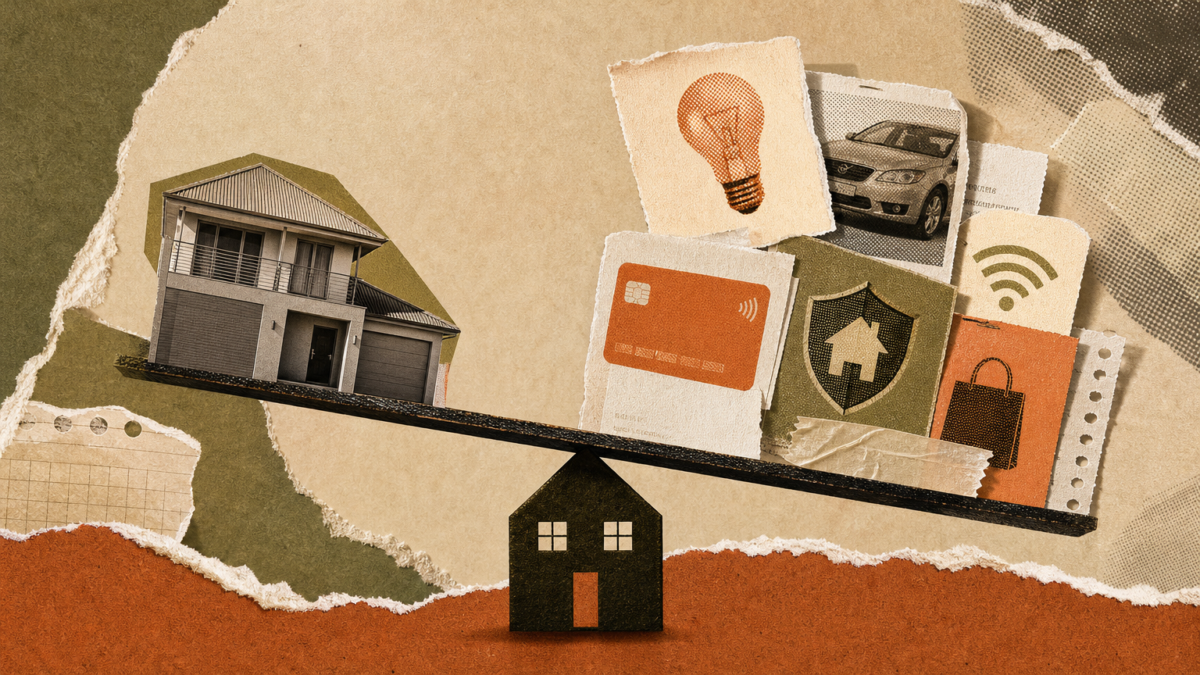
Australians are prioritising their mortgage and rent payments over other household expenses, with new research revealing an estimated 2.3 million households have missed or delayed paying bills to meet their housing commitments.
The findings from comparison website Finder show 23 per cent of Australians have postponed at least one bill over the past 12 months to ensure they could cover their mortgage or rent, raising questions about the financial pressures facing homeowners and tenants that may not be immediately apparent to the property industry.
Electricity and gas bills were the most common expenses to be delayed, with 8 per cent of respondents putting off an energy payment, while 6 per cent postponed car insurance and another 6 per cent delayed credit card repayments.
Home internet, buy now, pay later services and home insurance were each delayed by 5 per cent of respondents.
The research, based on a survey of 1,006 Australians conducted in August, provides a different perspective on housing affordability at a time when higher interest rates and living costs are placing renewed pressure on household budgets.
While mortgage arrears remain relatively contained, the findings suggest some households are maintaining their housing payments by allowing other financial commitments to fall behind.
In its October Financial Stability Review, the Reserve Bank of Australia reported that mortgage arrears had increased slightly during 2026 but remained around pre-pandemic levels.
The RBA estimated that fewer than 2 per cent of owner-occupier borrowers were experiencing a cash flow shortfall, meaning their income was insufficient to cover scheduled mortgage repayments and essential expenses.
Although the central bank found most mortgage borrowers remained resilient, supported by savings buffers and employment conditions, it also identified greater vulnerability among lower-income households.
For real estate agents and property managers, the contrast is significant. A household continuing to meet its mortgage or rental obligations may still be experiencing financial strain elsewhere, particularly as the cost of maintaining a property competes with other essential expenses.
Richard Whitten, money expert at Finder, said housing costs were leaving some Australians with little flexibility in their budgets.
“When the mortgage or rent takes such a big chunk out of the budget, other bills can easily get pushed down the list.
“For some, that means holding off on the electricity bill, insurance renewal, or credit card repayment so they can make sure their biggest bill is paid.
“It’s concerning that so many households are in a position where they have to decide which expenses need to wait.”
The findings come as the cost of running a household continues to rise.
Australian Bureau of Statistics figures for August 2026 showed electricity prices increased 13.2 per cent over the year, while housing costs rose 5.7 per cent and rents increased 3.6 per cent.
The ABS attributed much of the measured electricity price increase to the ending of Commonwealth electricity rebates.
For property managers, the figures provide further context around rental affordability, particularly in markets where tenants are already committing a substantial proportion of their income to housing.
Domain’s September Quarter Rent Report found combined capital city median house rents remained unchanged at $700 per week, although they were still 7.7 per cent higher than a year earlier.
Unit rents increased $10 over the quarter to $690 per week, representing annual growth of 6.2 per cent.
While the quarterly figures suggest rental growth is moderating in some markets, the annual increases demonstrate that tenants are still absorbing higher housing costs than a year ago.
Separate figures from the Australian Prudential Regulation Authority indicate that mortgage repayment difficulties remain relatively limited despite the broader financial pressures.
APRA’s June 2026 property exposure statistics showed loans between 30 and 89 days overdue accounted for 0.54 per cent of outstanding residential housing credit, down from 0.66 per cent a year earlier.
Non-performing housing loans represented 1.01 per cent, compared with 1.04 per cent the previous year.
The figures suggest that widespread mortgage repayment distress has not emerged, although they do not capture whether borrowers are delaying other payments to remain up to date with their home loans.
Finder’s survey offers some insight into those potential trade-offs, although it does not distinguish between renters and mortgage holders or establish a direct relationship between delayed household bills and mortgage arrears.
The research found 77 per cent of Australians had not missed or delayed a bill to cover housing costs over the previous year, indicating that most households were not reporting this particular form of financial pressure.
However, for the substantial minority who were, Mr Whitten warned that postponing payments could create additional problems if the underlying pressure on household finances continued.
For the real estate industry, the findings highlight an important distinction between housing payment performance and overall household financial health.
While relatively low mortgage arrears suggest most borrowers are continuing to manage their repayments, Finder’s research indicates that for some Australians, keeping those payments current is coming at the expense of other household obligations.