

Across the homeowners we speak with at OpenAgent, 61 per cent now show moderate or high hesitation, up eight percentage points on a year earlier.
Those insights come from comparing July and August this year with the same months in 2025, across more than 35,000 conversations with homeowners considering their options.
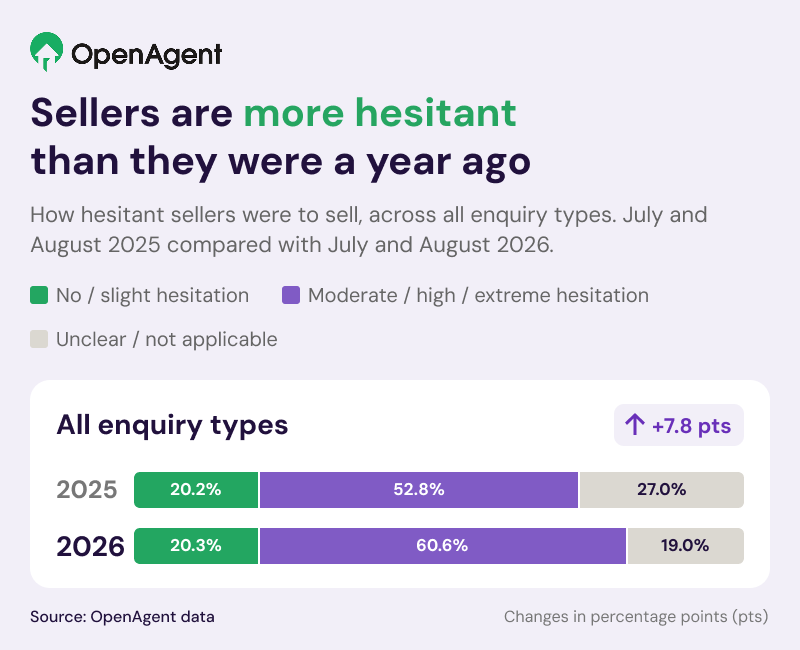
Fewer of the homeowners we speak with say they’re ready to sell right now, but those who do seem more sure of it.
Ready sellers are more willing to talk to agents
Hesitation rose whether homeowners were just starting to explore a sale or already comparing agents.
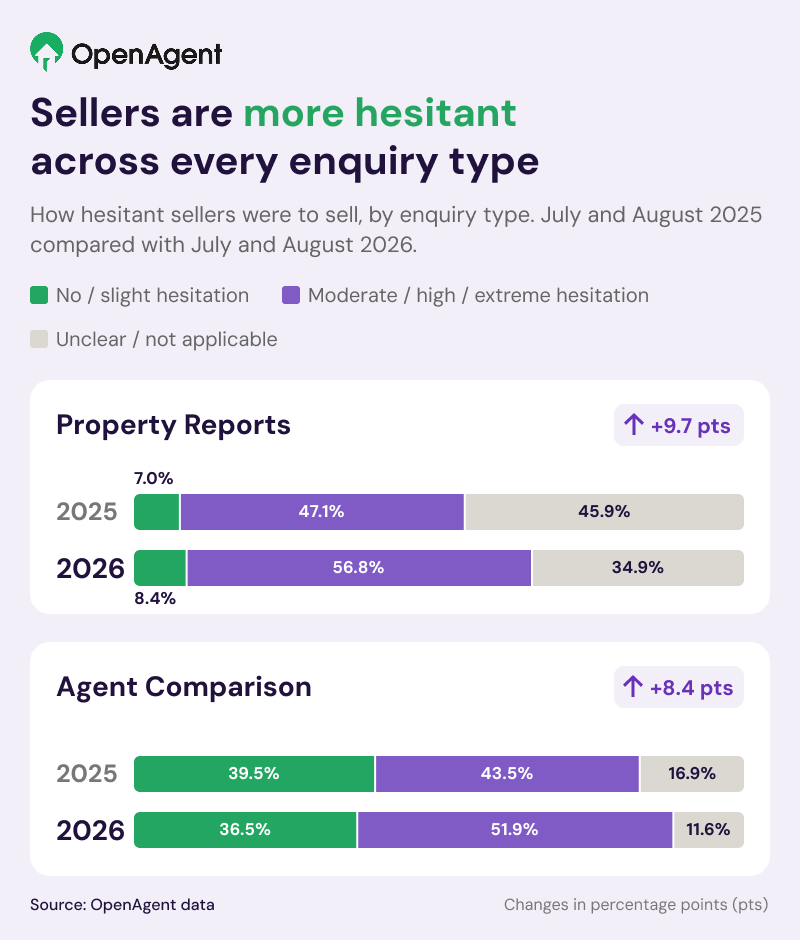
Among those requesting a property report, it rose around 10 points to 57 per cent. Among those comparing agents, it rose around eight points to 52 per cent.
The picture changes once you look at how serious homeowners are about selling.
Our conversations cover their plans and timelines, and those who tell us they want to sell immediately are more likely to agree to an agent introduction than they were a year ago.
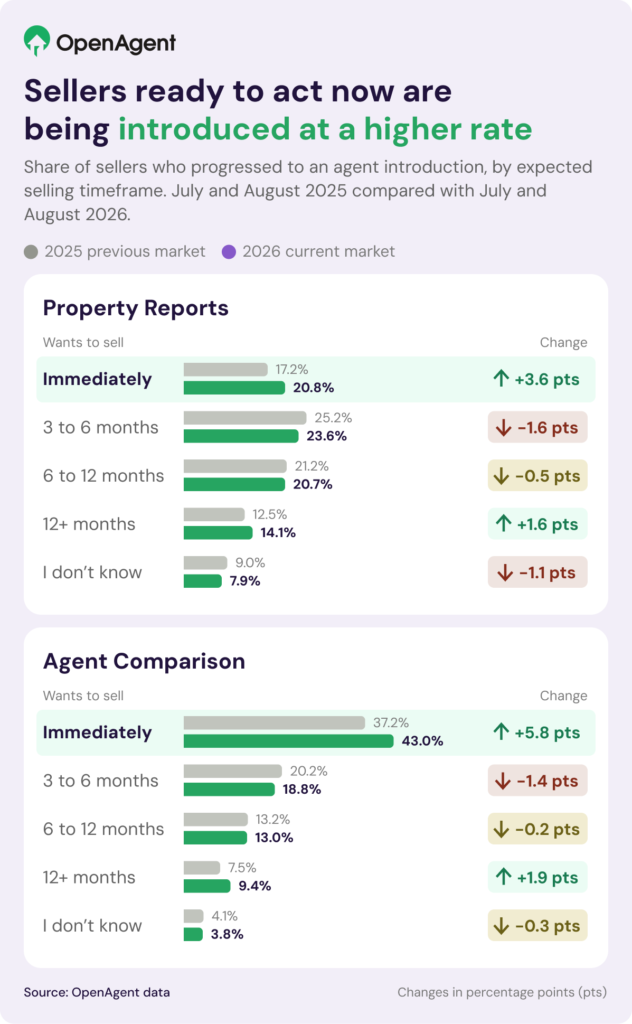
Among agent comparison users in that group, 43 per cent agreed to an introduction, up from 37 per cent.
For property report users, it rose from about 17 to 21 per cent, while among those who didn’t know when they’d sell, it slipped from about 9 to 8 per cent.
Kevin Kong, OpenAgent’s Head of Data, said the pattern was consistent with previous slowdowns.
“Customers who explicitly state they intend to sell soon generally proceed to market on their usual timelines, regardless of broader conditions,” Kevin explained.
“Conversely, those who don’t indicate an immediate need to sell take significantly longer to list.”
Some homeowners have a pressing reason to move, such as a separation, a deceased estate or a job interstate.
Those chasing a bigger backyard or a more convenient downsize generally have more flexibility over timing.
But either way, the data suggests that consumers recognise the value a good agent brings in a slower market, and they’re more willing to engage in a high-quality conversation with recommended agents.
Investors show the sharpest reversal
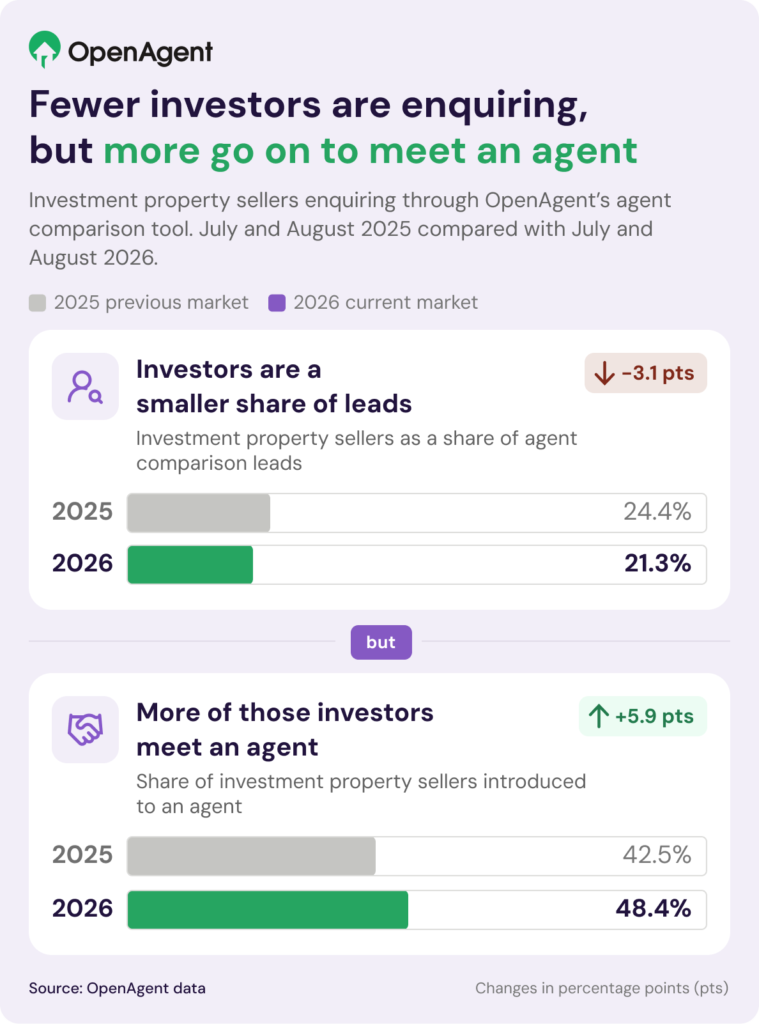
In NSW, investors’ share of agent comparison leads fell from around 22 to 18 per cent.
Yet just over half of those coming through agreed to an agent introduction, up from about two in five a year earlier.
Nationally, the introduction rate for investors rose to almost half.
Kevin’s read was that this year’s negative gearing changes were a factor.
Under the changes, which take effect in July 2027, negative gearing on residential property will be limited to new builds.
Established properties held before the May budget are grandfathered, but that protection doesn’t carry over to a replacement established property.
“Existing investors are heavily disincentivised to sell unless they are exiting the property market entirely,” Kevin noted.
He also cautioned that conditions vary from one market to the next.
“Looking solely at national data can be misleading when considering your own sub-market,” he added.
What’s holding hesitant sellers back
In a recent sample of our conversations with hesitant homeowners, wanting more certainty about what their property is worth was among the most common concerns.
This is where an agent’s local expertise and recent sales evidence can really help, even in a slower market.
Others raise questions about choosing an agent, including commission, and in a slower market where every dollar counts, value and cost are front of mind.
Some want to finish renovations first, or wait to see whether they can achieve the price they have in mind.
The sellers who are ready, though, haven’t changed course. As Kevin put it, “unhesitant sellers are still moving to market at their normal pace despite the slower conditions”.
That’s why our team doesn’t take a stated timeframe at face value, or dismiss someone who says they don’t know.
Each conversation works through when the homeowner expects to sell, the circumstances behind the move, what is holding them back and whether they want to speak with an agent now.
For the homeowners we go on to introduce, we spend around 12 minutes on the phone on average before making that introduction. By the time a referral reaches you, it isn’t a cold lead.
Where someone needs more time, we stay in touch through follow-up conversations, emails and advertising.
When an introduction is made, you receive what we’ve learned about their plans, their timing and their circumstances, from a homeowner who has already agreed to speak with you.