
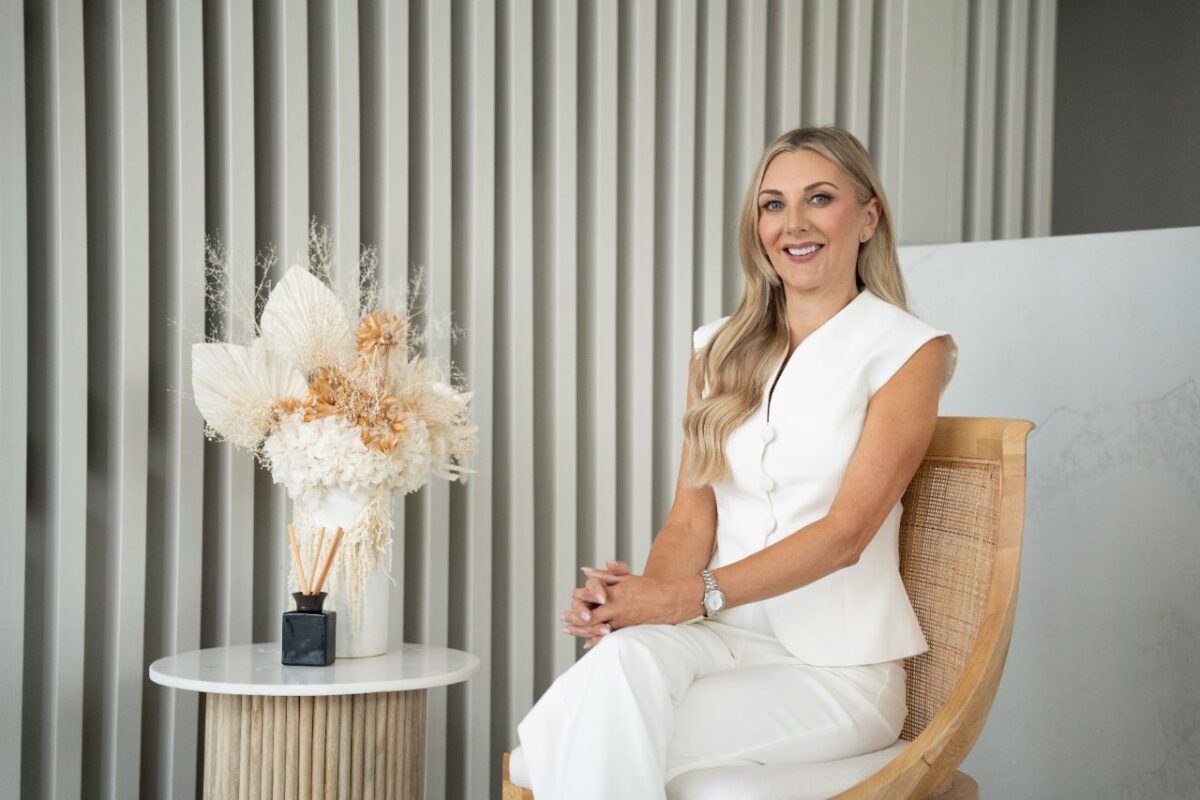
This year has changed the way I think about leadership. Leading a large real estate business through one of the most dynamic periods our industry has experienced has been both energising and humbling.
Market conditions have shifted, policy settings have evolved, compliance requirements have continued to grow, artificial intelligence has accelerated at an extraordinary pace, and consumer expectations seem to change almost in real time.
This year has reinforced something I’ve slowly been learning throughout my career: the role of a leader isn’t to remove uncertainty. It’s to build enough confidence that people can move through it.
Somewhere over the past twelve months, I found myself coming back to a phrase I’d heard years ago. “You can’t fence the ocean.” At first, I simply appreciated the imagery. Today, I think it captures the essence of leadership.
Our instinct as leaders is to create order. We develop strategy, refine systems, analyse data and build frameworks because planning matters. It provides direction, aligns teams and creates momentum.
Yet there is a subtle trap in believing that enough planning will somehow allow us to control the future.
It won’t.
Markets will continue to rise and fall. Governments will change policy. Technology will keep reshaping industries, often faster than businesses can adapt.
Consumer behaviour will evolve, competitors will innovate, and there will always be external forces capable of changing the landscape overnight.
The tide doesn’t stop because we’ve built a bigger fence.
For many leaders, the natural response is to tighten control. We add another layer of reporting, another approval process or another meeting, believing that greater oversight will somehow create greater certainty.
This year has challenged that thinking for me.
The more unpredictable the environment has become, the more I’ve realised my role isn’t to control every variable – it’s to build an organisation capable of performing regardless of the variables.
That shift has changed where I invest my energy; I’m less focused on trying to predict every external event and more focused on strengthening what sits within our control: our culture, our standards, the quality of our decision-making and the confidence our people have in one another.
Harvard professor Amy Edmondson’s work on psychological safety, and Google’s well-known Project Aristotle, both arrived at a similar conclusion.
The highest-performing teams weren’t those with the smartest individuals; they were the teams where people trusted one another enough to contribute, challenge ideas and adapt together.
In a world where change has become the norm, perhaps trust has become a greater competitive advantage than certainty.
Looking back, I don’t think this year has taught me how to predict the next wave. It has taught me that predicting the wave is far less important than preparing your people to meet it.
Leadership isn’t tested when the sea is calm. It’s revealed when the tide refuses to do what you expected.
I’ve stopped trying to build bigger fences around the things I can’t control. Instead, I’m investing my energy in building a team that can think clearly, adapt quickly and keep moving forward, no matter what appears over the horizon.
Because you can’t fence the ocean.
But you can build a crew that’s ready to sail it.