
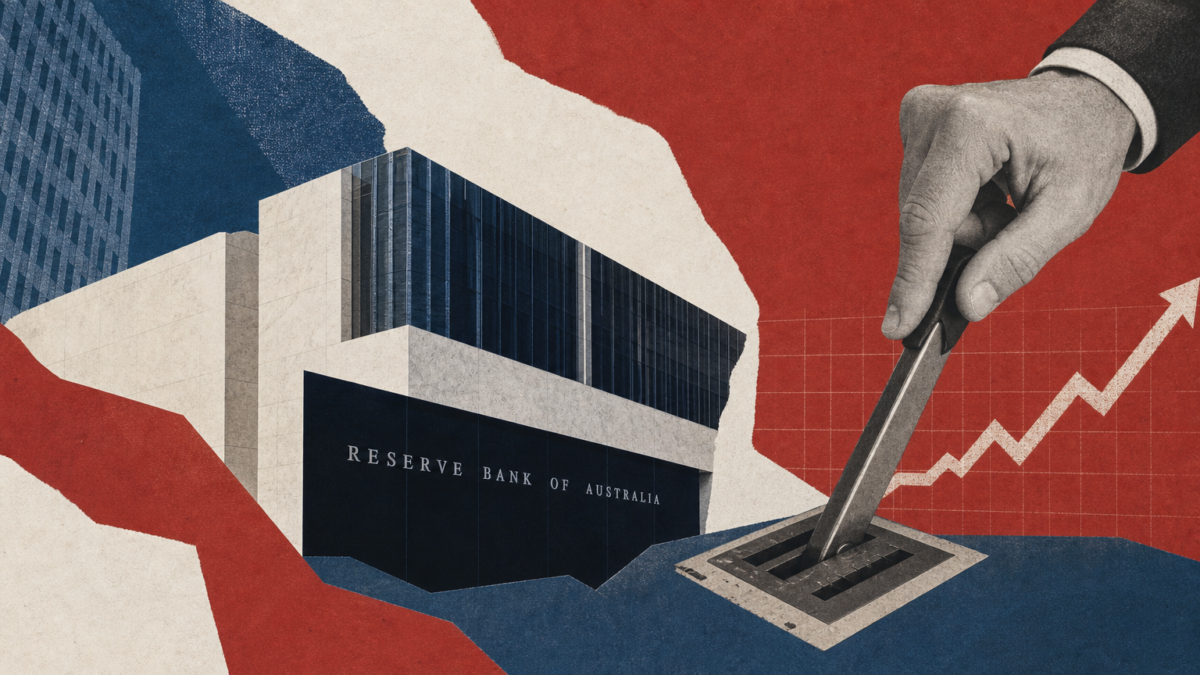
The Reserve Bank of Australia has increased the cash rate by 25 basis points to 4.85 per cent, warning that inflation remains stubbornly high and is now expected to stay above 3 per cent for the coming year.
In its decision on November 3, the Monetary Policy Board said inflationary pressures remained broad-based, with higher fuel and commodity prices, domestic capacity constraints and rising costs for businesses contributing to a worsening inflation outlook.
The increase, supported by six of the nine board members, marks another tightening of monetary policy as the RBA attempts to bring inflation back within its 2–3 per cent target range. Three members voted to leave the cash rate unchanged at 4.60 per cent.
The Bank also warned that higher interest rates and falling housing prices and turnover were expected to weigh on household consumption and dwelling investment, while forecasting a further slowdown in economic growth and a rise in unemployment.
The RBA announces its next cash rate decision on 8 December.
Read what our expert panel had to say.

Nigel O’Neil, Woodards CEO
The Reserve Bank’s decision to increase the cash rate by 25 basis points to 4.85 per cent is disappointing for mortgage holders, but hardly unexpected given the latest inflation figures.
With annual inflation rising to 4.3 per cent in September and underlying inflation at 3.6 per cent, the RBA has made it clear that getting inflation under control remains its priority.
In Victoria, the property market is already in something of a holding pattern, with buyers and sellers facing several uncertainties, particularly the upcoming state election.
From conversations we’re having across our network, there’s a sense that many people are waiting for some of those unknowns to be resolved before making their next move.
The election is a significant factor in that hesitation. Regardless of which party forms government, having a result at the end of the month will remove one major uncertainty and give people greater clarity about the direction of the state.
That’s not to suggest we’ll see an immediate surge in activity after the election, but it should provide some much-needed confidence.
Victoria’s new auction rules have also contributed to a period of adjustment. Melbourne auction volumes fell to 495 on the first weekend following their introduction, before rebounding almost 68 per cent to 831 the following weekend.
While that recovery is encouraging, broader market conditions remain challenging.
Looking ahead, I don’t anticipate any significant improvement in the next three to six months, particularly with further interest rate increases still a possibility.
Angus Moore, realestate.com.au Senior Economist
As was widely expected, the RBA lifted the cash rate by a further 25 basis points today, driven by their concerns about persistently high inflation, which were reinforced in the inflation data released last week.
While the economy has slowed, and the labour market has eased a bit in recent months, that RBA is yet to be convinced that inflation will return sustainably to target without further tightening.
Higher mortgage costs will continue to weigh on household spending and work to slow economic growth, although a reasonably resilient labour market and growing incomes continue to provide an important buffer.
For the housing market, another rate rise will lengthen the downturn already underway. Home prices nationally have declined for seven straight months, and are down 4.3% from peak. Further increases in mortgage rates will reduce borrowing capacities again for prospective buyers, adding to the downward pressure on home prices.
However, the downturn, while brisk, remains an orderly adjustment driven by rising rates and affordability pressures, rather than a distressed housing correction. Labour market conditions remain resilient by historical standards, mortgage arrears rates remain low, few borrowers are in negative equity, and many households retain substantial repayment buffers.
| City | Median property value | Base monthly repayments | Base monthly repayments with a 0.25% rate rise | Monthly change | Annual change |
| Sydney | $1,169,000 | $5,849.73 | $6,003.66 | $153.92 | $1,847.09 |
| Melbourne | $815,000 | $4,078.30 | $4,185.61 | $107.31 | $1,287.75 |
| Brisbane | $1,014,000 | $5,074.10 | $5,207.62 | $133.52 | $1,602.18 |
| Adelaide | $907,000 | $4,538.67 | $4,658.10 | $119.43 | $1,433.11 |
| Perth | $949,000 | $4,748.84 | $4,873.80 | $124.96 | $1,499.48 |
| Hobart | $734,000 | $3,672.97 | $3,769.62 | $96.65 | $1,159.76 |
| Darwin | $630,000 | $3,152.55 | $3,235.50 | $82.95 | $995.44 |
| Canberra | $847,000 | $4,238.43 | $4,349.95 | $111.53 | $1,338.31 |

Mindy Powell-Hodge, eXp Realty Realty-Australia’s Country Leader
A rate hike changes the conversation, but it doesn’t stop life or property decisions. This is where great agents prove their value: cutting through the headlines, understanding their local market and negotiating confidently. The market doesn’t need more noise; it needs expertise. That’s what our industry delivers.

Oliver Hume Property Group chief economist, Matt Bell
The RBA Board surprised absolutely no-one today and raised the cash rate to an 18-year high of 4.85%. The last time the cash rate was at this level was when they were on the way down in 2008 as central banks around the world slashed rates in response to the Global Financial Crisis.
If the rise is fully passed on, the impact on standard variable rates isn’t quite as historic because of how spreads between the cash rate and lending rates move around, but mortgage holders will have their rates very close to the highs experienced at the end of 2023 and early 2024.
Does today’s decision change the outlook for property?
The outlook for housing and land markets hasn’t changed because of today’s decision. No matter when this rate hike was delivered, it has been expected for most of the last few months. It’s going to be a tough last few months of the year, and probably into the first quarter of 2027.
Plenty of forecasters and financial markets expect this hike to be the last in the cycle, with a significant period of no change as the Bank monitors the data and hopefully watches inflation return to the middle of the target range.
The fundamentals underpinning demand for housing haven’t changed. Population growth remains strong and demand exceeds supply in most markets. Even in those with sufficient new supply, sales have not kept pace with new household formation. Once the final rate hike is delivered, and households can be sure their borrowing capacity and mortgage payments won’t rise further, the pieces will be in place for a return to increasing levels of transactions and moderate price gains.

Nerida Conisbee, Ray White Group Chief Economist
The challenge is that inflation remains elevated even as the economy shows clear signs of slowing. Employment fell by almost 40,000 in September and unemployment is now at 4.7 per cent. This makes further interest rate increases increasingly difficult to justify as previous increases continue to work their way through the economy.
Housing provides a particularly good example of why inflation is proving difficult to control. Despite falling established house prices, housing remains the largest contributor to inflation, increasing 5.2 per cent over the year. The housing component of the CPI includes new dwelling construction costs, rents and electricity, rather than changes in established property values.
New dwelling prices rose 4.7 per cent annually but were unchanged in September. At the same time, underlying construction costs are accelerating again. Builders are increasingly relying on discounts to attract buyers, despite facing higher costs.
The rental market is another concern. Rents have continued rising at an annual rate of 3.6 per cent since May, despite broader weakness in the property market. Investor activity has fallen sharply, with new investor loan commitments declining 8.6 per cent in the June quarter. The Federal Budget’s changes to negative gearing and capital gains tax are discouraging further investment.
This is significant for inflation. Reduced investor participation restricts rental supply, with these effects to continue to flow through to rental inflation.

LJ Hooker Head of Research and Business Intelligence, Mathew Tiller
The latest rate rise of 0.25bsp will further constrain borrowing capacity, with lenders expected to pass on higher
interest costs.
Local employment conditions, affordability, available stock and property type, however, will continue to play an important role in market performance.
The immediate effect will likely be on buyer demand and sales activity, with some purchasers reducing their budget or putting their plans on hold, while others will look to negotiate harder.
Properties that meet buyers’ needs and budget will continue to transact even with the higher mortgage repayments. Areas with limited stock and strong underlying demand may continue to see competition. We are expecting that some vendors could also become more hesitant, particularly if their next purchase requires a larger loan.
Latest Cotality figures indicate the real estate market is slowing, but this hasn’t led to a surge in sellers. Total listings are up 17.9 per cent, but new listings are down 12.5 per cent annually.
More homes on the market doesn’t mean panic selling; it can reflect slower sales, extended marketing campaigns and changing confidence in the economy.
Market demand is expected to remain subdued for longer, which could make new housing projects harder to finance. With demand softening in the short term, there remains a longer- term challenge of delivering enough homes to meet demand.

BresicWhitney CEO, Will Gosse
Five rises in ten months is a material shift. On a $1.5m loan, today adds roughly $250 a month. Across the five rises this year that’s about $1,200 a month more, or $14,000 a year. Someone who could borrow $1.5m in January can now borrow around $1.34m.
Sydney values are more than 10% below their February peak, and the pace of correction over the last three months has been sharper still. Anyone pricing off what a neighbour got earlier this year is pricing off a different market.
The question now stops being how high and starts being how long. The next meeting is 8 December. Buyers have five weeks where they know exactly where rates sit, and that is a window.
The buyers still active have done their sums. They know exactly what they can pay and what they won’t stretch past. Vendors who meet them there are selling. Vendors who don’t are sitting.

Dr Diaswati Mardiasmo, Chief Economist, PRD Real Estate
A cash rate of 4.85 per cent would put further pressure on borrowing capacity, buyer demand and property transactions, with highly leveraged investors and buyers who entered the market with smaller deposits likely to feel the greatest impact.
However, a slowdown could also create opportunities for buyers and financially secure investors, particularly as reduced competition provides more room to negotiate. Markets with strong rental demand, low vacancy rates and population growth are likely to remain attractive, including affordable city apartments, Darwin and regional centres facing shortages of rental accommodation.
I don’t expect a wave of forced selling across the country. Most homeowners still have substantial equity, and RBA data for October 2026 indicates only about 0.5 per cent of home loans are in negative equity. The bigger pressure is likely to come from reduced buyer purchasing power, although distressed listings have increased, highlighting that some households are already under strain.
For agents, this is a time to become the local data authority. National headlines can create anxiety, but they don’t tell the full story of what is happening in an individual suburb or postcode. Agents need to use current sales evidence, listing levels, buyer enquiry and vendor discounting trends to have honest conversations about pricing and expectations.

The Agency Insights Partner Cameron Kusher
We’ve heard quite a lot from the RBA over the past month highlighting that inflation outcomes have been much higher than they had forecast. These conditions have necessitated both the increase in the cash rate in September and this increase today. There remains a distinct possibility that interest rates will have to increase further although I don’t expect that will occur until next year.
From the perspective of the housing market, the cash rate is now the highest it has been in many years and rates have increased by 125 basis points this year which has reduced borrowing capacity by around 12.5 per cent. The changes to investment taxes have resulted in a larger fall in borrowing capacity for investors.
The RBA has repeatedly stated that the fall in housing prices is not a concern for them but they are much more concerned about how the fall can impact on the broader economy.
This rate increase is likely to further dent confidence in the housing market, reduce buyer demand and push housing prices lower. Whilst there is not yet any evidence of a spillover from weaker housing prices into the broader economy the higher interest rates go and the longer they remain at an elevated level, the greater the risk that the weak housing market starts to impact on the broader economy.