

Days before Victoria woke up blue in Saturday’s state election landslide, Tom Panos was already watching the state’s auction rooms for clues.
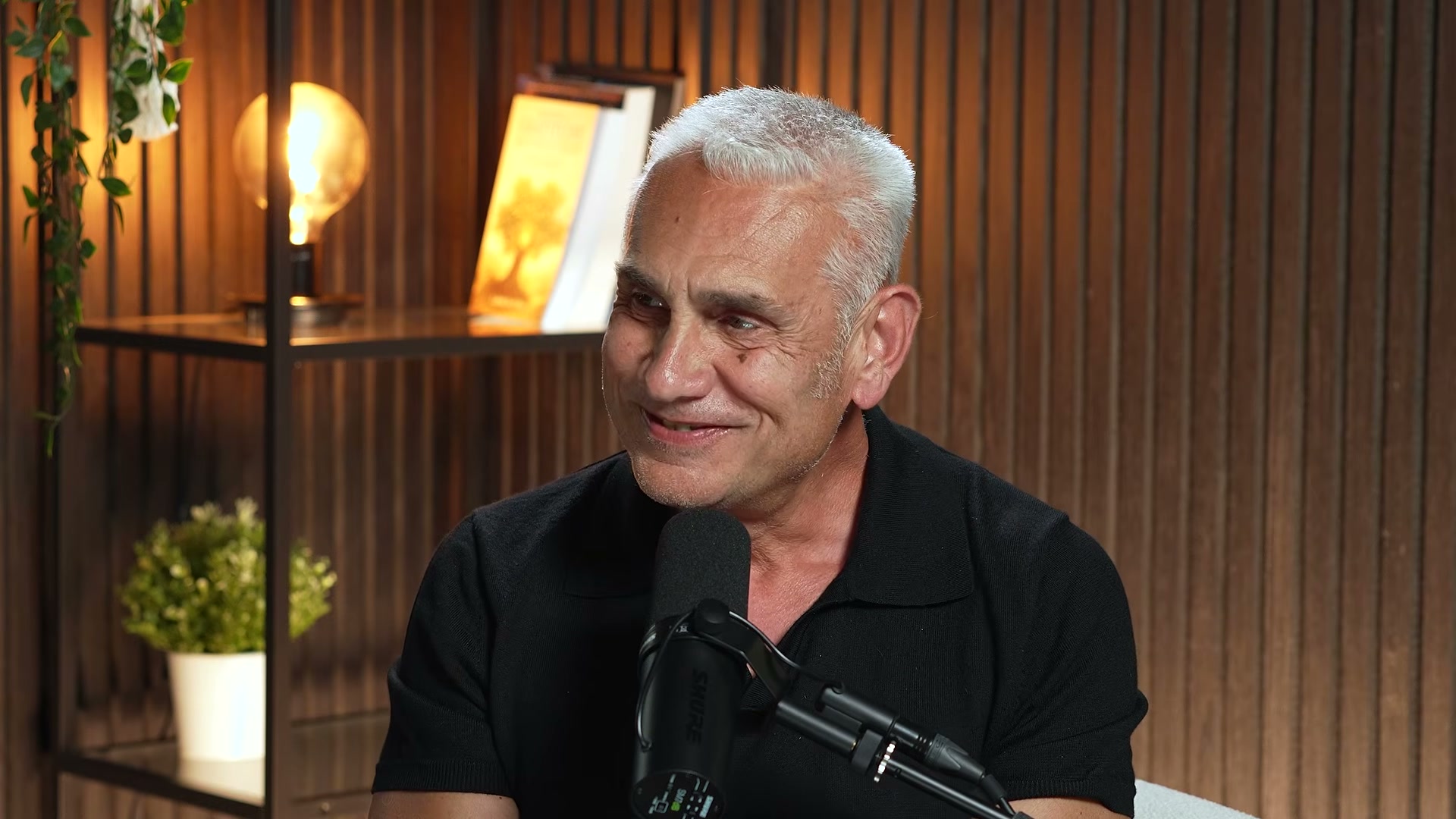
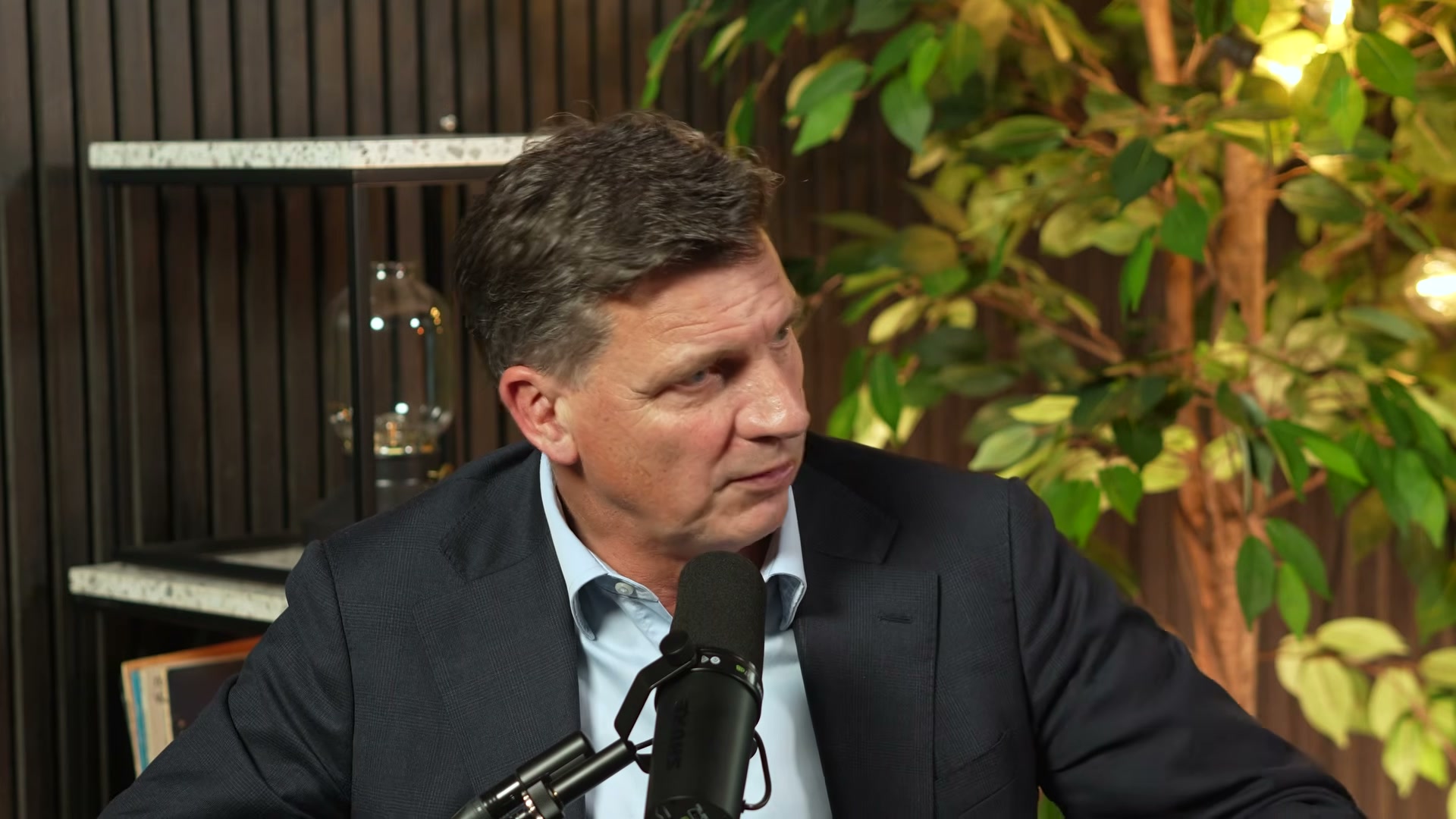
For the debut episode of his new long-form show, The Panos Podcast, the real estate coach and auctioneer sat down for 48 minutes with Federal Opposition Leader Angus Taylor.
Recorded two weeks ahead of the Victorian vote, the conversation ranges from Taylor’s Snowy Mountains upbringing to his Oxford thesis on the price of beer – before locking onto the exact pressures showing up at open homes across the country: tax changes, housing supply, building red tape, and battered household confidence.
Here are the five biggest takeaways for agents and principals.
1. The Victoria bellwether – and Melbourne’s surprise 60 per cent clearance rate
Looking back at the exchange after Saturday’s result, the most striking moment lands at the 35-minute mark.
Panos told Taylor he tracks auction clearance rates “like it’s my life” – and had noticed Melbourne suddenly sitting at roughly 60 per cent while other capitals languished in the 30s and 40s, and Brisbane occasionally dipped into the 20s.
With a state election two weeks out and betting markets shortening on a Coalition win, Panos floated a theory.
“I think the fact that the numbers are looking good for the Coalition might be the reason why Melbourne, out of all the markets, all of a sudden has had a clearance rate that’s going up,” Panos said.
“People are thinking to themselves, hey, maybe there’s some light at the end of the tunnel.”
Taylor agreed – tying the shift directly to buyer psychology ahead of both Victoria’s vote and the NSW state election in March.
“People have got to believe that change can happen, and that’s when hope and confidence comes back,” Taylor said.
“There’s no market that’s driven more on confidence and hope than the housing market, because that’s the biggest thing you’ll ever buy in your life. And I think Victoria is the beginning of that change.”
2. A ‘day-one’ pledge on negative gearing, CGT, and trust taxes
Pressed by Panos on what he would unwind first if he won office, Taylor did not hedge.
“Day one,” Taylor said.
“From the beginning of a Taylor–Canavan government, we will reverse those changes because those changes are a war on aspiration in this country.”
He argued the tax settings hit both everyday property investors and business owners trying to scale.
“What’s being punished here is people who grow a business successfully,” Taylor said. “That’s what the capital gains tax does – it says, hey, if you grow a business, we’re going to take almost half of it.”
Later in the interview, Taylor pointed back to Paul Keating’s 1987 reversal on negative gearing – noting it took roughly two years and rising rents to force a backflip – and predicted the current government will face mounting pressure over the next 18 months to do the same.
3. The ‘housing trifecta’ – and Panos’ Saturday auction-floor reality check
Asked for his first three housing moves in 100 days, Taylor summed up the current market as “an extraordinary trifecta in the housing market, and it’s not a good trifecta: we’re seeing rents going up, we’re seeing housing construction going into free fall, and we’ve seen confidence collapse.”
Panos backed that up with what he is seeing on the street every Saturday, arguing Treasury’s assumption that investors would pivot to new builds has not played out at auction.
“The investors have walked away completely,” Panos said.
“First-home buyers, what they did is they walked away. They’re not going to go take a 5 per cent deposit scheme just to go into negative equity.”
He added that the traditional Bank of Mum and Dad is pulling back too – calling it the opposite of the wealth effect, or “the poor effect”, where parents who used to stand next to their kids at auctions to cover deposits or stamp duty are now tightening their own belts.
4. The 2,000-page code adding up to $70,000 to a new home
Beyond tax policy, Taylor pointed straight at building regulation as a major brake on new supply.
“We’ve got to get rid of the red tape,” he said.
“Two thousand pages in the National Construction Code telling a builder how to build a house. We don’t need that. And we know it’s added up to $70,000 to the cost of building a house. It’s out of control.”
His argument was blunt: “A first-home buyer doesn’t need a mansion. They just want to get into a good, solid house, very often to raise a family. So we shouldn’t over-engineer this, but that’s exactly what’s being required by legislation.”
5. Working harder for 5 per cent less
Asked why so many households feel like they are working harder while going backwards, Taylor cited national productivity figures.
“On average across our economy, Australians are producing 5 per cent less per hour worked than they were four and a half years ago,” he said.
He blamed regulatory overload for pulling small business owners away from customers and growth and into constant meetings with accountants and lawyers.
“Just back off,” Taylor said. “Let people get on with their lives.”
Watch the full episode
You can also listen to the full episode of The Panos Podcast on Apple Podcasts.