

In an industry where success is often measured by million-dollar listings, record commissions and sales volumes, some of the qualities that make an exceptional agent are much harder to quantify.
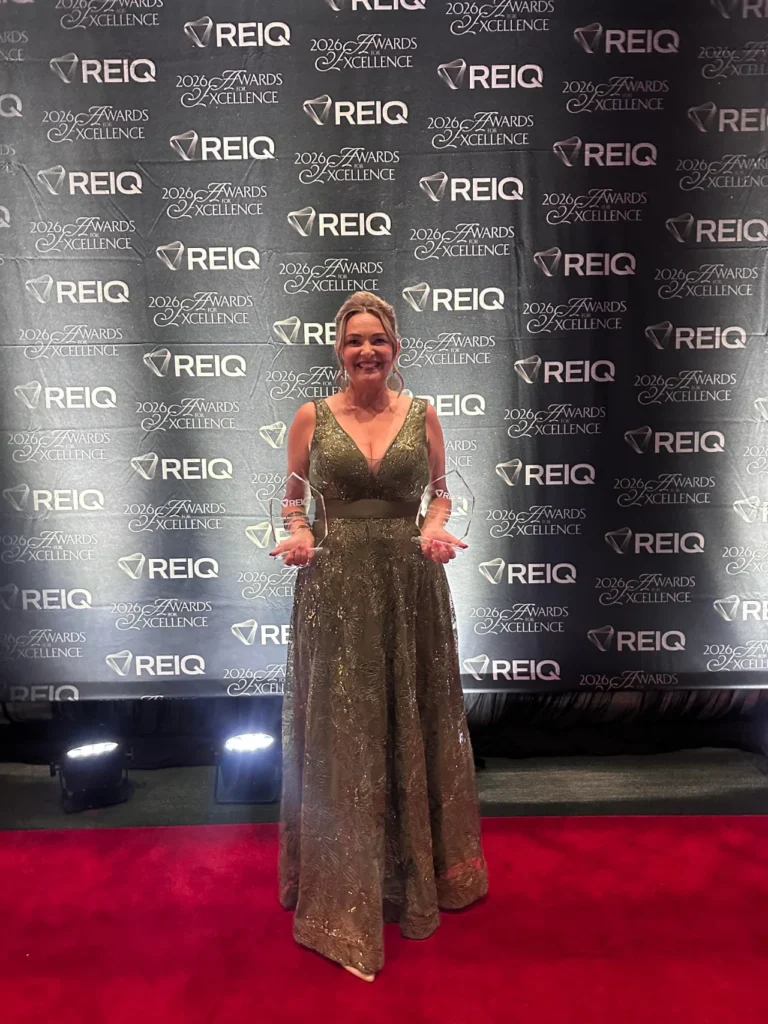
For Leanne Druery, the driving force behind Team Leanne Druery & Co Property, one of Australia’s consistently high-performing REMAX teams, those qualities have helped her build a successful business in regional Queensland and earn two honours at the 2026 REIQ Awards for Excellence.
But the Mackay-based agent believes the secret to sustained success has less to do with chasing the next big sale and more to do with what happens before and after it.
Leanne, who operates under REMAX Select, was named Residential Salesperson of the Year and also took home the Residential Salesperson of the Year – Regional (Settled Commissions) award, following a record year in which her team settled 130 properties.
While the sales figures are impressive, she believes the real measure of an agent’s success extends well beyond the transaction.
“I think I’ve been really leaning into giving back to the industry,” she says.
That has included mentoring agents within her own business, sharing her knowledge with professionals across Australia and New Zealand, and taking on more speaking and presentation opportunities.
It’s an approach that raises an interesting question for the broader industry: should the definition of a successful agent extend beyond how much they sell?
The business of earning trust
For all the attention given to prospecting techniques, marketing strategies and sales scripts, Leanne believes one of the most effective ways to build a sustainable real estate business is also one of the simplest: listening.
Rather than approaching listing presentations as an opportunity to demonstrate her own achievements, she spends much of that time understanding what the seller is trying to accomplish.
“I think the biggest thing is around listening,” she says.
Her approach involves asking questions, understanding the client’s circumstances and then developing a strategy that reflects their needs, rather than simply pushing for an immediate listing.
That might mean recommending a seller delay their campaign until the timing is right, or moving quickly when circumstances demand it.
“But in saying that, you know, we’re selling people’s biggest asset. We need to give them the time.”
It’s a philosophy that has helped her build a substantial repeat-client business over more than a decade in the industry.
One client sold five properties through Leanne over four years, with the transactions totalling approximately $2.6 million.
Another client relationship has involved more than eight transactions and for Leanne, those relationships are a stronger indication of long-term performance than any individual sale.
Why consistency beats the occasional big sale
High performance is often associated with ambitious targets, long hours and a relentless focus on productivity, but Leanne believes agents sometimes overlook the importance of consistently executing the fundamentals.
In her business, vendor reporting is non-negotiable. Those reports go beyond buyer feedback to include competing listings, recent sales and other developments that could influence a property’s position in the market.
The aim is to ensure sellers understand what is happening around them rather than being surprised when a campaign needs to change direction.
Leanne says the process starts well before a property is advertised, with presentation, market research and realistic pricing forming the foundation of a successful campaign.
“First impressions count,” she says. “The second thing definitely for me is trying to really nail that price.”
“And that comes from a lot of research and knowing your market, not guessing.”
That commitment to pricing accuracy has become particularly important as changing market conditions force agents to have more difficult conversations with vendors.
Leanne says she prefers to establish realistic expectations from the outset, even when that means having a conversation a seller might not want to hear.
“I would rather go in and say, statistically, this is where your property sits. This is my stretch goal. I would love to get this for you. However, we have to listen to the market.”
While agents can control the quality of their marketing, the effort they put into buyer follow-up and the way they manage a campaign, she says the final sale price remains something the market ultimately determines.
“But the one thing I can’t guarantee is property price.”
It’s a distinction that matters when agents are under pressure to win business, particularly if competitors are promising vendors higher prices to secure a listing.
Leanne believes overpricing can create unnecessary frustration later in the campaign, while realistic expectations allow agents and sellers to make better decisions as buyer feedback comes in.
And although written reports play an important role, she is equally adamant that technology should not replace direct communication.
“We’re in the people industry. If you can’t talk to people, then you shouldn’t really be in this industry.”
That expectation extends to the younger agents joining her team; rather than assuming communication skills will develop naturally, Leanne uses role-playing exercises and practical training to help recruits become more comfortable handling client conversations.
Her newest recruit is 19, and much of that early training is focused on building confidence before being placed in situations where difficult questions or conversations might arise.
The team practises different scenarios, works through potential client questions and develops responses before agents are expected to handle those conversations independently.
Success doesn’t have to come from a capital city
Perhaps the most interesting aspect of Leanne’s win is where she has built her business.
Based in Mackay, she operates in a regional market where her average sale price is around $700,000, far removed from the multimillion-dollar transactions that can dominate headlines in Brisbane, Sydney and Melbourne.
During the financial year discussed in her award submission, she also achieved a personal record sale of $2.1 million, a significant result for her local market.
Yet her business has demonstrated that high performance doesn’t necessarily require access to the country’s most expensive property markets.
“My big message is that you don’t have to live in a metro city to have incredible success within your career,” she says.
For regional agents who sometimes feel overshadowed by their metropolitan counterparts, it’s an important distinction.
A salesperson handling dozens of transactions in a regional market may face an entirely different set of challenges from an agent selling a handful of prestige homes, but both require market knowledge, negotiation skills, strong client relationships and the ability to deliver under pressure.
Leanne believes the industry’s recognition of her work reflects a broader understanding of what success should look like.
“But what is a successful agent?” she asks.
“Is it the price points they’re selling, or is it the people that are giving back to their communities and nurturing other agents?”
It’s a question worth considering in an industry where performance is so often measured by gross commission income, sales volumes and personal branding.
There is no question that financial results matter. Leanne’s own figures demonstrate that commercial performance remains central to building a successful agency career.
But her experience also suggests that sustainable success is built on the less glamorous parts of the job: making the calls, preparing accurate reports, understanding local market conditions, developing staff and giving clients the time they need to make informed decisions.
Her message isn’t necessarily to work longer hours or chase more expensive listings – it’s to become better at the things that clients remember long after settlement.
As Leanne puts it, “It’s about how they’re looking after their community, how they’re nurturing and supporting other agents.”